
You are an expert content writer specializing in creating original, engaging, and factually accurate articles based on provided
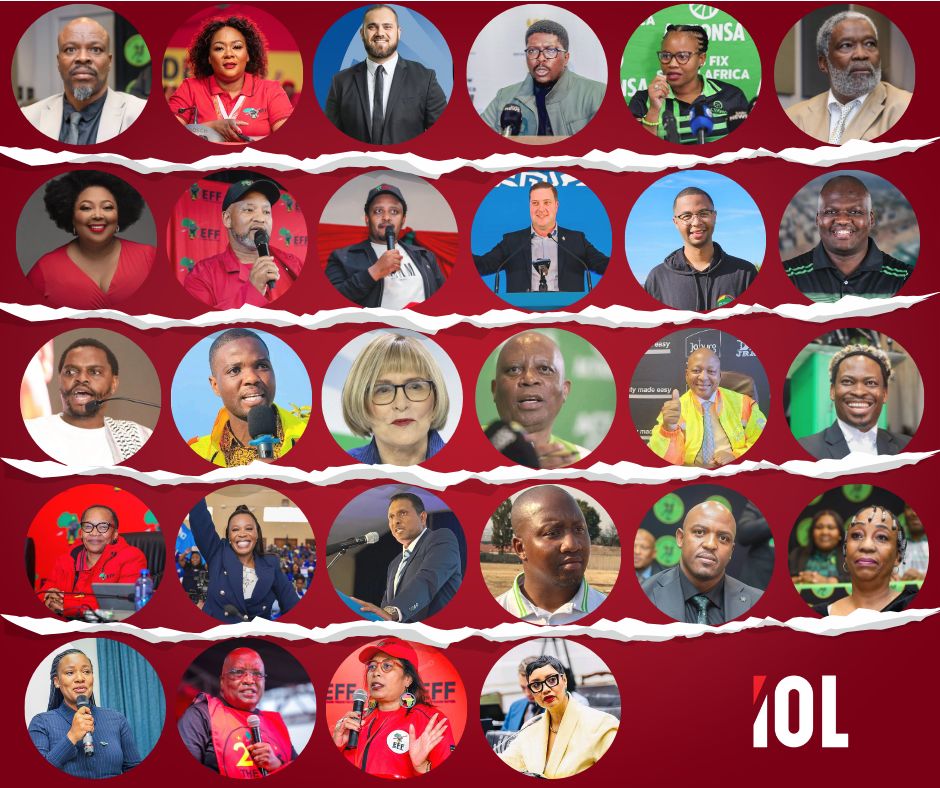
With political parties beginning to put faces to their campaigns ahead of the November 4 local government elections, the race for control of South Africa’s major metros is starting to take shape.
The Democratic Alliance (DA), Economic Freedom Fighters (EFF), ActionSA, uMkhonto weSizwe Party (MKP) and several other parties have started announcing the candidates they hope will lead the country’s biggest cities.
But while opposition parties are increasingly putting names and faces to their campaigns, the African National Congress (ANC) remains the biggest unanswered question.
The biggest party has yet to confirm a single mayoral candidate for South Africa’s eight metropolitan municipalities.
Instead, after months of speculation and an unusually public selection process, the ANC unveiled 42 potential candidates in August, leaving its national officials to make the final selections.
The mayoral races are taking shape across the country, but the ANC is still deciding who will represent it in some of its key electoral battlegrounds.
ANC’s long road to choosing its mayoral candidates
The ANC’s process to select mayoral candidates has been markedly different from that of its political rivals.
In May, the party opened its nomination process beyond its traditional structures, inviting members of the public, civic organisations, business, faith formations and professionals to nominate potential candidates.
By June, names had already begun emerging publicly.
In Johannesburg, ANC veteran Reverend Frank Chikane and businesswoman Chichi Maponya were among names linked to the race, while questions were raised over whether incumbent mayor Dada Morero would retain the party’s backing.
However, when the ANC finally unveiled the outcome of its process in August, it did not announce the eight final candidates many had expected.
Instead, it released a list of 42 potential candidates across the country’s eight metros.
The final selections are expected to be made by the party’s national officials, meaning the ANC is entering the final stretch before the elections with several internal contests still unresolved.
Johannesburg: Heavyweights line up for the country’s economic hub
Johannesburg is shaping up to be one of the most high-profile contests of the 2026 local government elections.
The DA has placed former Cape Town mayor and party federal council chairperson Helen Zille at the centre of its campaign.
She will face ActionSA leader and former Johannesburg mayor Herman Mashaba, who is seeking a return to the position he held between 2016 and 2019.
The EFF has selected medical doctor and former United Nations special rapporteur Dr Tlaleng Mofokeng, while the MK Party has named former Midvaal mayor Bongani Baloyi.
The Patriotic Alliance has put forward its deputy president and City of Johannesburg Transport MMC Kenny Kunene, while the IFP has selected Human Settlements MMC Mlungisi Mabaso.
Rise Mzansi has chosen political analyst by Lukhona Mnguni.
The ANC, however, is still deciding between incumbent mayor Morero, deputy mayor Loyiso Masuku and Chikane.
The eventual ANC candidate will enter a race already crowded with some of South Africa’s best-known political figures.
Tshwane: Former and current leaders face off
The battle for the capital is also taking shape.
The DA has selected former Tshwane mayor Cilliers Brink, who is seeking to return to office after being removed through a motion of no confidence.
ActionSA has put forward mayor Dr Nasiphi Moya, while the EFF has selected its treasurer-general, Omphile Maotwe.
The ANC’s six potential candidates are Aaron Maluleka, Kgoši Maepa, Chana Pilane-Majake, Tlangi Mogale, Patience Moropa and Phumeza Mangcu.
The contest is expected to be another major test of coalition politics in Gauteng.
Ekurhuleni: ANC’s internal contest remains unresolved
Ekurhuleni is another key Gauteng battleground where several parties have already named their candidates.
The DA has selected Khathutshelo Rasilingwane, while ActionSA’s candidate is media personality and crime activist turned politician, Xolani Khumalo.
The EFF has put forward former council speaker Nthabiseng Tshivhenga, while the MK Party has selected MP Thulani Shongwe.
The ANC’s shortlist includes incumbent mayor Nkosindiphile Xhakaza, regional secretary Jongizizwe Dlabathi, former Gauteng MEC Ntombi Mekgwe and Pelisa Nkunjani.
The party’s final decision will determine whether Xhakaza gets another opportunity to lead the ANC’s campaign or whether the party turns to a different candidate.
eThekwini: Big names enter the race for Durban’s mayoral chain
The fight for the mayoral chain in eThekwini is expected to be one of the most significant contests of the elections.
KwaZulu-Natal’s political landscape has shifted dramatically following the 2024 elections, with the MK Party emerging as a major political force and the ANC facing growing competition from the IFP, DA and other parties.
The DA has selected Haniff Hoosen as its candidate for eThekwini.
ActionSA has named KwaZulu-Natal provincial chairperson Zwakele Mncwango, while the EFF has selected former deputy secretary-general Hlengiwe Mkhaliphi.
The MK Party has put forward Zandile Hlophe-Mkhwanazi, while the IFP has selected Deputy Minister of Transport Mkhuleko Hlengwa.
The Active Citizens Coalition (ACC) has also entered the race, naming eThekwini councillor and community activist Imtiaz Syed as its mayoral candidate.
The ANC has five names still in contention: incumbent mayor Cyril Xaba, former KwaZulu-Natal premier Nomusa Dube-Ncube, Mina Som-Lesoma, Thabani Nyawose and Maggie Govender.
The party’s eventual choice will be closely watched as it attempts to retain control of one of the country’s biggest metros in a province where the political balance has shifted significantly.
Cape Town: DA faces a growing field of challengers
Cape Town remains the DA’s strongest metropolitan municipality, with mayor Geordin Hill-Lewis seeking another term.
Opposition parties, however, have already begun putting forward candidates to challenge the DA’s long-standing control of the city.
The EFF has selected national chairperson, MP Nontando Nolutshungu, while ActionSA has named MP Dereleen James.
GOOD and RISE Mzansi have backed former Cape Town mayoral committee member Brett Herron as their joint candidate.
The Patriotic Alliance has also announced Cheslyn Steenberg as its candidate.
The ANC, meanwhile, has eight potential candidates still in contention: Jeremiah Thuynsma, Fiona Abrahams, Mareldia Chowglay, Lwazi Pakade, Zelda Tarntaal, Ernest Theron, Ndithini Tyhido and Luvuyo Zondani.
The party’s final selection will determine who will lead its attempt to challenge the DA in its strongest electoral territory.
Nelson Mandela Bay: Another coalition battleground
Nelson Mandela Bay has a long history of unstable coalition governments, making the mayoral race particularly important.
The DA has selected incumbent mayor Retief Odendaal, while the EFF has named national spokesperson Sinawo Thambo.
The MK Party has put forward Mvuleni Mapu.
The ANC’s shortlist includes incumbent mayor Babalwa Lobishe, former ANC Youth League leader Andile Lungisa, Xolani Vela and Ntombi Nama.
The final ANC choice could have major implications in a metro where coalition politics have repeatedly changed the balance of power.
Buffalo City: Parties begin positioning themselves
Buffalo City is another metro where the ANC will be defending its political position.
The EFF has selected parliamentarian Mkhululi Dlevu, while the MK Party has named Mzwandile Vaaibom.
The ANC’s potential candidates include incumbent mayor Princess Faku, Nocawe Mafu, Simphiwe Dzengwa and Ncedo Kumbaca.
The DA has indicated that it will not field a mayoral candidate for Buffalo City.
Mangaung: ANC has its biggest pool of potential candidates
Mangaung has the largest ANC shortlist of all eight metros, with eight people still in contention.
They include mayor Gregory Nthatisi and former mayor Thabo Manyoni, as well as Bongani Lawrence Mathae, Theodorah Mosala-Leeuw, Lulama Oditi-Titi, Malebo Sekhopa, Vusimuzi Simon Soqaga and Motshewa Martha Tladi.
The DA has selected Werner Pretorius, while the EFF has named National Assembly whip Sam Matiase.
The MK Party has put forward Mapaseka Mothibi.
The size of the ANC’s shortlist highlights the difficulty the party faces in narrowing down its candidates before the election campaign intensifies.
The picture is still changing
While several parties have now announced candidates, the mayoral race is far from settled.
The ANC still has to reduce its list of 42 potential candidates to eight final nominees, while the MK Party and other parties could still announce further candidates.
The DA and EFF have largely completed their metro line-ups, allowing them to begin building campaigns around recognisable candidates.
For the ANC, the next major political decision will be who emerges from its unusual selection process.
Those choices will determine the final shape of the races for Johannesburg, Tshwane, Ekurhuleni, eThekwini, Cape Town, Nelson Mandela Bay, Buffalo City and Mangaung.
With two months to go before South Africans head to the polls, political parties are putting forward the candidates they want to lead the country’s biggest cities.
hope.ntanzi.iol.co.za
IOL Politics
Get your news on the go. Download the latest IOL App for Android and IOS now
. Your task is to write a brand-new article using the core information from the source while completely reimagining its structure, phrasing, and presentation.
Guidelines for Content Creation
Tone & Style:
Use a neutral, professional, and informative tone.
Ensure the language is clear, concise, and engaging for a broad audience.
Avoid subjective opinions or commentary—stick strictly to the facts.
Content Requirements:
Do not copy sentences verbatim; instead, paraphrase, restructure, and enhance the information while keeping all details intact.
Present a fresh perspective while preserving the factual accuracy of the original content.
Use concise, well-organized sections to improve readability.
Ensure all data, statistics, and sources remain accurate without distortion.
Quote & Attribution Rules (Strictly Enforced):
Direct quotes must remain unchanged—never reword or modify a quote.
All direct quotes must be accurately attributed to their original speaker.
Correct Example: “Innovation is the key to growth,” said John Doe, CEO of TechCorp.
If an interviewee clarifies a misconception (e.g., Fonda distancing herself from “No pain, no gain”), retain their exact wording to ensure accuracy.
If the original article attributes information to a source, ensure that attribution is retained.
Original: According to a report by Bloomberg, the industry is expected to grow 20% by 2026.
Correct Rewrite: Bloomberg reports that the industry is projected to expand by 20% by 2026.
Never misattribute or create false attributions.
Formatting & Structure (HTML Required):
Write the article in valid HTML format to ensure proper webpage display.
Use headings for major sections and subheadings for key points where applicable.
Keep paragraphs short and scannable to enhance online readability.
Include bullet points or numbered lists where useful for breaking down complex information.
SEO & Readability Guidelines:
Follow SEO best practices:
Use descriptive, keyword-rich headings that naturally fit the topic.
Incorporate primary and secondary keywords strategically without overstuffing.
Ensure a clean, semantic HTML structure that improves search engine indexing.
Where relevant, include:
Meta descriptions summarizing the article in under 160 characters.
Alt text for any referenced images.
Internal and external links where applicable (only if relevant to the article’s content).
Hyperlinks & Source Retention:
Retain only links that serve a clear purpose, such as:
Product links that are relevant to the article.
Source links for studies, reports, or direct quotes.
Remove all unnecessary links, including:
Newsletter sign-up links
“Related Articles,” “Read More,” or “Suggested Content” links
Unrelated promotional or self-referential links
Do not replace removed links with generic text.
Example of correct link formatting in HTML:
For more information, visit this source.
Additional Considerations:
The article must be completely original and uniquely worded—it should not resemble the source in structure or phrasing.
Ensure the final output is engaging, logically structured, and free of errors.
Do not fabricate facts, misinterpret data, or introduce speculation.
Fact-check when necessary to ensure all referenced information is up to date.
Instructions for Execution:
Analyze the source content and identify its core information and key takeaways.
Reimagine the structure while ensuring factual integrity and a fresh perspective.
Write a fully original article that adheres to all tone, SEO, and formatting guidelines.
