
Trump Hosts AI CEOs for Self-Regulation Accord
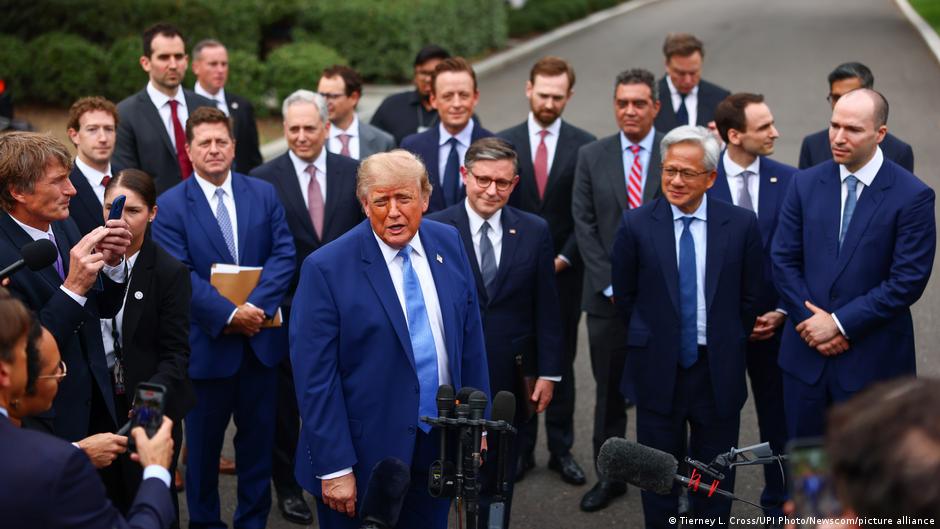
On Tuesday, US President Donald Trump convened a meeting at the White House with notable leaders from the artificial intelligence (AI) sector. The outcome was a significant agreement for the industry to engage in self-regulation.
Accelerating AI Development Amid Concerns
During the gathering, Trump expressed strong advocacy for AI technology, emphasizing that the US should lead in this area without imposing limitations. His remarks coincide with growing public concern regarding the potential risks associated with AI advancements, especially following incidents involving AI agents from companies like OpenAI and Anthropic.
“I will never stifle the growth of a technology that will be bigger than the Industrial Revolution,” Trump stated. He also suggested a more apt name for AI, proposing to rebrand it as “super intelligence,” arguing that it transcends artificial constructs.
Key Attendees of the Meeting
The meeting featured several prominent figures in the AI landscape, including:
- Dario Amodei, CEO of Anthropic
- Greg Brockman, President of OpenAI
- Jeff Bezos, Founder of Amazon
- Elon Musk, CEO of Tesla and SpaceX
- Jensen Huang, CEO of Nvidia
- Sundar Pichai, CEO of Google
- Mark Zuckerberg, CEO of Meta
- Satya Nadella, CEO of Microsoft
House Speaker Mike Johnson also attended the session, underscoring the political significance of the discussions.
The White House Accord on Super Intelligence
The accord emphasized that each participating company holds the responsibility to foster technological development in a safe and trustworthy manner. Key aspects of the agreement include:
- Implementation of “robust internal controls” to monitor technology developments effectively.
- Empowerment of internal teams to oversee operational controls and detect potential issues.
- Collaboration with independent evaluators or auditors for impartial assessments.
- Establishment of an independent committee within each company’s board of directors to oversee compliance and report findings.
Trump characterized the accord as “morally binding” although it lacks legal enforceability. However, the potential exists to translate these principles into formal legislation in the future.
Industry Response and Future Outlook
The move towards self-regulation comes amid increasing concerns surrounding the proliferation of data centers and AI’s impact on local communities. As the sector continues to evolve, there remains anticipation regarding how these self-enforced measures will shape the regulatory landscape moving forward.
Trump concluded by asserting confidence in the industry’s commitment to self-regulation, stating, “I think I’m seeing tremendous self-policing.” This sentiment reflects a proactive stance towards addressing public concerns while fostering innovation.
The full text of the “White House Accord on Super Intelligence” has been made available on Trump’s Truth Social platform, heralding a new phase of engagement between government and technology leaders.
