

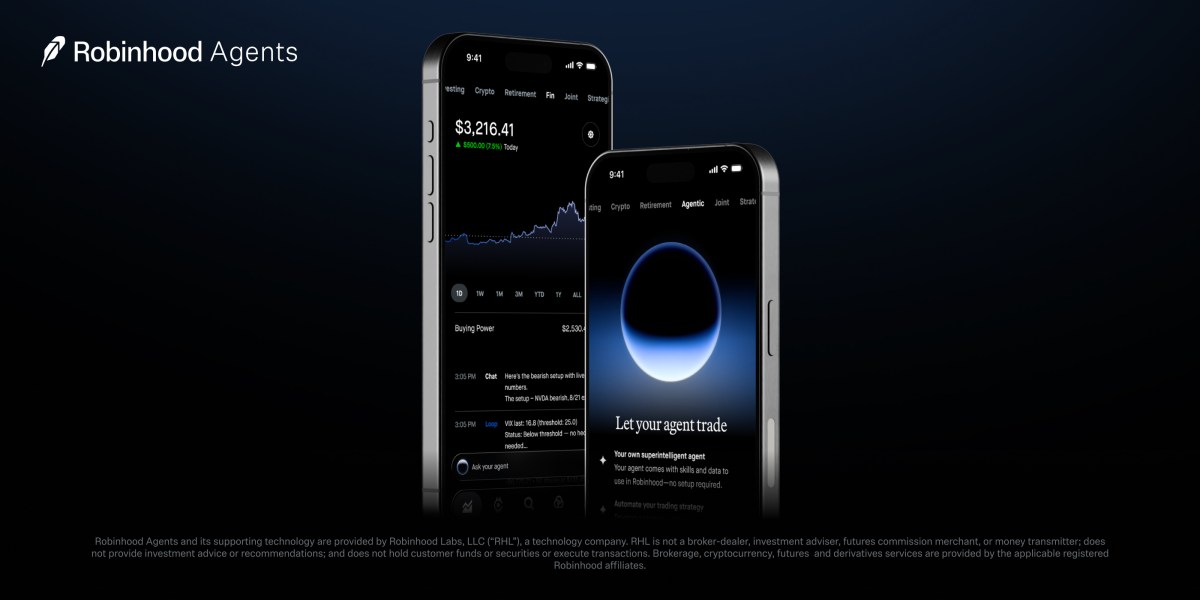
Robinhood Introduces AI Trading Agents to Democratize Investing
This week marks a significant development for Robinhood, as the brokerage unveils AI trading agents for its approximately 29 million customers. Users can utilize advanced models from OpenAI and Anthropic to engage in trading, conduct research, and formulate intricate investment strategies tailored to their needs.
Launch Overview
The initiative was announced during Robinhood’s annual HOOD summit, coinciding with an earlier release of a MCP (Model Connect Protocol) tool in May. This tool allows technically inclined users to integrate their own agents directly with Robinhood’s trading platform.
AI Trading Agents Explained
Robinhood stands out as the first brokerage to provide nontechnical trading agents to a vast customer base. This advancement has the potential to redefine how Americans approach investing, thus influencing market dynamics more broadly.
How the Agents Work
During a recent demonstration highlighted by Fortune, users could choose from several models—OpenAI’s GPT-6 Luna, GPT-6 Sol, or Anthropic’s Opus 4.8—and assign a name to their agent. After configuration, users could issue commands in plain language for tasks ranging from basic trades, such as “Buy $200 of Ford stock,” to more sophisticated operations like establishing “Loops.” These Loops can automate market checks and trades based on predetermined conditions, making it easier for users to manage their investment strategies.
Guardrails for Safe Trading
In light of potential risks, Robinhood has implemented a series of safeguards to ensure responsible use of trading agents. Key features of this system include:
- The assignment of a dedicated trading account for each agent.
- User-defined limits on the amount any agent can trade at once.
- An optional confirmation step for users to approve transactions before they are executed.
Empowering Investors with Advanced Tools
Robinhood executives emphasize that these user-friendly agents, paired with libraries of financial data, will equip users with investment capabilities similar to those utilized by professional traders on Wall Street. This move aligns with the company’s commitment to democratizing finance.
“Ownership doesn’t work without markets, and markets don’t work without traders,” stated Robinhood CEO Vlad Tenev. “We’re making Robinhood the best place in the world for active traders by delivering tools once reserved for hedge funds, big banks, and quant firms.”
Implications for the Market
The widespread availability of these AI trading agents could lead to shifts in trading patterns and strategies among investors. A notable concern is how these agents might interact; for instance, if multiple agents coordinate trades, this could contribute to increased market volatility or panic in extreme scenarios.
Legal Considerations
Determining liability for potential mishaps in agent-based trading remains uncertain. Robinhood maintains that the use of these agents does not constitute financial advice; rather, it is akin to seeking information from the internet or a friend. The legal framework around AI in trading is still evolving.
Cost Considerations
Robinhood has announced that its lower-end GPT-6 Luna model will be free to users until the end of the year. Afterward, standard fees for using OpenAI and Anthropic agents will apply. While company executives suggest that these costs will be minimal, it remains to be clarified how rising computational expenses or high-volume trading could affect pricing.
User Adoption and Future Trends
Early indicators suggest user interest is strong, with over 150,000 customers having opened accounts under the previous technical agent model. Current data reveals that these agents facilitate nearly 30 million transactions daily on Robinhood’s platform.
The Competitive Landscape
While Robinhood currently leads in offering nontechnical trading agents, other fintech firms such as eToro, Public, and Coinbase are also exploring similar integrations through their MCP tools. It’s anticipated that traditional brokerages, like Charles Schwab and Fidelity, will follow suit in the near future.
Conclusion
The introduction of AI-powered trading agents by Robinhood could transform investment approaches and market engagement for everyday investors. As the financial landscape continues to evolve, understanding the implications of these advancements will be crucial for both individual traders and the broader market ecosystem.
