

You are an expert content writer specializing in creating original, engaging, and factually accurate articles based on provided
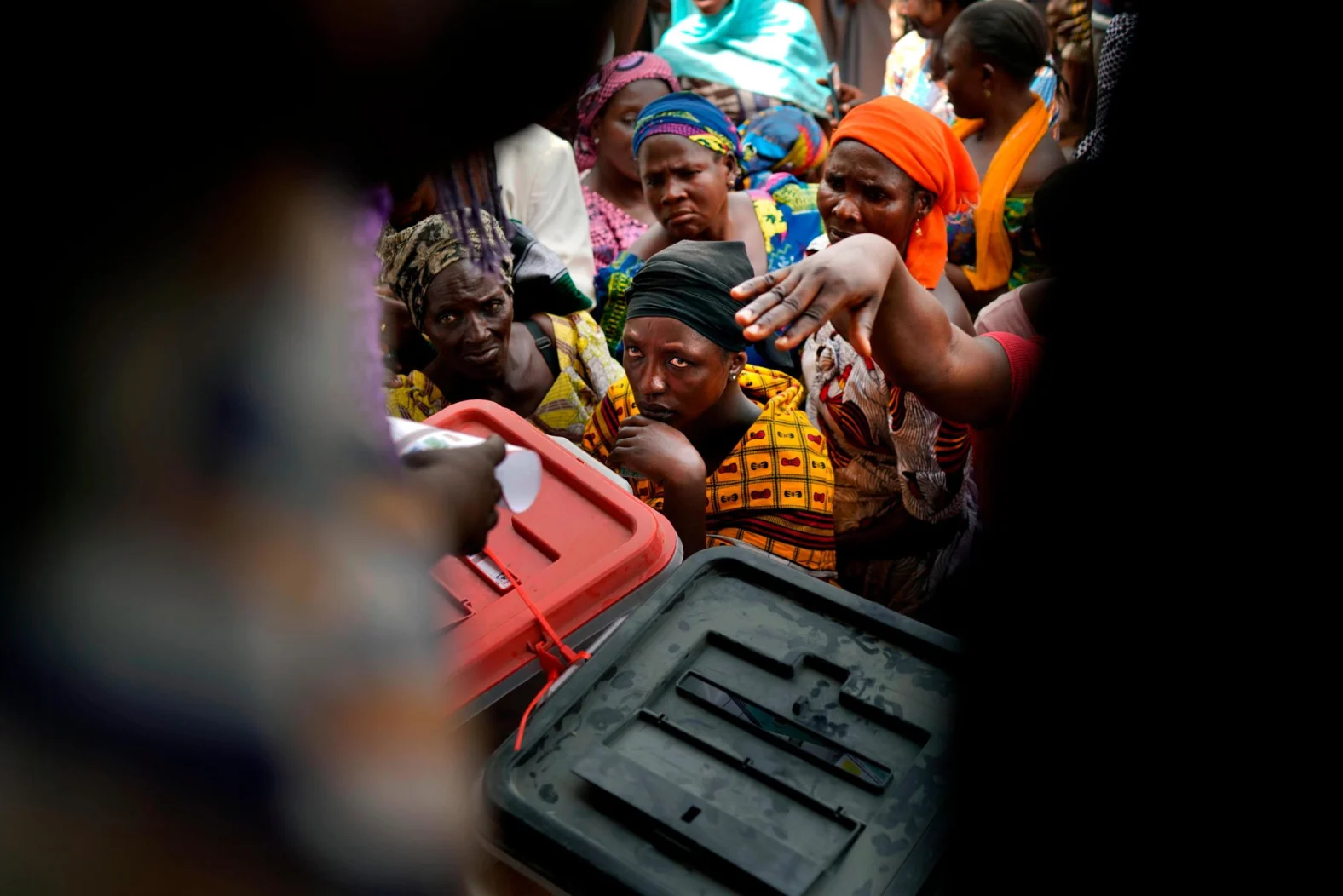
Women participating in politics in Kaduna State are sometimes branded “Karuwa”, a derogatory Hausa term associated with a sexually immoral or “loose” woman, a study on barriers to women’s political participation has revealed.
The study, titled “Study on the Reluctance of Women Running for Election/Barriers to Women’s Political Inclusion,” said the stigmatisation of women in politics was among the social and cultural barriers discouraging women from seeking political office.
The study, conducted by Learn Legal Consult for Basileia Vulnerable Persons Rights Initiative, covered Igabi, Sabon Gari, Lere, Kachia, Zangon Kataf and Chikun local government areas, involving surveys, focus group discussions and key informant interviews.
According to the report, participants in a preliminary media-facing listening tour across selected local government areas in Kaduna State said women politicians were sometimes judged by their character and sexuality rather than their leadership abilities.
The report said the use of the term “Karuwa” creates a form of social stigma capable of discouraging women from participating in politics, particularly in communities where political involvement by women is viewed negatively.
The study further documented accounts of sexual harassment and inappropriate demands allegedly faced by women seeking political opportunities.
“One account described a situation where a woman was told, in substance, that if she wanted political success, a man would have to touch her sexually,” the report stated, adding that sexual harassment could constitute a significant barrier to women’s political participation.
A woman who participated in the study also described the political journey of women as “very long and sensitive”, saying female politicians could be subjected to intimidation, unpleasant names and sexual harassment by men seeking to take advantage of them in exchange for political positions.
“Women who go into politics are often given unpleasant names.
“Sometimes, men subject them to sexual harassment because some want to take advantage of them in exchange for positions,” she was quoted as saying.
The report said some women were also discouraged by the perception that politics was meant for “irresponsible women”, adding that such perceptions could affect their acceptance within society.
A religious leader interviewed for the study similarly reported that some women were discouraged from contesting elections because of what people said about women who ventured into politics.
The study quoted the religious leader as saying: “Because of what people used to say about women, like if a woman is going to contest, they will say she is going for prostitution and whatsoever.
“So this thing always holds women from participating in anything that has to do with politics.”
Beyond social stigma and sexual harassment, the report identified financial constraints, political gatekeeping, godfatherism, unequal access to influential networks, family responsibilities, insecurity and limited support from political parties as other barriers confronting women.
The survey found that 71.1 per cent of respondents believed women found it harder to obtain political party tickets, while 47.4 per cent said political parties did not support women seeking political office.
The study also found that 71.1 per cent of respondents had experienced or witnessed political intimidation, while 57.9 per cent considered the political environment unsafe for women.
On community support, only 5.2 per cent of respondents described their communities as supportive or very supportive of women participating in politics, while 47.4 per cent said they received little support.
The report also highlighted political party structures as a major obstacle, with participants alleging that access to party leaders and influential networks could determine whether women were given a meaningful opportunity to contest.
One participant said: “Another challenge is acceptance from the party chairman and party leaders.
“If they don’t accept you as one of the contestants, even though you come out, you will not win, because there must be a primary election.”
The report said participants repeatedly identified godfatherism and political gatekeeping as factors limiting women’s access to political opportunities.
It also noted that women did not always support other women candidates, with participants observing that some women could mobilise behind male candidates while failing to support female candidates.
However, the researchers cautioned that the section containing the “Karuwa” findings was a preliminary media-facing report and not the final quantitative or qualitative research report.
The report concluded that women’s political exclusion in Kaduna was structural and multidimensional, requiring reforms within political parties, stronger protection against harassment and intimidation, improved access to campaign finance and networks, community engagement and greater awareness of affirmative mechanisms for women.
It also called for political parties, traditional and religious leaders, civil society organisations, men and women to work towards creating safer and more inclusive political spaces.
The study’s central campaign message was: “Women can lead. The question is will Nigeria let them?”
. Your task is to write a brand-new article using the core information from the source while completely reimagining its structure, phrasing, and presentation.
Guidelines for Content Creation
Tone & Style:
Use a neutral, professional, and informative tone.
Ensure the language is clear, concise, and engaging for a broad audience.
Avoid subjective opinions or commentary—stick strictly to the facts.
Content Requirements:
Do not copy sentences verbatim; instead, paraphrase, restructure, and enhance the information while keeping all details intact.
Present a fresh perspective while preserving the factual accuracy of the original content.
Use concise, well-organized sections to improve readability.
Ensure all data, statistics, and sources remain accurate without distortion.
Quote & Attribution Rules (Strictly Enforced):
Direct quotes must remain unchanged—never reword or modify a quote.
All direct quotes must be accurately attributed to their original speaker.
Correct Example: “Innovation is the key to growth,” said John Doe, CEO of TechCorp.
If an interviewee clarifies a misconception (e.g., Fonda distancing herself from “No pain, no gain”), retain their exact wording to ensure accuracy.
If the original article attributes information to a source, ensure that attribution is retained.
Original: According to a report by Bloomberg, the industry is expected to grow 20% by 2026.
Correct Rewrite: Bloomberg reports that the industry is projected to expand by 20% by 2026.
Never misattribute or create false attributions.
Formatting & Structure (HTML Required):
Write the article in valid HTML format to ensure proper webpage display.
Use headings for major sections and subheadings for key points where applicable.
Keep paragraphs short and scannable to enhance online readability.
Include bullet points or numbered lists where useful for breaking down complex information.
SEO & Readability Guidelines:
Follow SEO best practices:
Use descriptive, keyword-rich headings that naturally fit the topic.
Incorporate primary and secondary keywords strategically without overstuffing.
Ensure a clean, semantic HTML structure that improves search engine indexing.
Where relevant, include:
Meta descriptions summarizing the article in under 160 characters.
Alt text for any referenced images.
Internal and external links where applicable (only if relevant to the article’s content).
Hyperlinks & Source Retention:
Retain only links that serve a clear purpose, such as:
Product links that are relevant to the article.
Source links for studies, reports, or direct quotes.
Remove all unnecessary links, including:
Newsletter sign-up links
“Related Articles,” “Read More,” or “Suggested Content” links
Unrelated promotional or self-referential links
Do not replace removed links with generic text.
Example of correct link formatting in HTML:
For more information, visit this source.
Additional Considerations:
The article must be completely original and uniquely worded—it should not resemble the source in structure or phrasing.
Ensure the final output is engaging, logically structured, and free of errors.
Do not fabricate facts, misinterpret data, or introduce speculation.
Fact-check when necessary to ensure all referenced information is up to date.
Instructions for Execution:
Analyze the source content and identify its core information and key takeaways.
Reimagine the structure while ensuring factual integrity and a fresh perspective.
Write a fully original article that adheres to all tone, SEO, and formatting guidelines.
