

You are an expert content writer specializing in creating original, engaging, and factually accurate articles based on provided
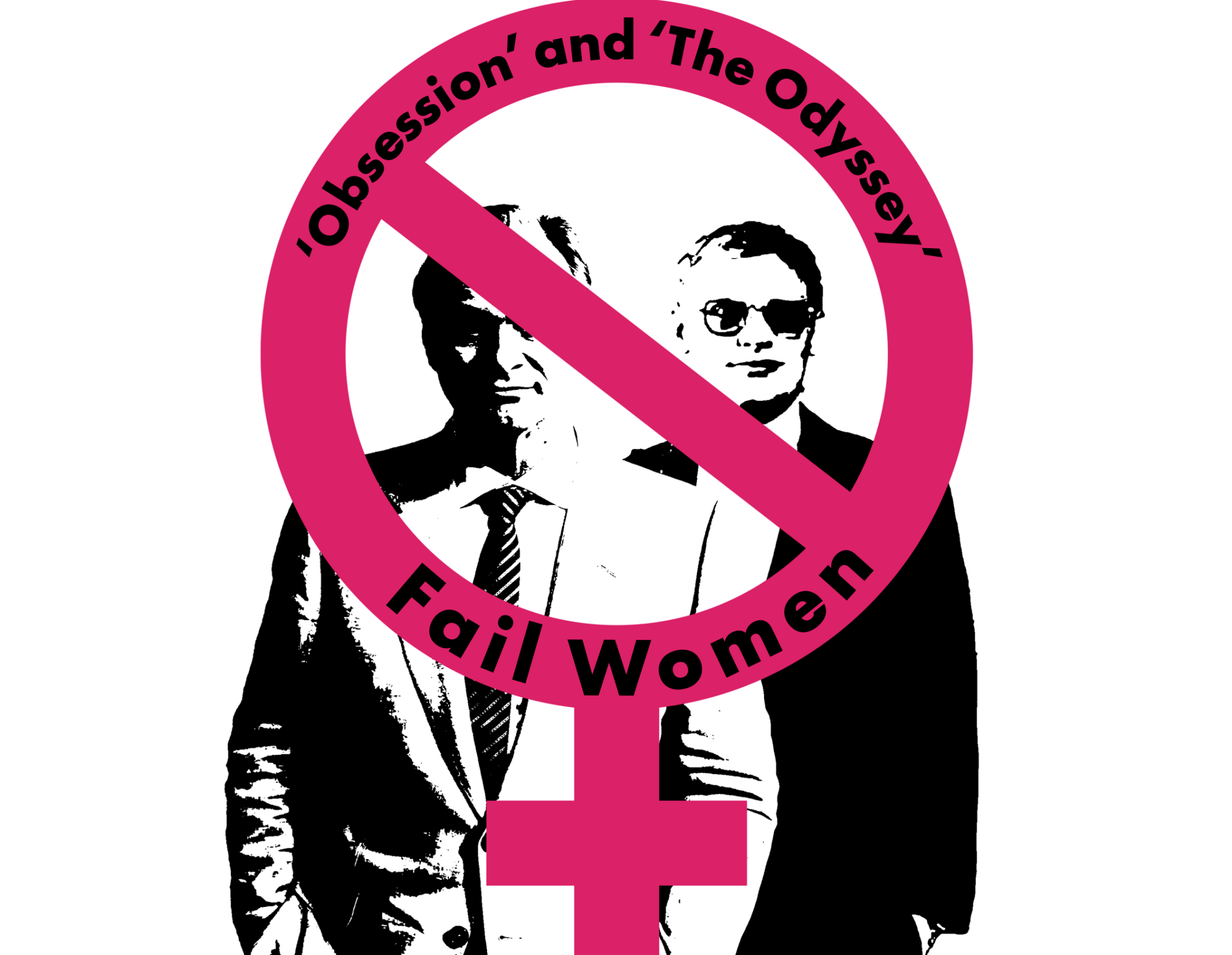
This year has proven to be a tumultuous time for women’s portrayals in the media. During the past few years, social media has seen a rise of the tradwife and misogyny. It is not surprising that two of the biggest movies of the summer, “Obsession” and “The Odyssey,” do not stand the test of portraying women as intelligent or as important as men. Movies that get the most attention from society are often a reflection of the society’s values. It is a shame that the movies of the summer fail to portray women in an assertive, empowering light. The excuses have been heard, but women still seem to struggle to be portrayed as equals in the theater.
What more could the modern woman need in the year 2026 than a movie telling them that some men suck? In the wake of feminism being critiqued, often by right-wing individuals, it seems that the bare minimum is being applauded with the movie “Obsession” directed by Curry Barker. The general consensus is that “Obsession” is a portrayal of how men are selfish in relationships. The main character, Bear, only thinks about himself and forces the love interest, Nikki, into a nonconsensual relationship. Spoiler Alert: It ends poorly.
Is it great that a movie is calling out selfish men? Yes. Do I need a movie to tell me men can be selfish in relationships? No. While not every man-dating-women will have experienced this, I would place a bet that they have heard from someone who has experienced dating a man who doesn’t understand that no means no or only thought about his needs in a relationship.
Kat Tenbarge, a journalist who investigates internet culture, wrote a review stating that “Obsession” is about male entitlement and may actually damage the public’s perception of women with borderline personality disorder and how likely rape victims are to be believed. “[‘Obsession’ is] a choice to depict a woman stripped of her autonomy as an increasingly violent monster, one that may seem empowering but actually feeds directly back into the victim-blaming rhetoric that dominates our culture,” Tenbarge said. Nikki comes across in the movie as more of a psycho girlfriend or a crazy woman than she does as a victim. It may be dangerous to associate her behavior as funny/scary instead of as a cry for help. A five-star review on Letterboxd by user llamapaige reads “This movie made me scared of my girlfriend.”
Story continues below advertisement
Obsession has received glowing reviews since its release in May. Monica Castillo, a top critic on Rotten Tomatoes applauded Barker, “Through clever cinematography, editing tricks, and a cast that’s fully committed to the director’s unnerving vision, Barker reimagines a classic horror idea for a new generation.” However, despite glowing reviews, it is about time women hold themselves to a higher standard when it comes to giving credit. Obsession doesn’t even pass the Bechdel test. Why is it being applauded as a service for women?
“The Odyssey” is a more discreet failure but a failure nonetheless as the film strips women of their autonomy. Christopher Nolan, acclaimed director, set out to film a screen adaptation of the classic “Odyssey” by Homer using IMAX cameras. A flex to some but a hindrance to viewers who have to pay big bucks to see the film as intended.
Plot spoilers in next paragraph
Nolan’s film is three hours of creative liberties and choices, yet not once is a woman seen on screen without a man or not talking about a man. Catherine Shoard pointed to choices made by Nolan, including Calypso’s bartenner-esuqe role and Athena’s lack of agency, “These changes consistently make the women either more boring or more bonkers,” Shoard said. Athena is played by Zendaya and plays a major role in the movie – she portrays a woman murdered by Odysseus while capturing Troy. Yet Nolan’s Athena has no godlike attributes even when appearing in the form of a goddess. She appears every once in a while, and it is not until the end where Nolan uses her to portray anything. Nolan’s film uses impressive modern technology, but it is a shame that the women come across so 19th century.
The character Penelope, played by Anne Hathaway, has a prominent role, but only as a woman who is depressed and helpless without her husband. Of course, the screenplay is based on the book, but Nolan barely stayed true to Emily Wilson’s translation like he claimed to. Wilson wrote a review of the movie titled “An Uncomplicated Man,” “There are more female characters than in most Nolan movies, thanks to the source material,” Wilson said, “the script allows only for a set of all too brief tableaux of female victims (the bereaved mother, the abused wife).” Wilson’s critique pointed out how Penelope has no dreams and Calypso, played by Charlize Theron, is not given the same range of emotions as in Homer’s original work, among other points.
Interviewer Eliana Dockterman asked Nolan, “You also see this idea of man as beast in the scene with Circe. She says that Odysseus’ men would have raped and killed her—that they’re pigs. Then you get to the end and see the sack of Troy and the horror of what they did. She’s right.”
Nolan’s response: “Circe articulates it well in the film. I love the way Samantha [Morton] has played the part. Talking about choices of adaptation, the end of the poem is so grim and so misogynistic, I had to exclude some of that material. But I didn’t want to completely take it off the table in terms of what it is saying about men and the way they wage war.”
Why, Nolan, did you feel the need to take it off the table? Nolan appears to acknowledge the misogyny in Homer’s world, yet he does not make changes in his script to counteract the misogyny. By choosing to make the women in “The Odyssey” more passive, Nolan is not countering the misogyny of Homer, he is just setting the women aside, so he does not have to address it. Even Calypso, who in Homer’s monologue drugs and rapes Odysseus, is given the passive role of a lonely women who fed a man flowers for 10 years. It is not empowering to remove Calypso’s complexity and actions and replace them with a woman with no story.
Nolan is praised by many as a director, but I’d argue that his movies are only for the male gaze. Seriously, how many times is he going to cast Matt Damon in a movie that doesn’t pass the Bechdel Test? He is unoriginal. Oh, and if you were wondering, only one Nolan film briefly passes the Bechdel test!
The Bechdel test is contested by some for not being a good standard for judging a movie. The requirements are: two women, who are each named, speak to each other about a topic other than a man. No, failing this test does not make a movie sexist, but it shows just how little time women are given in films.
While these are only two movies that fail to pass the Bechdel test, they are the two movies that went mainstream this summer. While one can look at the film industry as a whole and find two other movies that portray women positively, the films that rise to the top say the most about what society prioritizes. “Obsession: and “The Odyssey” might be massive financial and visual successes, but what is the excuse behind setting women aside.
It is easy to give into the hype of popular movies, but sometimes it is important to ask yourself why these movies fail to represent women in a positive way. For men who don’t see the importance of positive representation of women in film, I ask you how many movies you’ve watched this year where men are stripped of any agency and only talk about men? In fact, I ask you to spend a day in silence only speaking when a woman asks you to. It sounds extreme but that is simply the representation that women get in so many films.
. Your task is to write a brand-new article using the core information from the source while completely reimagining its structure, phrasing, and presentation. Guidelines for Content Creation Tone & Style: Use a neutral, professional, and informative tone. Ensure the language is clear, concise, and engaging for a broad audience. Avoid subjective opinions or commentary—stick strictly to the facts. Content Requirements: Do not copy sentences verbatim; instead, paraphrase, restructure, and enhance the information while keeping all details intact. Present a fresh perspective while preserving the factual accuracy of the original content. Use concise, well-organized sections to improve readability. Ensure all data, statistics, and sources remain accurate without distortion. Quote & Attribution Rules (Strictly Enforced): Direct quotes must remain unchanged—never reword or modify a quote. All direct quotes must be accurately attributed to their original speaker. Correct Example: “Innovation is the key to growth,” said John Doe, CEO of TechCorp. If an interviewee clarifies a misconception (e.g., Fonda distancing herself from “No pain, no gain”), retain their exact wording to ensure accuracy. If the original article attributes information to a source, ensure that attribution is retained. Original: According to a report by Bloomberg, the industry is expected to grow 20% by 2026. Correct Rewrite: Bloomberg reports that the industry is projected to expand by 20% by 2026. Never misattribute or create false attributions. Formatting & Structure (HTML Required): Write the article in valid HTML format to ensure proper webpage display. Use headings for major sections and subheadings for key points where applicable. Keep paragraphs short and scannable to enhance online readability. Include bullet points or numbered lists where useful for breaking down complex information. SEO & Readability Guidelines: Follow SEO best practices: Use descriptive, keyword-rich headings that naturally fit the topic. Incorporate primary and secondary keywords strategically without overstuffing. Ensure a clean, semantic HTML structure that improves search engine indexing. Where relevant, include: Meta descriptions summarizing the article in under 160 characters. Alt text for any referenced images. Internal and external links where applicable (only if relevant to the article’s content). Hyperlinks & Source Retention: Retain only links that serve a clear purpose, such as: Product links that are relevant to the article. Source links for studies, reports, or direct quotes. Remove all unnecessary links, including: Newsletter sign-up links “Related Articles,” “Read More,” or “Suggested Content” links Unrelated promotional or self-referential links Do not replace removed links with generic text. Example of correct link formatting in HTML:
For more information, visit this source.
Additional Considerations: The article must be completely original and uniquely worded—it should not resemble the source in structure or phrasing. Ensure the final output is engaging, logically structured, and free of errors. Do not fabricate facts, misinterpret data, or introduce speculation. Fact-check when necessary to ensure all referenced information is up to date. Instructions for Execution: Analyze the source content and identify its core information and key takeaways. Reimagine the structure while ensuring factual integrity and a fresh perspective. Write a fully original article that adheres to all tone, SEO, and formatting guidelines.
