

You are an expert content writer specializing in creating original, engaging, and factually accurate articles based on provided
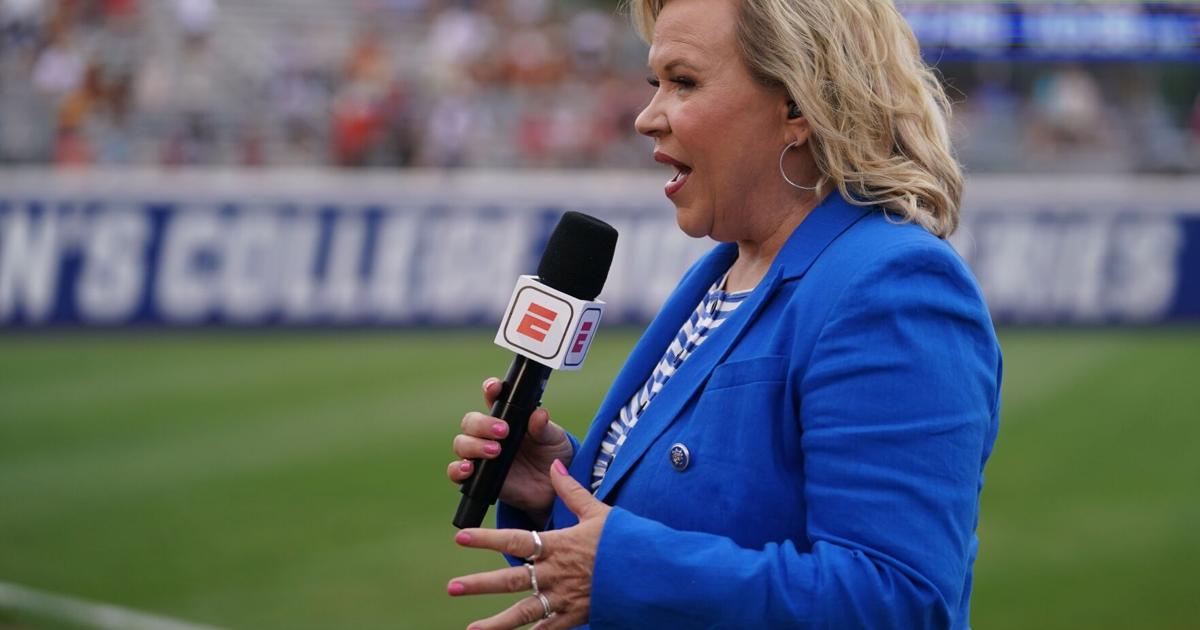
It’s been one week since Arch Manning was asked whether he’d seen any viral edits or videos after Texas’ incredible comeback win over Ohio State. His response spurred some of the most discourse I’ve seen in recent months over women in sports media.
“I saw the AI edit of (Steve Sarkisian) slapping Holly Rowe … That’s a good one,” Manning said.
Manning and the room of journalists broke out in laughter.
Women have spent decades working to earn the respect of men in the sports industry, and this disrespect of Rowe, who was the subject of the Texas’ head coach slap in the AI video, only proves there are still ways to go.
Rowe is one of the most respected female sideline reporters out there. She’s been with ESPN since 1998 and has never stopped working, literally. She didn’t take time off when she was battling metastatic melanoma.
But even she is still subject to intense scrutiny. People online make jokes about her weight. And now a group of men were laughing about a video that wasn’t really even circulating until Manning brought it up.
The video came about after Sarkisian didn’t let Rowe ask any questions postgame and instead yelled “Texas Fight, Hookem” into the microphone and walked away.
Rowe walked off visibly frustrated. Texas officials told The Athletic there were technical issues on ESPN’s side, so Sarkisian was waiting for about a minute. Fellow ESPN sideline reporter Laura Rutledge had said previously that Sarkisian declined the halftime interview due to technical difficulties.
Manning and the journalists in the room received loads of criticism online for making light of the AI-generated video that was clearly disrespectful to Rowe. He wrote an apology on his Instagram story on Wednesday, saying “I know my words and actions were hurtful to a lot of people.”
Rowe reposted his apology, thanking Manning and disclosing the two had a conversation that will “remain private.”
But this is only one of many recent instances of disrespect toward women in sports, joining Sydney Sweeney’s ad for sports prediction market Novig in which she was fully naked, and Callaway’s ad where a woman is pushed to the ground after reaching to touch a man’s driver.
Both sparked intense controversy, but Sweeney’s ad was more indicative of how sports media and advertisements are painting women recently. For example, the NFL used influencers Alix and Ashtin Earle to advertise its game in Australia at the beginning of the season, where they posed as clueless football players who only care about their appearances.
Painting women this way in sports advertisements has been a recent phenomenon. The girl knows nothing about sports, so the guy helps them out. It’s almost like leagues and companies have taken steps backward, not forward, when it comes to integrating women into their marketing campaigns in a way that isn’t rooted in misogyny.
As for the Callaway advertisement, that showed clear disrespect to women both in golf and just in general. The ad has since been taken down, but the fact it was ever approved in the first place is shocking.
But the most shocking part of all of this disrespect toward women in sports is simply that it’s still happening.
At least Manning apologized, and Callaway took the video down. Sweeney doubled down, though, which is concerning considering she is somewhat of a role model to a number of young adults.
Just because there were apologies doesn’t erase the damage that was done. It doesn’t erase the discourse online. And it certainly doesn’t erase how women feel about these things.
As a woman working in sports, all of this upsets me. I hope it upsets you, too.
MORE FOOTBALL CONTENT

Penn State has officially concluded its nonconference slate, throughout which it showcased w…
. Your task is to write a brand-new article using the core information from the source while completely reimagining its structure, phrasing, and presentation.
Guidelines for Content Creation
Tone & Style:
Use a neutral, professional, and informative tone.
Ensure the language is clear, concise, and engaging for a broad audience.
Avoid subjective opinions or commentary—stick strictly to the facts.
Content Requirements:
Do not copy sentences verbatim; instead, paraphrase, restructure, and enhance the information while keeping all details intact.
Present a fresh perspective while preserving the factual accuracy of the original content.
Use concise, well-organized sections to improve readability.
Ensure all data, statistics, and sources remain accurate without distortion.
Quote & Attribution Rules (Strictly Enforced):
Direct quotes must remain unchanged—never reword or modify a quote.
All direct quotes must be accurately attributed to their original speaker.
Correct Example: “Innovation is the key to growth,” said John Doe, CEO of TechCorp.
If an interviewee clarifies a misconception (e.g., Fonda distancing herself from “No pain, no gain”), retain their exact wording to ensure accuracy.
If the original article attributes information to a source, ensure that attribution is retained.
Original: According to a report by Bloomberg, the industry is expected to grow 20% by 2026.
Correct Rewrite: Bloomberg reports that the industry is projected to expand by 20% by 2026.
Never misattribute or create false attributions.
Formatting & Structure (HTML Required):
Write the article in valid HTML format to ensure proper webpage display.
Use headings for major sections and subheadings for key points where applicable.
Keep paragraphs short and scannable to enhance online readability.
Include bullet points or numbered lists where useful for breaking down complex information.
SEO & Readability Guidelines:
Follow SEO best practices:
Use descriptive, keyword-rich headings that naturally fit the topic.
Incorporate primary and secondary keywords strategically without overstuffing.
Ensure a clean, semantic HTML structure that improves search engine indexing.
Where relevant, include:
Meta descriptions summarizing the article in under 160 characters.
Alt text for any referenced images.
Internal and external links where applicable (only if relevant to the article’s content).
Hyperlinks & Source Retention:
Retain only links that serve a clear purpose, such as:
Product links that are relevant to the article.
Source links for studies, reports, or direct quotes.
Remove all unnecessary links, including:
Newsletter sign-up links
“Related Articles,” “Read More,” or “Suggested Content” links
Unrelated promotional or self-referential links
Do not replace removed links with generic text.
Example of correct link formatting in HTML:
For more information, visit this source.
Additional Considerations:
The article must be completely original and uniquely worded—it should not resemble the source in structure or phrasing.
Ensure the final output is engaging, logically structured, and free of errors.
Do not fabricate facts, misinterpret data, or introduce speculation.
Fact-check when necessary to ensure all referenced information is up to date.
Instructions for Execution:
Analyze the source content and identify its core information and key takeaways.
Reimagine the structure while ensuring factual integrity and a fresh perspective.
Write a fully original article that adheres to all tone, SEO, and formatting guidelines.
