


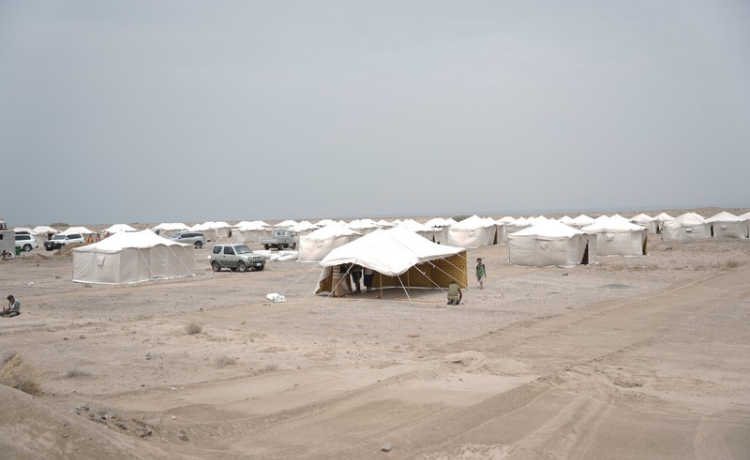
In Ta’iz Governorate, Yemen, the ongoing conflict has dramatically escalated, leading to severe humanitarian challenges. Aziza Marzouk, a mother of four, recounts a terrifying experience of fleeing from Al Mokha as bombs and drones rained down around her family. “We saw bombs and drones falling near us – we were terrified. We couldn’t sleep, and we couldn’t stay inside the house,” she said.
The region has seen more than 145,000 individuals displaced since September 3rd, with many families enduring multiple displacements as vital transportation routes have become either restricted or inaccessible. “I took my daughters and went outside looking for a way to escape,” Aziza continued. In her desperate search for safety, she managed to secure a ride in a military pick-up truck, a perilous mode of transport amid ongoing hostilities. “While we were fleeing, the vehicle came under fire. I saw death in front of me,” she expressed, highlighting the mortal dangers faced by families during these chaotic moments.
Impact on Maternal Health
The repercussions of this conflict extend significantly into maternal and reproductive health. The already strained healthcare system experiences overwhelming pressure due to this recent surge in violence. Yemen has one of the highest maternal mortality rates in the Arab region; every day, three women die from preventable pregnancy complications. Currently, around 6.2 million women and girls are without essential protection against gender-based violence.
“I saw death in front of me. I felt there was no way I would survive” – Aziza Marzouk
According to UNFPA, the United Nations Population Fund, nearly 600 of the newly displaced pregnant women are expected to require emergency obstetric care. Notably, 360 women are anticipated to give birth within just two weeks. For many, the journey to safe healthcare has been fraught with peril. Mariam*, a 20-year-old, shared her harrowing experience: “When we were forced to flee, I was already close to giving birth… The pain became too much, and I gave birth on the road.”
Unprecedented Challenges During Childbirth

Mariam explained that, despite being surrounded by fellow women who tried to shield her privacy during delivery, they had no proper shelter or medical assistance. The intense situation worsened when the weather turned, and heavy rain began. Utilizing a curtain for cover, the group faced the harsh elements together. “After my baby was born, we had nowhere to go. That night, we slept beneath a tree and had no food or warm clothes,” Mariam recalled.
“The pain became too much and I gave birth on the road” – Mariam*
The urgent need for humanitarian assistance

The coordination of reproductive health and protection services is critical amidst such a crisis. Saeed Saif, UNFPA’s coordinator for the west coast of Yemen, highlighted the emotional toll on displaced individuals. “Many were crying, overwhelmed by what they had endured and uncertain about what lay ahead.” The displacement sites are severely overcrowded, with continuing threats from nearby bombings contributing to an atmosphere of fear.
Amid these circumstances, UNFPA has organized rapid response teams that aim to provide essential health and protection services, with support from various international donors. They are currently deploying community midwives to help ease the strains on healthcare services in Ta’iz and Al Hudaydah.
Maternity health supplies are being distributed to meet the urgent needs of 120,000 pregnant women over the next six months. For those who have faced gender-based violence, virtual support systems are being implemented, especially in areas where safe spaces are no longer viable due to ongoing hostilities.
“Years of progress in women’s health, safety, dignity, and rights is being eroded before our eyes” – Francesco Galtieri
UNFPA urgently requires $22.7 million to maintain its humanitarian response efforts in Yemen over the next three months, rounding out an overall appeal of $71 million, which is currently only 20% funded. This financial gap continues to widen as the necessities surge, stressing the urgency of immediate action to address the needs of the most vulnerable populations in conflict-affected areas.
*Names changed for privacy and protection.
