


Every year, Bryter conducts an insightful study focusing on women gamers, and 2026 marks the ninth iteration of this survey. This year, they gathered responses from 1,004 women between the ages of 16 and 65 across the US and the UK, ensuring an equal distribution of participants from both countries. All respondents identified as gamers, defined as individuals who engage in gaming on PC or current/previous-generation consoles at least once a month.
❗️According to Newzoo’s findings, in 2024, 72% of women in the online population engaged in gaming, compared to 81% of men. Women account for 45% of all players; however, only 36% of female gamers identify as “gamers.”
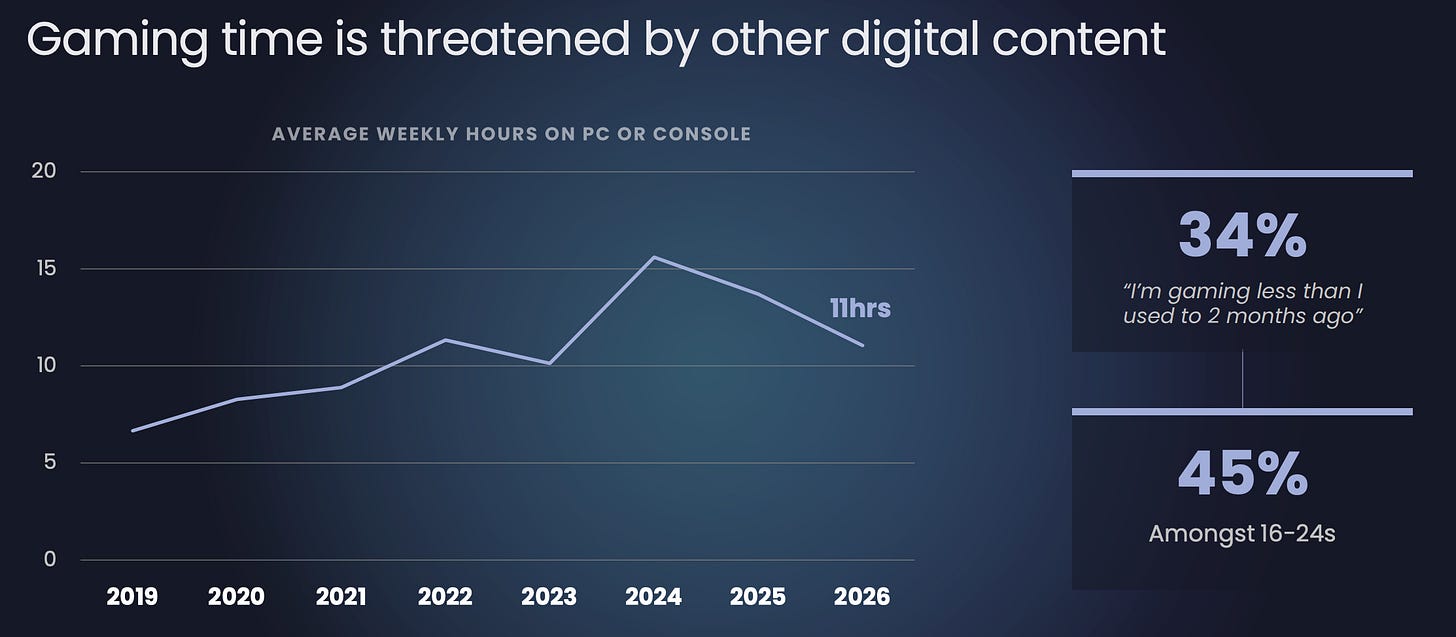
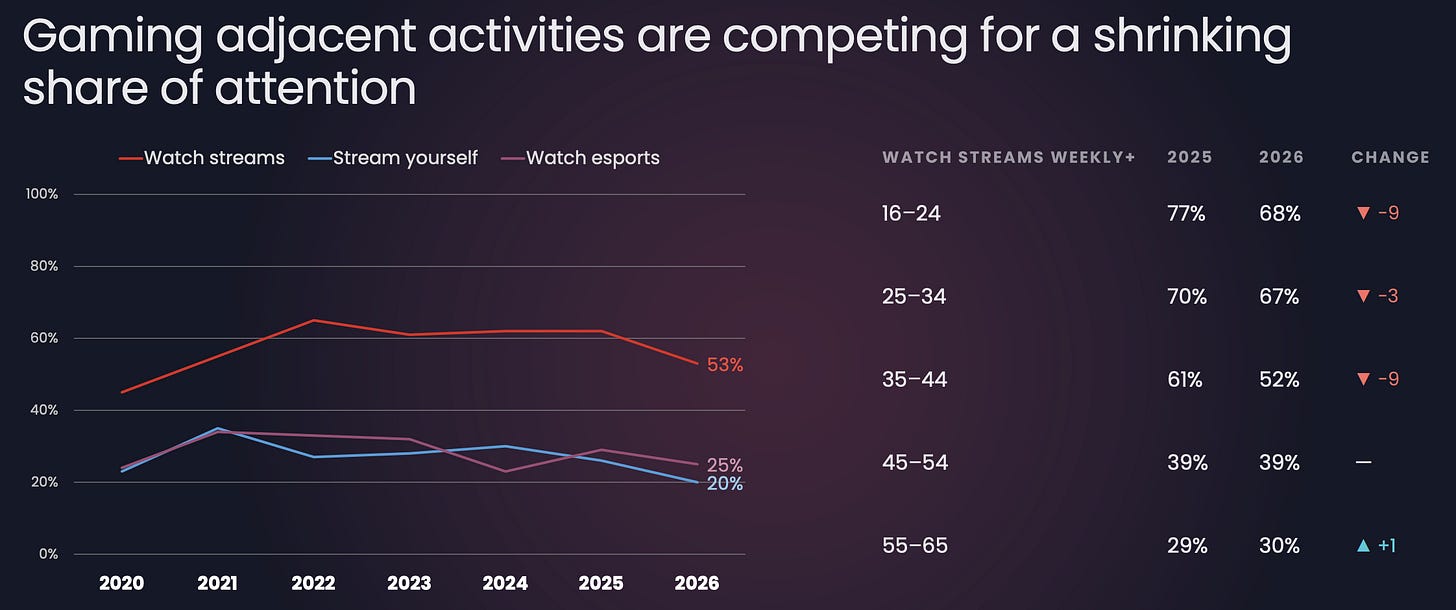
After reaching a peak in 2024, the average time women dedicate to gaming on PCs and consoles has decreased. In 2026, the average weekly gameplay time for women is estimated at 11 hours. Notably, 34% of respondents indicated they play less than they previously did, with this figure rising to 45% among women aged 16-24. Bryter suggests that social media engagement consumes a significant amount of time for younger players, while older demographics tend to shift towards streaming services.

Managing a distributed dev team shouldn’t mean managing a compliance headache. Mellow’s Contractor Management offers ready-made contracts, IP compliance, and automated payouts for contractors in over 150 countries for just $35/month per contractor.
See Contractor Management →
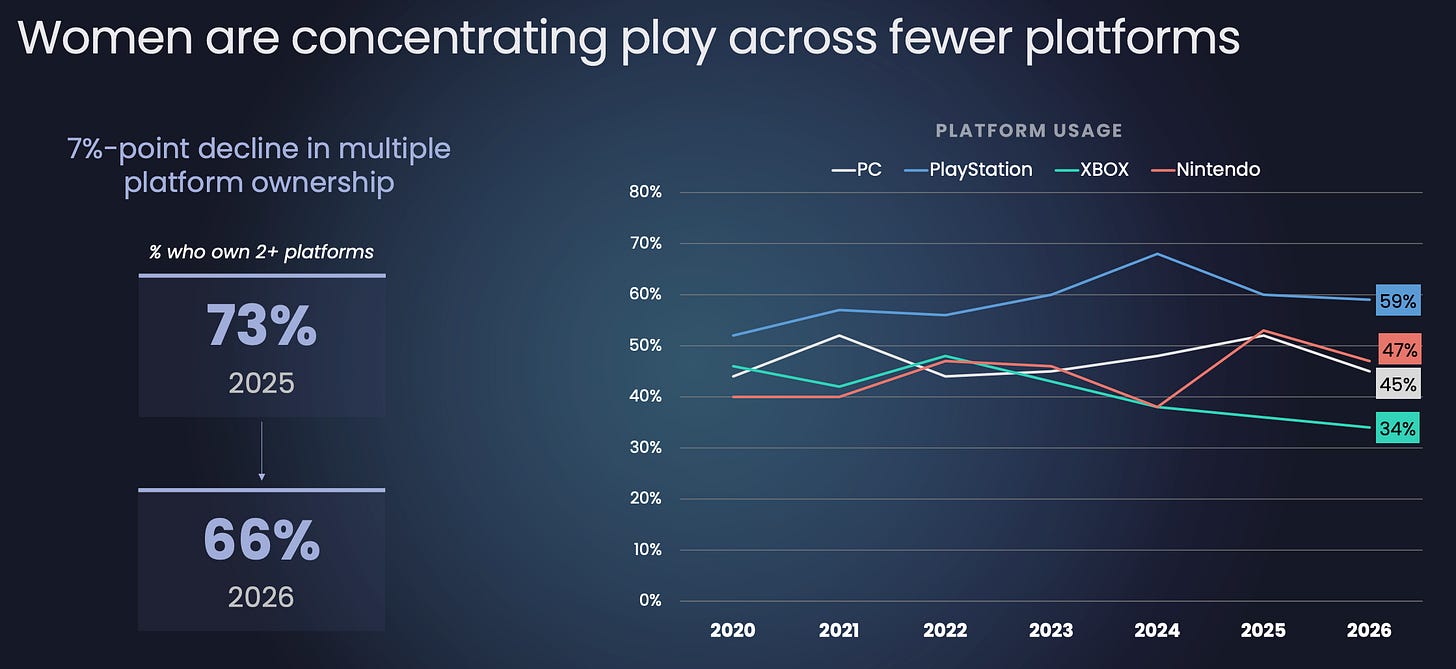
Interestingly, as of 2026, 66% of women report owning two or more gaming platforms, a drop from 73% in the previous year. This trend may correlate with rising console prices. In terms of platform preference, PlayStation leads with 59%, followed closely by Nintendo (47%), PC (45%), and Xbox (34%). All platforms have seen a decrease in audience size, particularly impactful on PC and Nintendo, with Xbox’s popularity steadily decreasing since 2022.
Women typically engage with six different game genres, with Action-Adventure (52%), Life Simulation (44%), and Battle Royale (39%) standing out as the most popular. Growth has been notably seen in genres such as Battle Royale (+14 percentage points), Life Simulation (+12 percentage points), and Sports (+11 percentage points) since 2020. Conversely, interest in Platformers, MMORPGs, and Strategy games has declined among female players.
Regular online gameplay is common, with 69% of women participating in online games weekly. However, this figure has been declining since peaking in 2022. Notably, a shift towards solo gaming is also evident—50% of female gamers report preferring single-player experiences as opposed to 25% who enjoy multiplayer modes. Among those aged 16 to 24, high multiplayer engagement persists, with 78% playing together regularly, despite 45% of them still opting for solo play.
Motivations for gaming also vary by age. Younger women (16-24) prioritize diverse character selections and fast-paced gameplay. In contrast, women aged 25-44 gravitate towards games with rich narratives and avenues for self-expression through customization. For women over 45, the desire for challenging games is paramount, while those aged 55-65 focus on mastering skills and strategic thinking.
When it comes to discovering new games, recommendations from friends are the most influential method across all age groups except for those aged 25-34, who tend to favor gameplay videos. Younger women frequently follow streamers and observe others play, while older women rely on word-of-mouth recommendations and established game franchises.
Engagement with gaming creators is also prevalent—69% of women gamers follow gaming personalities or streamers, appreciating content like game reviews (51%), relaxing gameplay (49%), and live streams (43%). Notably, it’s personality rather than game choice that attracts them, with humor and a calm demeanor being the top reasons for following creators.
Spending behaviors have experienced a downturn, with women’s expenditures on gaming in the UK dropping from £277 in 2024 to £220 in 2026, and in the US from $304 to $250. Particularly, younger women (16-24) have significantly reduced their gaming budgets—30% less in the UK and 40% in the US since 2024. Despite this, the number of premium games purchased annually remains stable at around four.
Mobile gaming remains prominent, with popular genres among women being Puzzle and Match-3 (48%), Arcade (41%), and Quiz and Word games (35%). Women under 30 tend to gravitate towards Arcade and Battle Royale, whereas those over 30 prefer Puzzle, Match-3, Quiz, and Casino games. The average monthly in-app purchase spending stands at £24 in the UK and $32 in the US.
While the gaming community offers much, 51% of women reported experiencing toxicity, although this figure has decreased since 2022 when it peaked at 72%. Online multiplayer gamers report even higher levels of toxicity (62%). Notably, younger women (16-24) reported a staggering 79% having faced toxicity.
Among the various types of toxicity recorded, verbal abuse (38%), gameplay sabotage (31%), and “quizzing” related to gaming experience (30%) were most frequently reported. Alarmingly, sexual harassment (25%) and receiving threats (9%) are also noted concerns within the community.
Despite various reporting options for abuse and discrimination, only 34% of women believe that the gaming industry adequately addresses these issues. Approximately 42% of those who faced toxicity rarely or never reported it, often due to a belief that no action would be taken.
In conclusion, while female gamers are a substantial segment of the gaming community, their experiences and engagement with gaming continue to evolve. There is a clear need for responsive and supportive measures within the gaming industry to enhance their experiences and combat toxicity.
