


US Military Reinforcements Surround Iran Amid Tensions
Published on: 2 Oct 2026
Significant Military Deployment
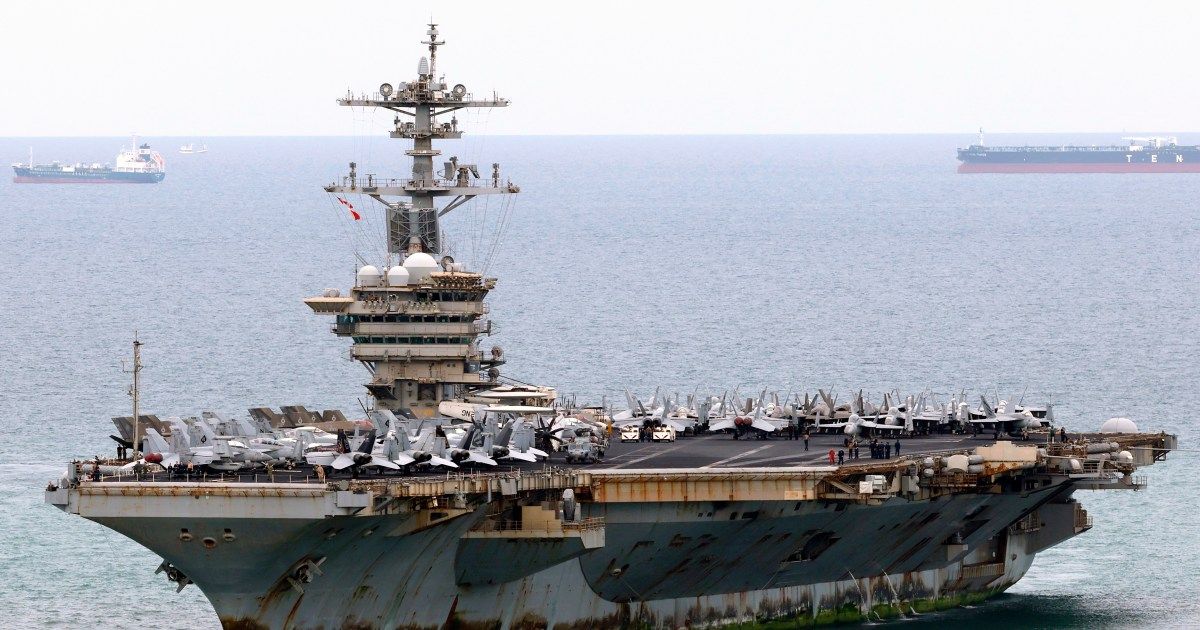
In a strategic response to ongoing tensions in the region, the United States is mobilizing an extensive military presence around Iran, involving the positioning of a third aircraft carrier. This deployment comes as the conflict in the area enters its eighth month.
The USS Theodore Roosevelt carrier strike group has departed from its base in San Diego, with a scheduled arrival in the Middle East. It is joined by the Makin Island Marine Expeditionary Force, which carries over 2,000 Marines.
By the end of November, the US will have stationed three aircraft carriers and two amphibious landing groups near Iran, significantly bolstering its military capabilities in the area.
Strategic Objectives
Military officials suggest that this build-up aims to provide President Donald Trump with a broader array of options should he choose to escalate military action. Current figures indicate that approximately 50,000 US service members are already present in the region.
According to Al Jazeera correspondent Tanya Noury, the new deployments will include advanced air power with F-35 fighter jets among other assets, ensuring that military responses remain viable regardless of ongoing diplomatic discussions.
Defense Secretary Pete Hegseth has stated that US forces are prepared to act should the president issue a new order for strikes.
Diplomatic Context and Responses
In parallel to these military movements, the United States is intensifying economic sanctions against Iran, recently targeting the country’s rail and automotive sectors. The goal of these actions, as stated by the Treasury Department, is to further diminish Tehran’s financial resources.
On the diplomatic front, Iran has proposed a seven-day roadmap through Qatar, which seeks to reopen the strategically vital Strait of Hormuz and resume negotiations on nuclear discussions. In exchange, Iran is asking for the US to end its naval blockade and relieve sanctions.
This proposal was promptly dismissed by President Trump, who emphasized the non-negotiable nature of existing sanctions, referring to them as globally instituted rather than purely American measures. He cited the existence of multiple UN Security Council resolutions against Iran’s nuclear ambitions.
Iran’s Position
Tehran’s response remains complex and multifaceted. Foreign Minister Abbas Araghchi conveyed that Iran is ready to continue military engagements if necessary but also expressed a desire for peace during statements made on social media.
Analysts interpret these mixed messages as strategic maneuvering, suggesting that both sides are testing the waters to see who will make the first concession in the ongoing conflict.
Public Sentiment and Political Impact
Recent polling indicates that approximately 70 percent of the American public view the ongoing conflict as unwarranted. Despite declining approval ratings, President Trump has dismissed critiques of his leadership, labeling pollsters as corrupt.
As the midterm elections approach, the political ramifications of any military escalations or concessions remain a prominent concern for the administration.
