


U.S. Labor Market Weakens in September, Impacting Federal Reserve Policy
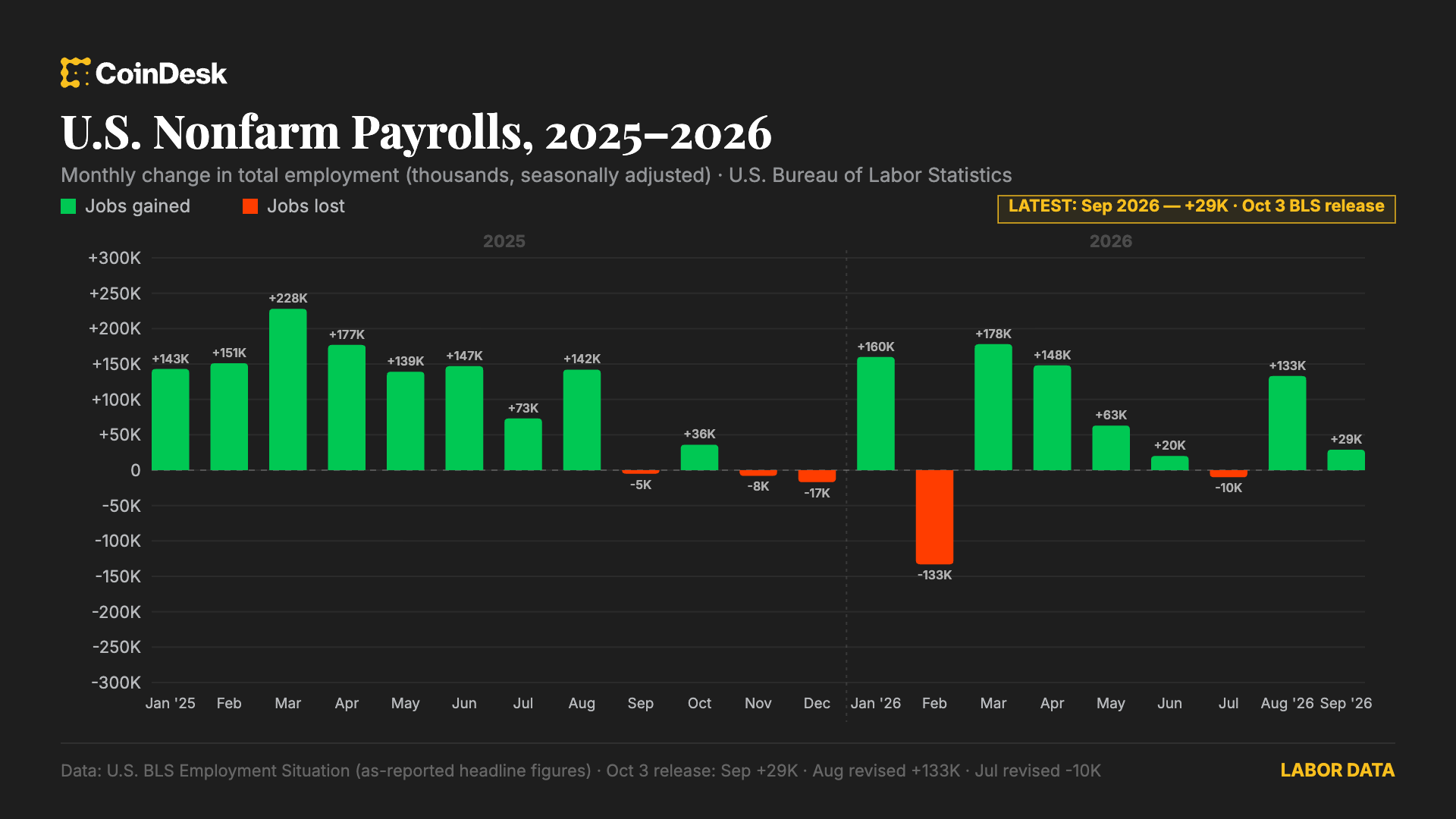
In a sign of potential economic cooling, the U.S. labor market demonstrated notable weaknesses in September 2023. The latest Nonfarm Payrolls Report released on Friday indicated that the country added only 29,000 jobs during the month, falling short of analysts’ expectations of 90,000 job gains. This figure is also significantly lower than August’s adjusted total, which was revised down to 133,000 from an initial 162,000.
Unemployment Rate Trends
The unemployment rate experienced a slight increase, climbing to 4.2%. This rise contrasts with the anticipated rate of 4.1% and matches August’s unemployment figure. Compounding the situation, July’s employment numbers were also adjusted, revealing a loss of 10,000 jobs instead of the previously reported gain of 21,000.
Market Reactions
Following the release of these labor statistics, financial markets reacted accordingly. Bitcoin maintained its position just under $87,000, while U.S. stock index futures saw modest gains, with the Nasdaq up by 1.2%. In the bond markets, the yield on 10-year Treasury notes dropped by 7 basis points to 5.17%, mirrored by a similar decline in the 2-year yield to 4.71%. Additionally, gold prices increased by over 1%, and the U.S. dollar weakened against other major currencies.
Wage Growth Observations
Average hourly earnings reported only a 0.1% increase in September, which was significantly below the forecast of 0.3%. Comparatively, August’s growth also stood at 0.3%. Year-on-year, average hourly earnings rose by 3%, slightly trailing the projected 3.2% and just surpassing August’s 3.1% figure.
Implications for Federal Reserve Policy
The data from September may provide the Federal Reserve with leeway regarding interest rate policies, particularly as inflation persists at elevated levels. The combination of weak job growth and rising unemployment could influence the central bank’s upcoming decisions, particularly as it navigates balancing inflation targets with economic stability.
The overall labor report underscores a cautionary stance for the U.S. economy as it progresses further into the fourth quarter of 2023, challenging policymakers to adapt to changing employment conditions.
