

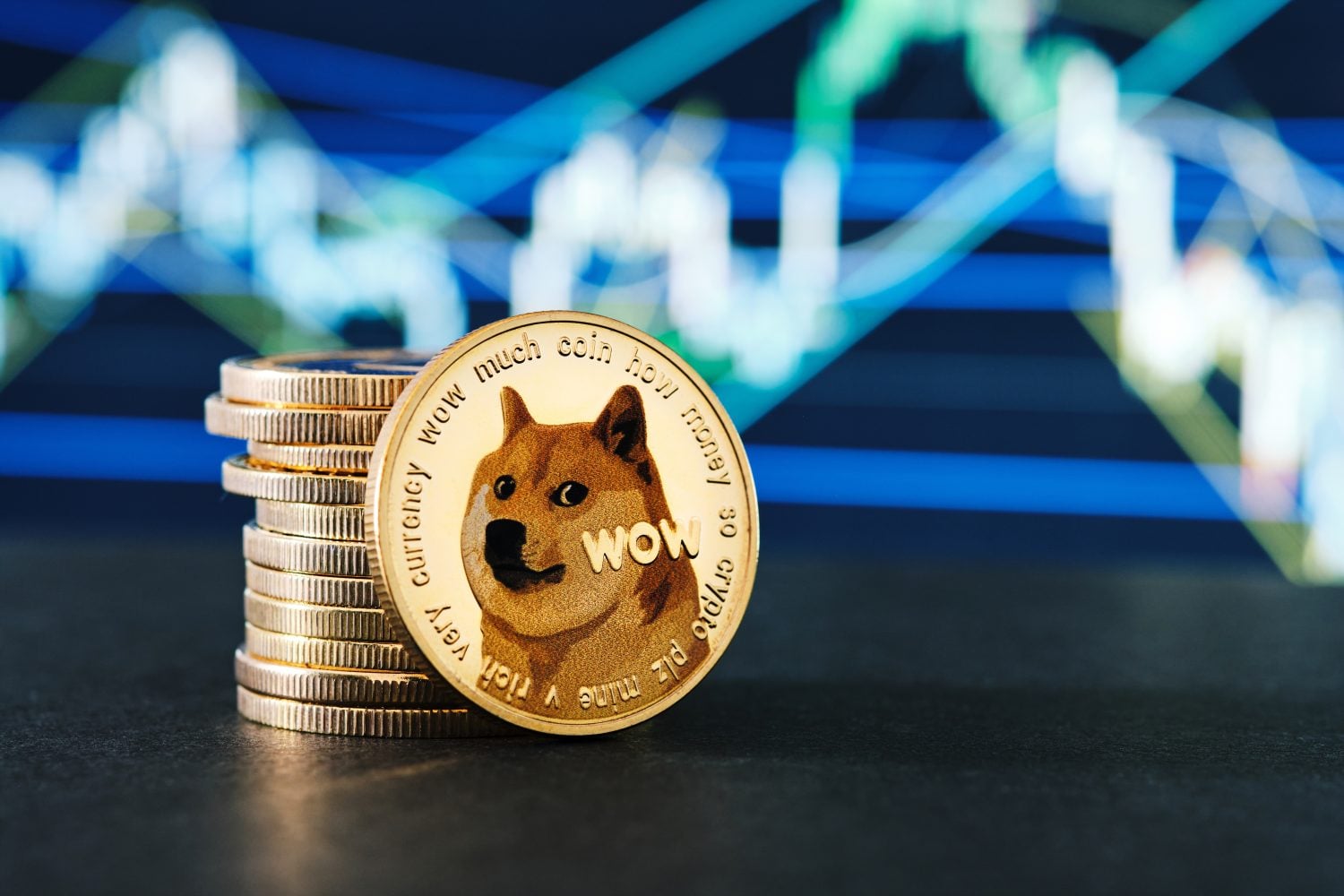
Dogecoin vs. XRP: A Comparative Outlook for 2026
As the cryptocurrency market continues to evolve, both Dogecoin (CRYPTO:DOGE) and XRP (CRYPTO:XRP) have experienced notable declines this year, dropping approximately 17%. However, when examining their performances over the past 12 months, the trajectory of each coin reveals stark differences:
- Dogecoin has plummeted by roughly 59%, trading around $0.093.
- XRP has seen a 47% drop, currently priced at about $1.50.
Given these disparities, a critical question arises: which cryptocurrency is poised for a more favorable recovery in the coming months?
XRP’s Performance: Overall Growth Trajectory
When analyzing both cryptocurrencies over different time frames, XRP shows a clear upper hand. Notably, XRP’s price has increased by 46% over the past 90 days, whereas Dogecoin has risen by 34%. Despite a slight recent uptick of about 13% for Dogecoin compared to XRP’s 8%, long-term data reflects a more robust performance from XRP.
Furthermore, XRP has experienced a lesser annual decline of 12 percentage points compared to Dogecoin. Looking at historical price peaks, Dogecoin’s current value stands at around 87% below its all-time high of $0.74 from May 2021. Conversely, XRP is down about 59% from its peak of $3.65 in July 2025, suggesting different recovery thresholds with XRP needing to potentially increase 2.4 times, while Dogecoin would need an elevenfold increase to reach $1.
Market Capitalization and Investor Trends
Market capitalization provides insight into investor sentiment and potential future growth. Currently, XRP’s market cap is estimated at approximately $95 billion, significantly outpacing Dogecoin’s $15 billion market cap. This disparity comes despite the fact that XRP has only about 62.9 billion coins in circulation compared to Dogecoin’s 156 billion.
Investment trends further highlight the divergence between the two. As of September 25, spot XRP ETFs had attracted approximately $1.77 billion, showcasing a strong investor interest, whereas Dogecoin ETFs garnered only $2.89 million that week, totaling around $15.5 million overall. These figures illustrate that XRP enjoys a significantly stronger investment backing than Dogecoin.
Supply Dynamics: The Case for Stability
Another vital aspect influencing the future of these cryptocurrencies is their supply dynamics. Dogecoin continuously generates approximately 5.3 billion new coins annually since it lacks a cap on total supply. This perpetual increase in supply necessitates a consistent demand just to maintain its price level.
In contrast, XRP also sees an increase in supply but with built-in structural limits; Ripple releases up to 1 billion XRP from its escrow each month, with most being re-locked. With a maximum supply of 100 billion coins, XRP has about 37 billion coins yet to be released, contributing to a more stable long-term outlook.
Future Outlook: Prospects for 2026
Taking into account both market performance and structural factors, XRP appears to be in a more advantageous position heading into the latter part of 2026. Its stronger historical performance, increased ETF investment, and limited supply provide a compelling narrative for its growth potential. On the other hand, while Dogecoin’s recent momentum might attract short-term traders, its ongoing supply increase poses challenges for sustaining higher price levels over time.
In summary, while both cryptocurrencies face their own sets of challenges and advantages, XRP currently outperforms Dogecoin concerning long-term growth sustainability and market dynamics. However, a rebound for Dogecoin above $0.10 or a short-term surge in its ETFs could alter the competitive landscape, especially if XRP begins to subside below $1.40.
For inquiries or corrections, please contact [email protected].
