


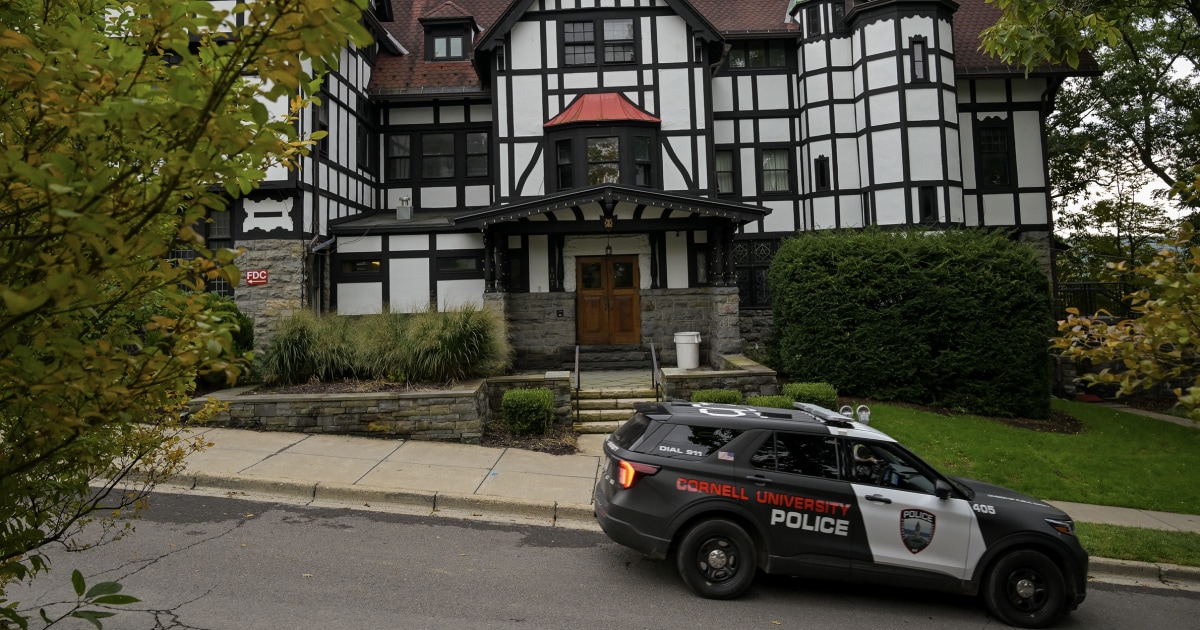
Cornell University Fraternity Investigation: Key Developments
In the wake of an alleged gang rape case involving a Cornell University student at the Chi Phi fraternity house, a deeper examination of the investigation’s handling has emerged. The case, which has attracted significant attention, raises important questions about how allegations of sexual assault are processed by law enforcement and legal authorities.
Incident Overview
The alleged incident reportedly took place over the night of October 19-20, 2024, when Jane Doe, a 20-year-old woman, claimed she was sexually assaulted while under the influence of alcohol, marijuana, and ketamine. According to police records revealed by NBC News, the Cornell University Police Department (CUPD) collected evidence and spoke with witnesses shortly after the allegation was made.
Initial Findings and Prosecutorial Decisions
District Attorney Matthew Van Houten indicated that his decision not to press charges stemmed from Jane Doe’s original six-page statement to the police. Van Houten stated that his office did not find sufficient evidence to warrant legal action based solely on this statement. Moreover, Van Houten mentioned that officials at his office had discussed the case and collectively agreed that there were no grounds for criminal charges.
Controversy Over Investigation Handling
Criticism has arisen regarding the overall handling of the investigation. Jane Doe’s legal representative has expressed discontent, arguing that the authorities failed to conduct a comprehensive inquiry and prematurely dismissed the case based on incomplete information. “In what world does the district attorney not even interview her or anyone else involved, or even request the full transcript?” questioned Governor Kathy Hochul, referencing the troubling lack of follow-up interviews.
Moreover, documents indicate that while the police documented interviews of potential witnesses, the prosecuting office may not have fully considered their statements before concluding the investigation. An investigator from Van Houten’s office reportedly remarked that the fraternity members opted not to speak to police on the advice of their attorneys, which had an impact on the information available for review.
New Developments
In response to the growing scrutiny over the investigation’s management, Governor Hochul designated Attorney General Letitia James as a special prosecutor to evaluate whether charges would be appropriate, signaling a shift in the judicial approach to the case.
Evidence and Communications
As part of the investigation, police attempted to access data from Snapchat that may provide additional context regarding the events of that night. However, initial findings revealed only three relevant pieces of content, which did not provide evidence of criminal activity. Critically, Jane Doe was not informed about the prosecutor’s decision until nearly two months after it was made, a timeframe during which she believed the investigation was ongoing, according to her attorney Thomas Giuffra.
Conclusion
The allegations involving Jane Doe highlight the complexities and challenges faced in cases of sexual violence. As new inquiries begin, the situation continues to unfold, prompting discussions about the accountability of both law enforcement and educational institutions in addressing such serious claims.
If you or someone you know has been sexually assaulted, support is available. Contact the National Sexual Assault Hotline at 1-800-656-4673 or visit RAINN’s online chat service for immediate assistance.
