


Political Landscape Ahead of the 2026 Midterm Elections
Washington, DC – As the United States gears up for the midterm elections on November 3, a narrative is emerging suggesting that Democrats are gaining momentum while Republicans are striving to bolster defenses amid financial challenges.
Current State of the Race
With the balance of power in both the U.S. House of Representatives and the Senate at stake, Democrats are entering October with optimistic prospects, as an increasing number of congressional races are considered competitive. Conversely, the Republican Party finds itself engaged in damage control, injecting substantial funds into previously secure contests while focusing on critical matchups.
Presidential Approval Ratings and Voter Concerns
President Donald Trump is facing significant headwinds, marked by low approval ratings—currently at just 31%. This figure represents the lowest approval rating experienced during either of his terms. Regarding economic performance, only 26% of respondents approved of Trump’s handling, a dip below former President Joe Biden’s lowest rating on the same issue.
Polls indicate that economic concerns dominate voter priorities, particularly exacerbated by rising gas prices related to the ongoing US-Israel conflict. Additionally, immigration and corruption remain pressing issues for many voters.
Henry Olsen, a senior fellow at the Ethics and Public Policy Center, highlighted a growing disappointment among the electorate regarding Trump’s fulfillment of key promises, stating, “Americans are disappointed, bordering on angry that President Trump hasn’t delivered on the core promises he made when he won re-election.”
The House of Representatives: A Shifting Landscape
Political analysts have increasingly predicted that Democrats could gain control of the House of Representatives this November. Such a victory would allow the party to exercise legislative power, enabling oversight and investigations into the Trump administration, particularly regarding his family business dealings.
Recent assessments by the Cook Political Report and the University of Virginia’s Sabato’s Crystal Ball have indicated an increased likelihood of Democratic success. Specifically, the Cook Political Report has shifted the projections for 15 House races, identifying multiple previously competitive districts as leaning Democratic.
Notably, in the Texas district represented by Republican Monica De La Cruz—once seen as secure—a recent analysis now rates her challenge against Democrat Bobby Pulido as a “toss-up.” Overall, predictions suggest that Democrats could secure between 5 to 15 additional House seats.
The Senate: A Battleground
As the election date approaches, competition is intensifying in Senate races, creating more excitement than in House contests, according to Kyle Kondik of Sabato’s Crystal Ball. Traditionally viewed as a long shot, the prospect for Democrats to gain control of the Senate—requiring a net gain of four seats—now appears more attainable.
With only 35 senate seats up for election this cycle, the road to a Democratic majority is narrower compared to the House. Kondik observed that “the trajectory of the polling since Labor Day has generally been that a bad Republican environment is just getting worse,” making the Senate landscape increasingly competitive.
In North Carolina, former Democratic Governor Roy Cooper is projected to outperform Republican candidate Michael Whatley. Similar leads for Democrats have been observed in contests across Texas, Ohio, and Alaska.
Financial Resources in the Race
This election cycle is on track to be one of the most financially intensive midterms in U.S. history, with expenditures surpassing $4 billion as of mid-September. Republicans outpaced Democrats in fundraising at the start of September, with the Republican National Committee holding $125.6 million compared to the Democratic National Committee’s $16.9 million in cash and considerable debt.
According to AdImpact, between mid-September and Election Day, Republicans are expected to spend $888 million on advertisements, while Democrats would allocate around $666 million. Notably, Republican ad spending is projected to eclipse Democratic efforts by significant margins in critical states.
Trump has signaled his intent to mobilize resources, committing to spend an estimated $400 million to $500 million through his Super PAC, though only a fraction has thus far supported candidates like Ken Paxton in Texas.
The Influence of Trump
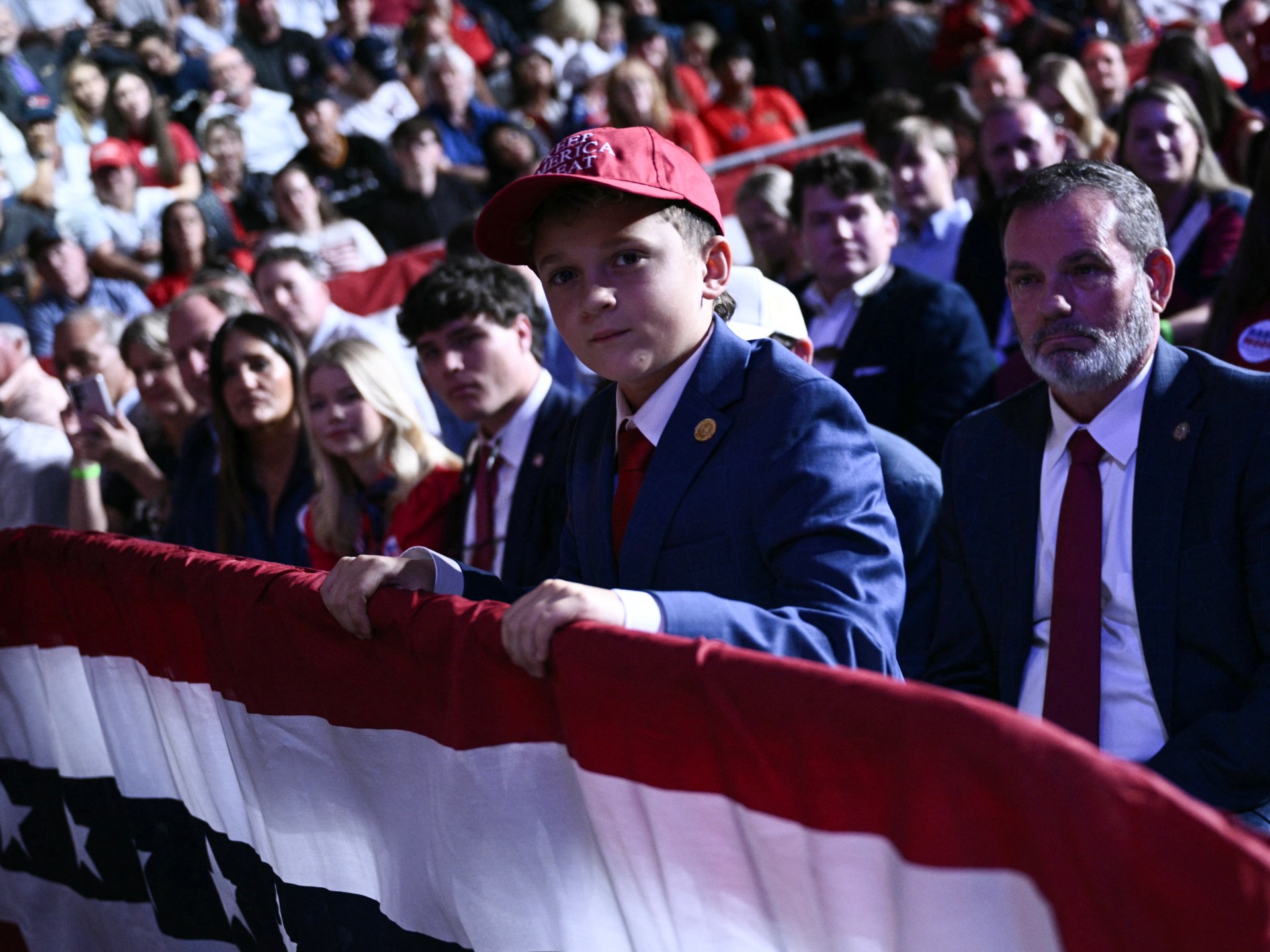
Trump’s campaigning strategy centers on energizing his base, urging supporters to “vote like I’m on the ballot.” However, analysts caution that this approach may not address the critical need for Republican candidates to sway undecided voters.
Polling data indicates that independent voters lean heavily toward Democrats, with a recent survey showing 57% favoring Democratic candidates compared to just 32% supporting Republicans. This reality has left some Republican candidates in a quandary, contemplating whether to distance themselves from Trump on contentious issues.
Lee Miringoff of the Marist University Institute for Public Opinion explained that some Republicans are starting to prioritize self-preservation in response to unfavorable poll numbers, noting, “some Republicans are starting to have self-preservation kick in because they’re concerned.”
Looking Ahead: Potential for Change
As the election date approaches, Republicans face a formidable challenge in shifting public opinion. Key issues remain unchanged, with Trump suggesting further escalation regarding international tensions, potentially impacting voter turnout.
While some Democratic candidates have struggled to articulate a clear vision beyond opposition to Trump, analysts believe there’s still room for significant shifts in public sentiment. Olsen cautioned that while Republicans have resources to influence close races, their success would require a substantial transformation in the political landscape.
