


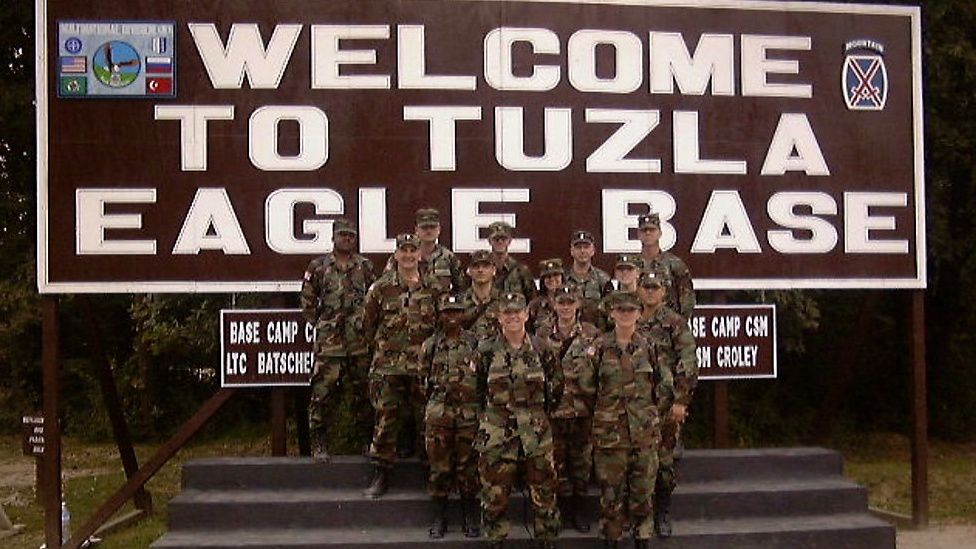
The participation of women in the military has a rich history, often relegated to non-combat roles despite their ability to take on much more challenging responsibilities. With the lifting of combat restrictions in 2013, women continue to break barriers and challenge longstanding stereotypes.
“Serving our country, it’s just always been something that’s fascinated me,” remarked Janice Gravely, who viewed a military career as a lifelong ambition.
Gravely reflected on her experience, emphasizing the allure of testing one’s limits. After completing a basic training course in nuclear explosion subversion, she was assigned to Alaska at a time when women were not permitted in combat zones.
During her time there, a division chemical officer posed a striking question: “Why did they send you here, lieutenant? We have no jobs for female officers in Alaska. It’s a combat area.” Despite this initial setback, Gravely advocated for herself and became a communications officer, navigating the complexities of her role.
She recalled, “We have a driver, and I’m on the other side and fully locked and loaded, chamber in the round, ready to deal with anything that comes our way.” This role allowed her to showcase her capabilities, and her leadership style earned her respect among her peers. “One of my soldiers said, ‘ma’am, don’t take this the wrong way, but you’re more man than I’ll ever be,’” she shared humorously.
Gravely served at Fort Drum with the 10th Mountain Division, working alongside notable figures, including retired four-star General Ann Dunwoody, whom she described as an exemplary leader.
While Gravely’s service included deployments to Bosnia and Iraq, she never held a formal combat officer title. Nevertheless, she contributed to the evolving narrative surrounding women in the military and witnessed significant changes post-retirement. In 2016, women were officially allowed to serve in combat roles.
“It’s so refreshing now to see our females being able to go to Ranger school and become infantry officers if they want,” Gravely observed. However, she stressed that while earning a spot should be meritocratic, the journey towards equality in the military has not yet been fully realized.
“If you want it, go for it. Know what the rules are, play by the rules, and then the men need to let the system work right,” Gravely stated, addressing the importance of equal opportunities in both combat roles and leadership.
Despite her optimism, she pointed out the stark reality of leadership representation, noting that only 10 women have achieved the rank of four-star general, and there are currently none serving in that capacity. “There are women that if you look at their record, they outshine those men 100-fold over,” she asserted, underscoring the need for a more equitable selection process.
Gravely concluded with a vision for the future, highlighting the military’s role in developing leaders and expressing hope that systemic improvements will continue.
