


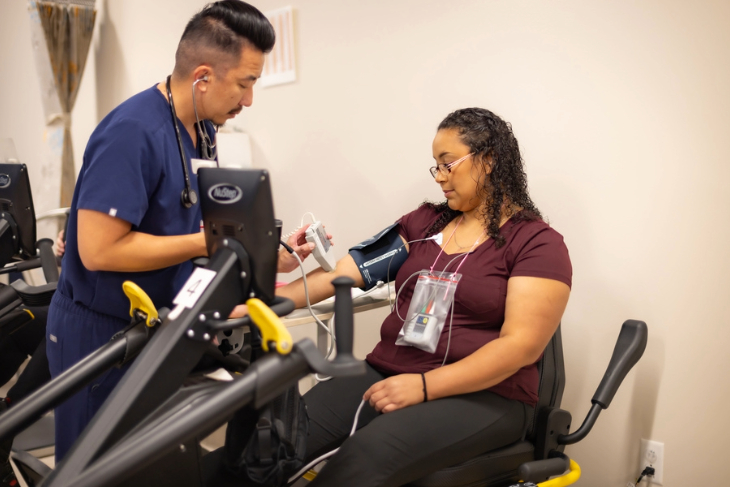
SACRAMENTO – At 31 years old, Christina Guajaca faced severe health challenges that significantly impacted her daily life. Tiredness and debilitating swelling in her legs made it impossible to wear shoes and left her struggling to walk short distances.
“I felt like I had cement in my lungs,” Guajaca recalled, a sentiment that encapsulated her struggle to breathe. After visiting the emergency department, she received a diagnosis: congestive heart failure. This critical condition prevents the heart from effectively pumping blood to meet the body’s demands. Her heart’s ejection fraction—a vital measure of its pumping capacity—was alarmingly low at 13%, compared to the normal range of 50% to 70%.
In the year following her diagnosis, Guajaca found herself frequenting various emergency rooms in Sacramento, often twice a month. Though treated with intravenous diuretics to alleviate fluid accumulation, the short-lived relief was not a sustainable solution. “I thought it was an easy fix,” she mentioned, noting the discouraging reality that each episode could weaken her heart further.
Her life took a positive turn when Guajaca sought help at the UC Davis Health Department of Emergency Medicine. There, she encountered a medical team that not only addressed her symptoms but also instilled hope for her recovery. “Before that, I didn’t think there was any hope,” she said, highlighting the transformative reassurance she received from her doctors.
She was subsequently referred to the UC Davis Comprehensive Heart Failure Program, where a dedicated team worked to modify her treatment plan. This comprehensive approach involved addressing various health factors affecting her condition, as well as ensuring her voice was heard throughout the process. “I was able to speak up for myself without feeling judged,” Guajaca remarked, emphasizing the trust built between her and her treatment team.
Now at 34, Guajaca’s situation has dramatically improved. With the installation of a left ventricular assist device (LVAD), she no longer lives under the constant threat of fluid retention. Engaging in cardiac rehabilitation sessions, she is focused on regaining her strength and improving her overall health. Although a heart transplant remains a possibility in her future, she is grateful for the support that has allowed her to reclaim everyday activities that were once inaccessible.
Focusing on Women’s Heart Health at the Heart Failure Summit
Guajaca’s journey underscores the importance of a coordinated care team in managing heart failure. The Comprehensive Heart Failure Program at UC Davis Health exemplifies this patient-centered approach, engaging specialists from cardiology, advanced heart failure, transplant medicine, nursing, pharmacy, rehabilitation, and supportive care to deliver tailored treatment plans.
By integrating advanced therapies, innovative techniques, and coordinated care across both inpatient and outpatient settings, UC Davis aims to enhance patient outcomes and overall quality of life.
As part of its ongoing commitment to improving heart failure treatment, UC Davis Health hosts the annual Heart Failure Summit—a platform where medical experts share research and quality improvement insights aimed at advancing cardiovascular care.
This year, the summit will spotlight women’s heart health, showcasing stories like Guajaca’s that highlight the necessity for early detection, specialized treatment, and sustained support for women battling heart disease. “Improving cardiovascular outcomes for women requires a life-course approach, one that begins with prevention and continues through the treatment of heart failure and advanced cardiovascular disease later in life,” explained Imo Ebong, professor of clinical internal medicine at UC Davis Health and Guajaca’s advanced heart failure cardiologist.
This initiative aligns with statewide efforts in California to reduce maternal mortality and enhance the health of women and families across the region.
Diana Ramos, California’s surgeon general and the keynote speaker for this year’s summit, leads the Strong Start & Beyond initiative, which focuses on addressing preventable maternal morbidity and mortality to foster healthier beginnings for California families.
Registration for the Heart Failure Summit is now open, providing a valuable opportunity for stakeholders to engage in meaningful discussions that foster collaboration and advance cardiovascular care for patients statewide, including individuals like Guajaca.
