


In a landmark development, the FDA conducted its inaugural public workshop focused on testosterone therapy for menopausal women in September 2026. The workshop aimed to address potential benefits and safety measures associated with testosterone use in women, alongside discussing the need for standardized treatment protocols.
Currently, testosterone is not approved by the FDA for use in women, yet prescriptions have significantly increased. Between 2016 and 2025, the rate of testosterone prescribed to women has nearly tripled.
Experts present at the workshop recognized that the strongest evidence for testosterone application in women is related to the treatment of hypoactive sexual desire disorder (HSDD). They acknowledged that further research is necessary to understand the hormone’s impact on energy levels, mood, memory, and muscle health.
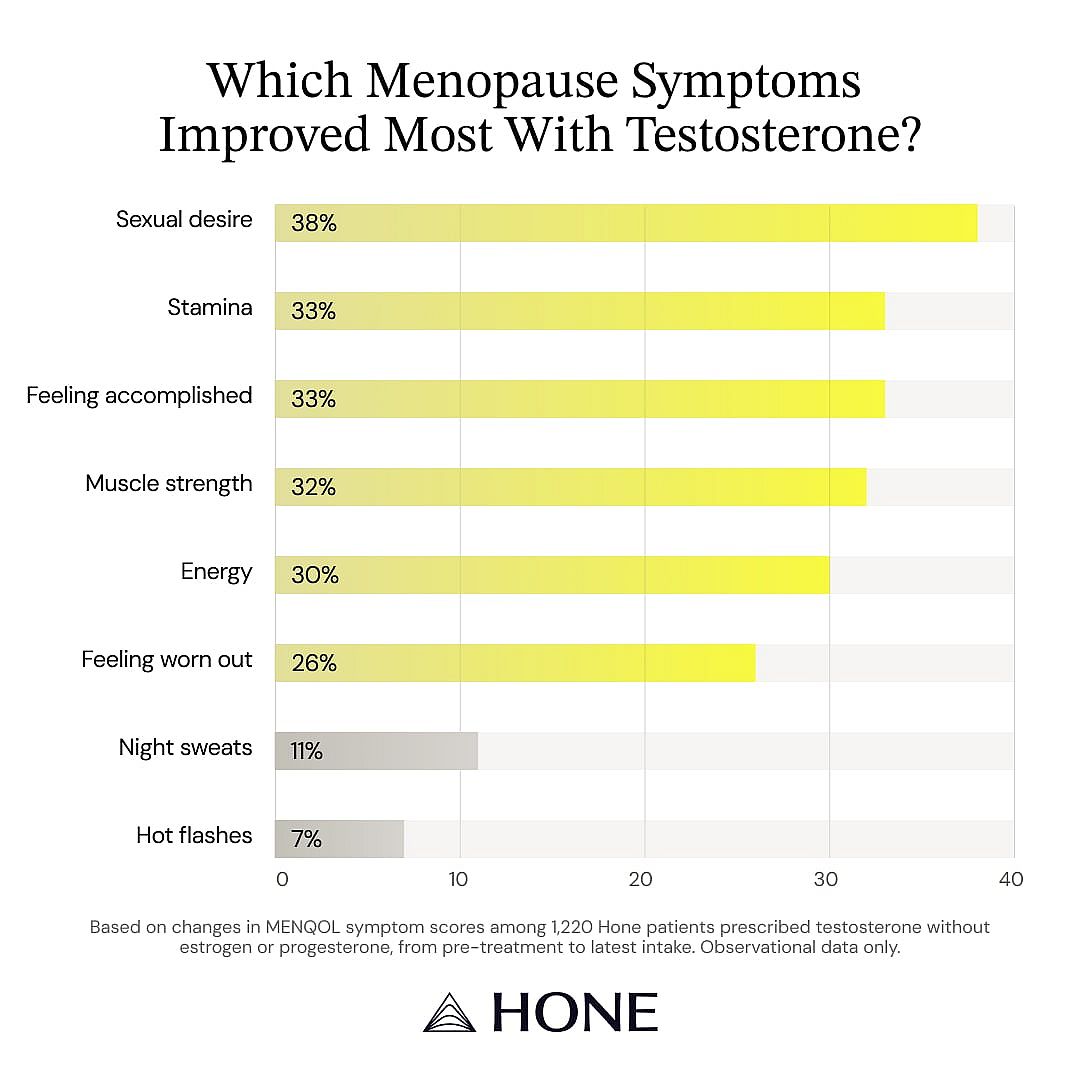
An analysis conducted by Hone Health involving over 1,220 women undergoing perimenopause or menopause revealed that those treated with testosterone experienced notable enhancements across 18 menopause-related symptoms. Key areas of improvement were identified as sexual desire, energy levels, physical strength, and overall stamina.
The study utilized a standard symptom-tracking questionnaire frequently employed by healthcare professionals to evaluate how menopause affects daily living. Among the key findings, improvements in sexual health, metabolic energy, and physical abilities like muscle mass predominated.
These findings indicate a potentially significant role for testosterone in enhancing energy, sexual desire, and vitality among menopausal women.
Dr. Natalie Kunsman, MD, a family physician affiliated with Hone Health and a specialist in hormone health, expressed that while tracking specific menopause symptoms is useful, it still only provides a limited view of the hormone’s overall influence. “Tracking specific symptoms is like looking through a keyhole when we know testosterone is working the whole room,” she noted.
Expanded Benefits of Testosterone in Women
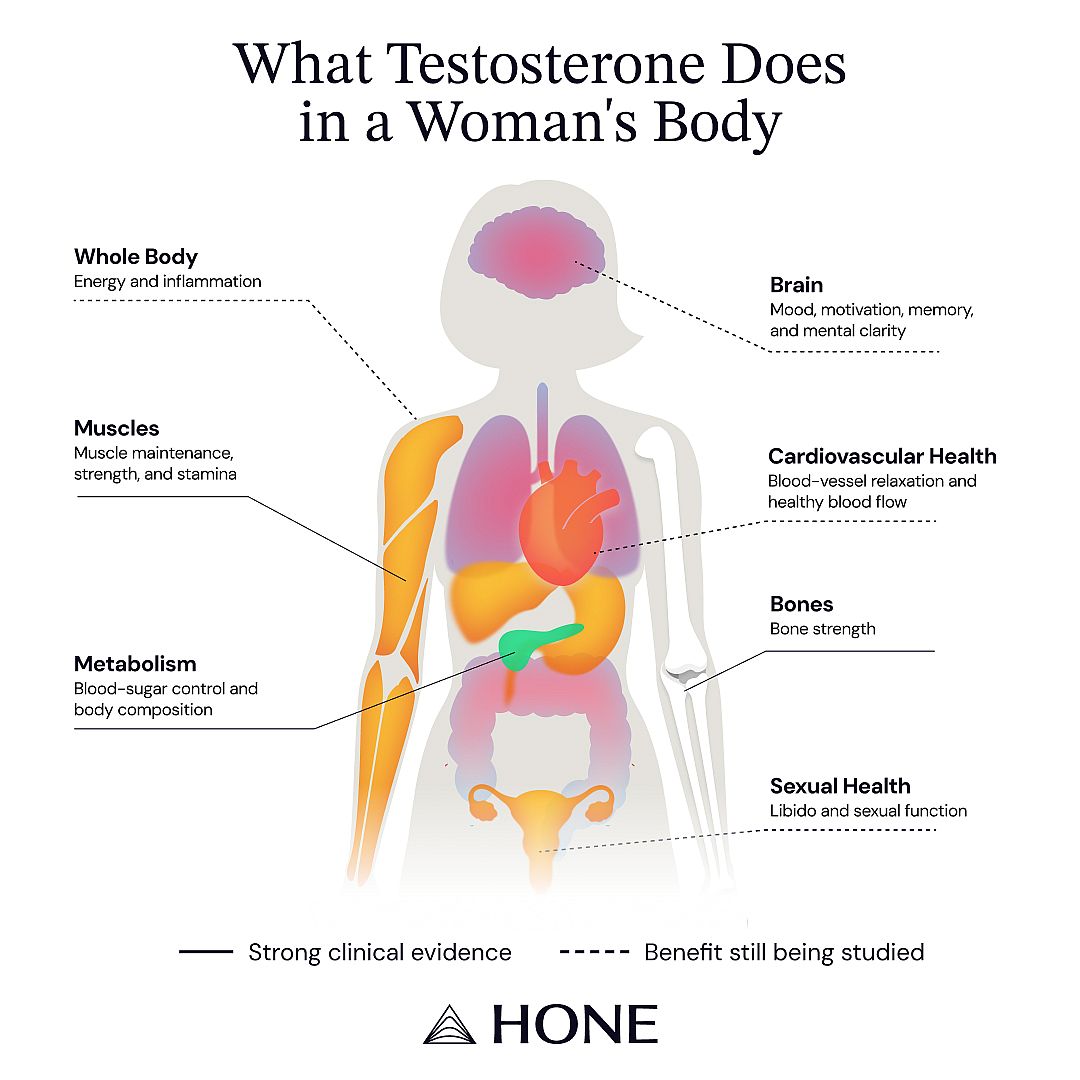
According to doctors affiliated with Hone Health, the advantages of testosterone therapy may reach beyond improvements in sexual health. This notion is supported by the presence of testosterone receptors throughout the female body, impacting various systems including the brain, muscles, bones, and cardiovascular structures. Notably, women’s testosterone levels decline with age, although this decrease is not as closely linked to menopause as the reductions in estrogen and progesterone.
Kunsman highlights several positive aspects associated with testosterone treatment:
- Muscle Maintenance: Aging women face a reduction in lean muscle mass, increasing the risk of frailty and metabolic disorders. Testosterone optimization can aid in preserving this vital muscle mass.
- Metabolic Health: Testosterone is crucial for weight regulation and blood sugar management. In menopausal women, low testosterone may contribute to the accumulation of body fat. It is suggested that optimal hormone levels could mitigate the effects of medications that promote weight loss but can also lead to muscle degradation.
- Bone Density: The hormone aids in preserving bone strength, an important consideration as women face increased osteoporosis risk during menopause.
- Cognitive Function: Testosterone is implicated in neuroplasticity and mood regulation. In a 2025 pilot study, it was reported that almost half of the participants experienced improvements in mood and cognitive clarity after testosterone treatment.
- Cardiovascular Health: Emerging evidence indicates that testosterone may enhance vascular function and help manage blood pressure levels in women.
- Inflammation Reduction: The hormone has roles in moderating immune responses, potentially lowering chronic inflammation linked to excess body fat.
Given these benefits, Kunsman argues for the inclusion of testosterone in hormone replacement therapy discussions, alongside estrogen and progesterone, remarking, “Just because we don’t have testicles doesn’t mean we don’t need testosterone.” The goal should be to achieve physiological dosing that aligns with optimal levels suitable for each woman’s age and life circumstances.
Consultation: Key Questions About Testosterone
Women experiencing symptoms such as low sexual desire, fatigue, loss of physical strength, or unwanted weight gain—especially during perimenopause or postmenopause—should engage in conversation with their healthcare provider about testosterone. The following questions may help frame the discussion:
- Am I a suitable candidate for low-dose testosterone therapy?
- Should I undergo blood testing to evaluate my testosterone levels?
- Are you open to prescribing low-dose testosterone, with or without prior blood testing?
- Which form of testosterone do you recommend (cream, patch, or injection) and why?
- What do you consider an optimal testosterone range for my age?
- How will we monitor my hormone levels and adjust the dosage as needed?
- What safety considerations should I be aware of based on my health background?
If a physician is hesitant to prescribe testosterone within the recommended range for women, telehealth platforms also provide physician-guided hormonal assessments and testosterone therapy.
Research Methodology
The insights presented are derived from patient data collected by Hone Health as of September 2026. Outcomes were assessed using the Menopause Quality of Life Questionnaire (MENQOL), a validated tool ranging from 0 to 6, with lower scores indicating fewer bothersome symptoms. Unlike men, women currently lack a standardized questionnaire for assessing testosterone deficiency.
The analysis specifically targeted patients with testosterone prescriptions and no records of estrogen or progesterone treatments. Notably, these findings are observational, lacking a control group, meaning they reflect associations rather than definitive causal relationships. Furthermore, prescription history is specific to Hone services, excluding individuals who may have obtained hormones through other providers.
This article was produced by Hone Health and reviewed and distributed by Stacker.
