

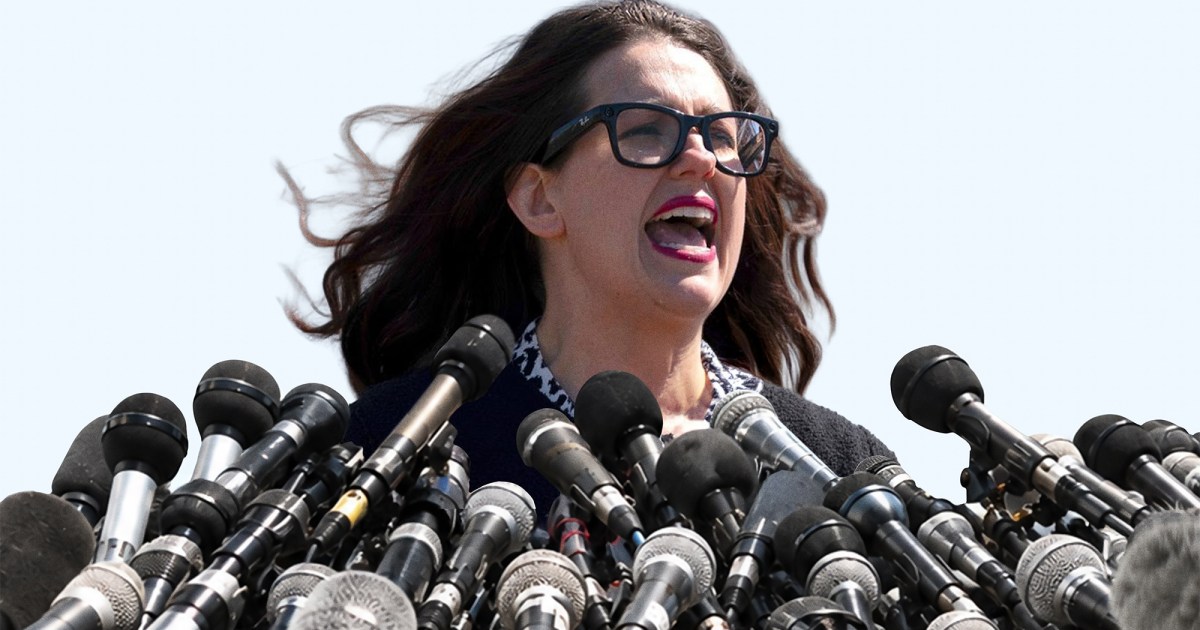
The Polarizing Influence of Kristan Hawkins on the Anti-Abortion Movement: A Detailed Exploration
In the evolving landscape of reproductive rights advocacy, Kristan Hawkins emerges as a significant figure within the anti-abortion movement. This article delves into her strategies, beliefs, and the ongoing debates surrounding abortion access in the Dobbs era.
Profile of Kristan Hawkins
Kristan Hawkins, the president of Students for Life of America, epitomizes the dynamic and often divisive figure within the anti-abortion advocacy. During a recent campus tour, she prominently showcased striking visuals and provocative slogans to garner attention, including the contentious claim that “Abortion is human sacrifice.” Dressed in both a stylish blouse and a bulletproof vest—an added precaution since the tragic death of her colleague Charlie Kirk—Hawkins engages students across the nation, not merely to debate but to capture moments that could fuel viral content.
Campus Debates and Engaging Young Activists
At Texas Tech University, Hawkins invited students to the microphone to participate in her “change my mind” debates, a platform popularized by Kirk. While the aim appears to be dialogue, her strategy often focuses on creating instances of confrontation where students may falter in their arguments, allowing her to extract clips that feed her social media narrative. One poignant exchange involved a young survivor of sexual assault who articulated her belief that women should have the option for abortion in extreme cases. Hawkins responded with a blend of theological and biological arguments, insisting on the innate value of all human life while sidestepping the complexities of trauma.
Hawkins’ Position on Abortion Legislation
Hawkins firmly opposes abortion access for survivors of rape, a position she asserts aligns with her moral convictions. “The circumstances of a human’s conception do not change that human’s value,” she stated emphatically. This perspective raises critical debates about the implications of forcing young rape survivors to carry pregnancies to term, further illuminating the complex ethical landscape within the anti-abortion discourse.
The Impact of the Dobbs Decision
With the June 2022 overturning of Roe v. Wade, Hawkins celebrated what she deemed a “victory” for the anti-abortion movement. Although her organization boasts over 1,700 chapters and has trained numerous activists, the reality of increasing abortion rates through telehealth services and mail-order pills challenges Hawkins and her allies. Despite legislative achievements, they find themselves grappling with an unexpected rise in abortion procedures across various states.
The Shifting Dynamics Within the Movement
Hawkins’ leadership has not gone without scrutiny; a faction within the movement is advocating for more radical approaches, including the criminalization of women who seek abortions. This “abolitionist” segment criticizes Hawkins for what they perceive as a lack of aggressive action against abortion seekers. Amidst verbal and digital confrontations, Hawkins remains determined to engage in dialogues that resonate with younger audiences, endeavoring to reshape perceptions about the anti-abortion ideology.
Challenges and Strategies Ahead
Hawkins recognizes that to make abortion “unthinkable,” cultural change is imperative. Her outreach efforts aim to connect with younger generations who may not align with traditional conservative values. By framing discussions around mental health, community well-being, and the sanctity of life, she seeks to persuade a broader audience without alienating her existing base.
Despite her provocative tactics and the attention they garner, criticisms continue to surface regarding the overall political strategy of the anti-abortion faction. Many advocates are questioning Hawkins’ ability to adapt her message within an environment increasingly receptive to abortion rights, evidenced by statewide measures that enshrine reproductive freedom.
Conclusion
The complexities surrounding Kristan Hawkins and her role in the anti-abortion movement encapsulate the broader challenges faced by advocates in a post-Roe America. As she confronts both ideological adversaries and internal critics, the future of the movement remains uncertain, heavily dictated by cultural inclinations and emerging political realities.
Amy Littlefield is the author of “Killers of Roe: My Investigation Into the Mysterious Death of Abortion Rights” (2026). Further reporting by Anna Yeo and Rachel de Leon.
