

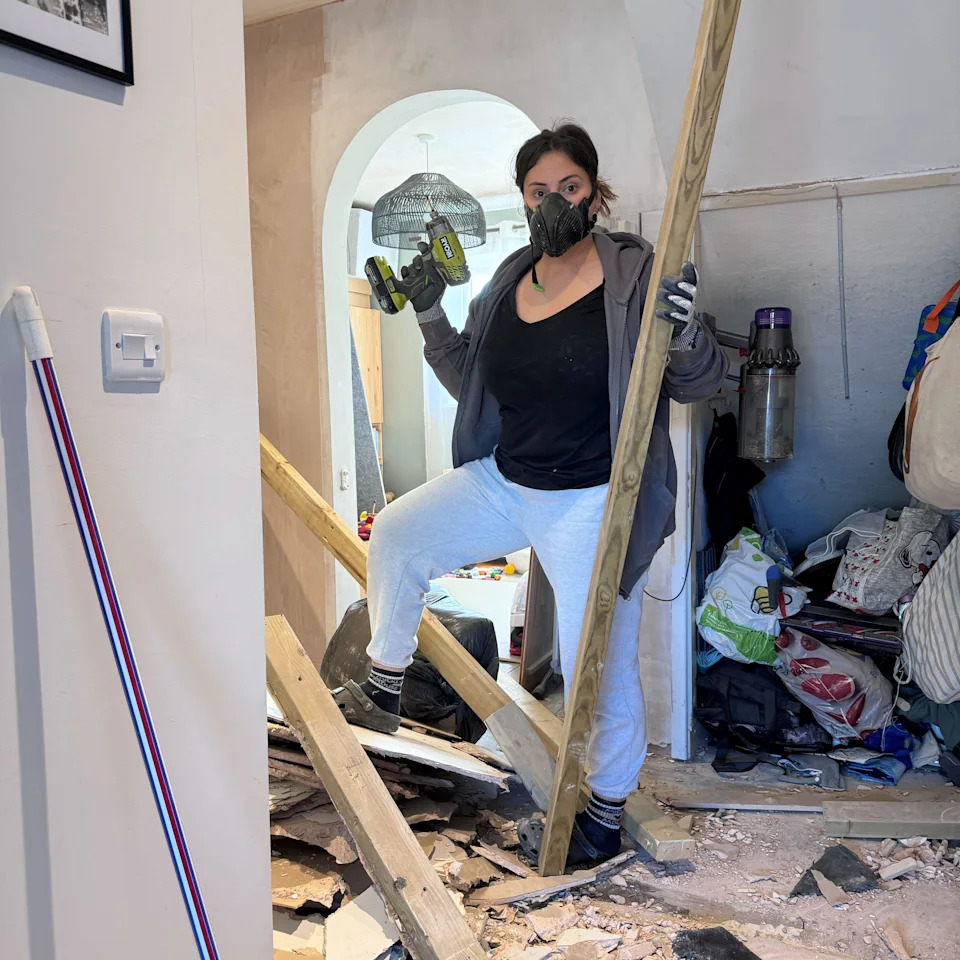
The rise of DIY culture in recent years has transformed the home improvement landscape, making it increasingly accessible and inclusive. Across social media platforms, a wide array of content is available, from quick tutorials on patching wall cracks to comprehensive guides on custom furniture projects.
Historically perceived as a male-dominated arena, the DIY movement has seen female influencers emerging as prominent figures, encouraging women to engage in home improvement projects. With a growing number of women entering skilled trades and a demand for female professionals on the rise, the narrative surrounding DIY is shifting dramatically.
Inspiring Change: Jasmine Gurney’s Journey
Jasmine Gurney, a DIY influencer, has become a beacon for many, undertaking an array of home renovation projects while eight months pregnant. Documenting her ambitious challenges on Instagram, she has tackled tasks such as dismantling partition walls, installing flooring, and building custom cabinetry—all while nurturing her young son.
Her primary focus has been finishing a fitted wardrobe before welcoming her new baby. “I like proving people wrong,” states Jasmine, who has faced criticism about her techniques but uses it as motivation. She aims to empower other women, proclaiming, “I’m showing that we are capable, we are interested in this sort of stuff.” She emphasizes the frustration of waiting for others to handle projects, demonstrating her belief that women can take initiative in home improvements.
During the COVID-19 pandemic, Jasmine noticed a surge in interest for DIY projects as professionals were unavailable, leading to a continued demand for her content. This trend persists, as many individuals are keen to take on home improvement tasks themselves amid rising costs and limited availability of tradespeople.
Gen Z: The Front-Runners of Change
A recent 2024 report from B&Q highlights that Generation Z women are at the forefront of redefining perceptions surrounding DIY. The survey revealed that approximately 75% of Gen Z women enjoy DIY, markedly higher than the 60% average among women as a whole. Furthermore, 82% of Gen Z women reported that witnessing other women engaging in complex DIY tasks on social media inspired them to dive into projects themselves.
While DIY projects empower many, certain tasks still necessitate the involvement of professionals. Individuals may prefer hiring tradeswomen for various reasons, including comfort, respectfulness, and a desire to support women in traditionally male roles.
The Rise of Tradeswomen: A New Era
Anna Moynihan launched TaskHer as a response to the clear lack of visibility for women in the trades. Her platform connects female tradespeople with clients needing assistance for various home projects. Insufficient representation and the need for a welcoming environment prompted her to create a space where women could thrive.
With inquiries on her platform more than doubling and the number of tradeswomen quadrupling over the past year, the demand for female representation in the field is evident. The shift reflects changing attitudes, with more people acknowledging the unique perspectives and skills that tradeswomen bring to their work.
Some women are entering the trades after leaving white-collar jobs, attracted to the autonomy and resilience offered by these careers. Many feel that working in trades may provide them with more job security against the encroaching influence of artificial intelligence on traditional desk jobs.
Changing the Landscape – Progress and Perceptions
Despite these positive trends, statistics from the Federation of Master Builders indicate that women represent only about 4% of the UK’s construction workforce. Encouragingly, the number of female apprentices in construction rose to 10% in the 2024-25 cohort, showing potential for growth in representation.
Jasmine’s hope is that her visibility as a DIY creator encourages other women to consider taking on projects in their own homes or pursuing careers in trades. She believes that increasing female representation in these spaces will normalize such endeavors. Anna concurs, stating, “You can’t be what you can’t see, and anything that shows women and girls that they can do something is fantastic.”
The ongoing evolution of the DIY and trades landscape illustrates a significant shift, fostering an environment where all individuals, regardless of gender, can feel empowered to undertake home improvement projects and pursue careers in those fields.
