

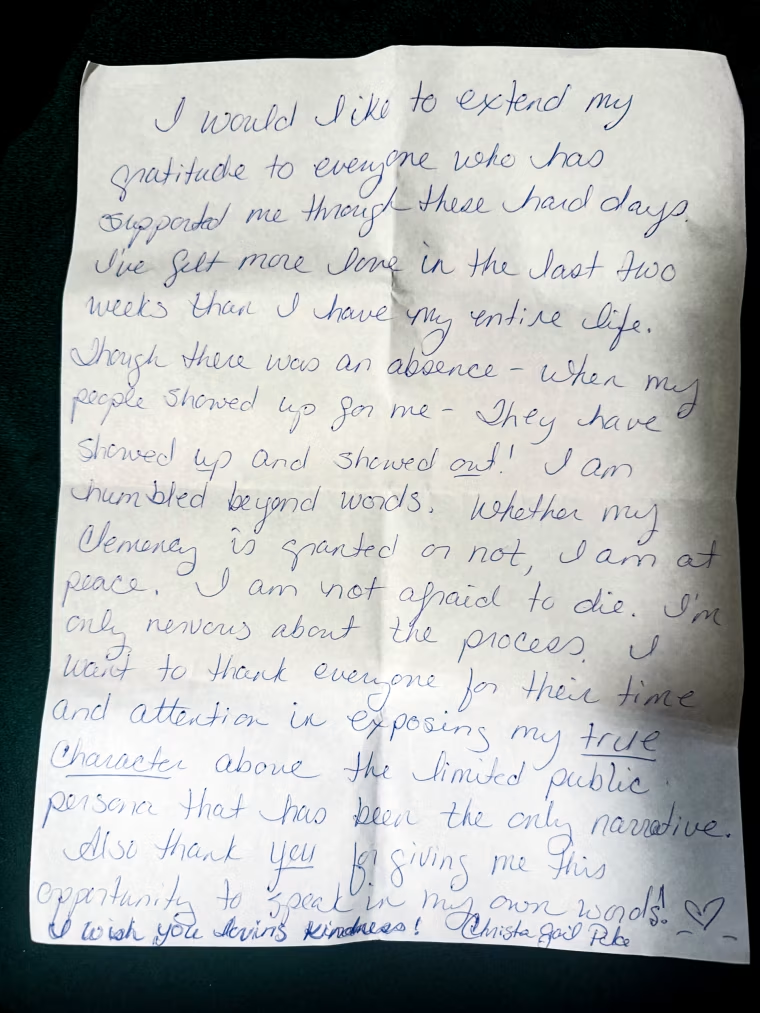
Christa Pike, currently on death row, openly acknowledges her involvement in a notorious murder case. However, significant aspects of her troubled upbringing, fraught with sexual and physical abuse, were not disclosed during her trial, ultimately influencing the jury’s decision to sentence her to death. Pike’s legal representatives argue that had her history of trauma been presented in court today, the sentence might have been different.
Her attorneys have sought intervention from the Supreme Court to halt her execution, citing Pike’s post-traumatic stress disorder resulting from early trauma, including molestation and rape. They express concern over the potential psychological distress she may face during the lethal injection protocol, describing the process as likely to exacerbate her existing mental health issues.
In response, the Tennessee Attorney General’s office noted that a judge had determined that any mental harm Pike might endure due to the execution method was speculative. With the Supreme Court’s denial of her petition for clemency this week, Pike’s hopes for a reprieve have dwindled, following Governor Bill Lee’s recent refusal to grant clemency despite appeals from her legal team.
Pike’s case stands in stark contrast with those of other individuals convicted in connection with the same crime. While Pike received the death penalty for her role in the murder of Colleen Slemmer, her co-conspirator, 17-year-old Tadaryl Shipp, was sentenced to life in prison. Meanwhile, the third accomplice, Shadolla Peterson, received probation for her cooperation with authorities. This disparity in sentencing reflects both the legal system’s treatment of juveniles and the specific circumstances surrounding Pike’s case.
Reflecting on her childhood, Pike’s attorneys reference the chaotic environment in which she grew up, marked by trauma and instability. In a personal letter, Pike has expressed that her public image is shaped by a narrow narrative, one that fails to encapsulate her history and struggles. Her legal team believes that understanding her troubled past is essential to comprehending her actions on the night of the crime.
Understanding the Impact of Trauma
Years of psychological assessment have indicated that the traumatic experiences from her childhood significantly influenced Pike’s mental health. A psychologist specializing in trauma concluded that Pike’s deviance and overwhelming emotional distress were exacerbated by the severe abuse she suffered. Her case has drawn attention to the importance of recognizing untreated trauma, especially among women facing mental health challenges.
Despite her grim past, Pike’s situation has evolved during her time in prison. A psychologist who evaluated her noted that medications available in prison have helped her achieve greater emotional stability, leading to feelings of regret for her past actions. However, the persistent trauma she endured raises questions about the systemic failures that allowed her suffering to go unaddressed.
The Victim’s Legacy
The murder of Colleen Slemmer continues to resonate profoundly with her family, particularly her mother, May Martinez. Martinez’s experience highlights the enduring pain caused by violent crime. After the legal proceedings, she learned painful details about the handling of her daughter’s remains, further compounding her trauma. Such experiences illustrate the broad implications of violent crimes, affecting not only the immediate victims but also their families and communities.
The juxtaposition of Pike’s and Slemmer’s stories underscores significant issues within the criminal justice system, including the treatment of mental health in sentencing, the complexities surrounding juvenile defendants, and the need for a more trauma-informed approach to justice. As the dialogue continues, advocates call for reforms aimed at addressing mental health needs and preventing future tragedies.
