


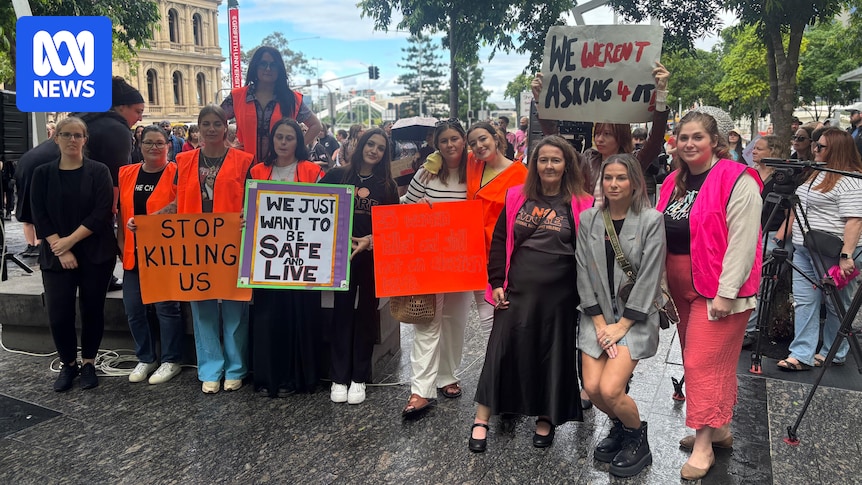
Nationwide Protests Demand Action Against Violence Towards Women
Today, Australian cities witnessed significant protests, uniting individuals across all demographics in a collective call to end violence against women. These events were predominantly spearheaded by the Indigenous-led organization What Were You Wearing?, emphasizing the immediate need for substantial government initiatives aimed at preventing domestic and gender-based violence.
Key Demands from Protesters
Between speaking engagements and passionate displays, participants articulated several critical demands:
- Increased government funding for prevention and crisis support services.
- Mandatory trauma-informed training for first responders.
- Implementation of nationally consistent and holistic consent laws.
- Enhanced housing security for victim-survivors.
- Reform of bail protocols to prioritize the safety of victims.
Brisbane: A Powerful Showing
About 250 individuals gathered in Brisbane, marching through the streets with signs bearing poignant messages. The gathering featured seven speakers, including victim-survivors and community leaders who shared impactful personal stories. Notably, Brittany Higgins attended the rally, holding a sign illustrating the staggering statistic of 25 women killed due to violence within a specified timeframe this year, as reported by Australian Femicide Watch.
“I’m here today as a victim-survivor, and that makes me really passionate about the cause and really passionate to get true systemic change,” said Higgins.
Melbourne: Voices of Frustration
In Melbourne, hundreds assembled on the steps of state parliament. Sherele Moody, founder of Australian Femicide Watch, expressed her frustration at the lack of effective action from authorities. She conveyed the reality of violence against women by reading out the names of victims, highlighting the persistent issue of domestic violence.
“Can’t believe we’re doing this again, but here we are,” Moody remarked to the assembled crowd.
Adelaide: Community Engagement and Commitment
Adelaide saw a significant turnout as community members rallied outside Parliament House, calling for increased government investment in evidence-based prevention strategies. Survivor advocate Stacey Nelan emphasized the importance of male engagement in the fight against gender inequality. “We can’t achieve gender equality without the good men challenging those who disrespect women,” she stated, advocating for a united front against violence.
Sydney: Cultural Change Advocate
In Sydney, the rally featured a Welcome to Country by Yvonne Weldon, the first Aboriginal councillor. She addressed the normalization of violence, urging attendees to unite against it. One organizer conveyed the growing discontent over insufficient attention given to this national crisis during the election period, stressing the need for dire reforms focused on consistent and holistic consent laws.
Canberra: A Call to Action
Protesters gathered outside Parliament House in Canberra, demanding immediate action from a government now more representative of women. Through various speeches and social media messages, activists called for urgent governmental attention to issues surrounding violence against women.
Hobart: The Importance of Solidarity
A gathering in Hobart featured approximately 150 individuals, where advocates called for communal outrage against gendered violence. Alina Thomas of Engender Equality voiced the necessity for men to join the fight against violence and support women’s safety actively.
Perth: Standing for the Voiceless
In Perth, attendees expressed their collective grief and anger over a societal problem seen as primarily stemming from male violence. Protesters emphasized the urgency of the situation, especially highlighted by the approaching Mother’s Day, which reminds many of lives lost to violence.
Bunbury: Grassroots Advocacy
In Bunbury, WA, a relatively new protest rallied 40 individuals who marched to address local concerns of violence against women. The event was organized by young advocates in a show of community-led action against gender-based violence.
Conclusion
This series of protests across Australia serves as a critical reminder of the urgent need for systemic change to address violence against women. The collective voices of thousands emphasize that now is the time for action—demanding government accountability and community support to ensure safety for all individuals.
