


Nikon Investigates AI Allegations in Small World in Motion Contest Entry
Nikon, the renowned Japanese optics company, has initiated a thorough review of the submissions for the 16th annual Small World in Motion contest, particularly regarding the winning entry by Ning Xu, an optical engineer from the National University of Singapore. This scrutiny follows a wave of accusations suggesting that artificial intelligence (AI) may have played a role in the creation of Xu’s prize-winning video.
The Contest and Winning Submission
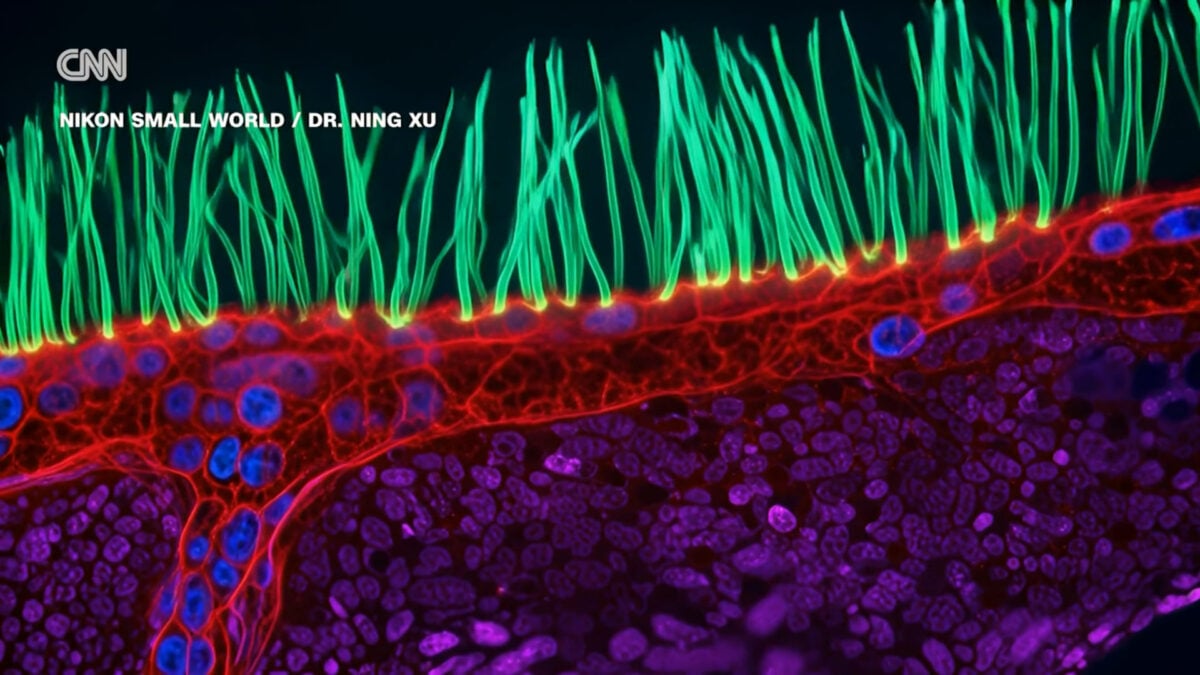
Small World in Motion aims to showcase the exquisite nature of light microscopy. Xu’s video, which captured the movement of cilia within lung tissue from a child suffering from primary ciliary dyskinesia, garnered attention for its visual impact. The video displayed various colorful structures beneath the cilia, sparking both curiosity and concern among viewers.
Emerging Controversy
Following the announcement of Xu’s victory in mid-September and subsequent reposting of the video on LinkedIn, Nikon faced immediate backlash. Many experts in the field, including Edward Phelps, a bioengineering researcher from the University of Florida, raised doubts about the authenticity of the shown structures. Phelps stated, “The purple structures resemble mitochondria but such a sub-epithelial structure composed of extracellular mitochondria of the same size as cell nuclei does not occur in biology.” He emphasized that the blue nodules appeared nuclear yet behaved inconsistently with known biological behaviors.
AI and the Use of Watermarks
Further complicating the discourse, Ian Donovan, a PhD student at UT Southwestern Medical Center, noted the presence of a SynthID watermark on the video. These watermarks, developed by Google’s DeepMind, are designed to indicate AI-generated content. However, the effectiveness of current AI detection methods remains limited, making it challenging to fully ascertain the origins of visual content without such identifiers.
Insights from the Community
Patrick Hickey, who secured fifth place in the contest, noted the importance of providing microscopists a platform to display their intricate and often abstract work. He underscored the existing guidelines, which clearly prohibit the use of generative AI in submissions, and state that entries must originate from actual microscopy.
Nikon’s Response and Clarifications
In response to the unfolding criticism, Nikon Instruments confirmed that Xu is cooperating with their investigation. The company has shared that Xu provided comprehensive technical documentation detailing the microscopy equipment, imaging techniques, and methods used in creating the source video. Moreover, Nikon clarified that “an unsupervised neural-network method was subsequently used as part of the post-processing and visualization workflow to distinguish and visualize features in the grayscale data, creating a more vivid and visually engaging video.”
Xu maintains that the original footage of the cilia is authentic and that AI was employed only as a tool for enhancing the visualization of structures, without making specific anatomical claims about their identity.
The Importance of Trust in Scientific Imagery
Commentators have raised significant concerns about the implications of such controversies in scientific imaging. Melanie White, a developmental biologist at the University of Queensland, emphasized that images and data must be trustworthy and accurately reflect the measurements taken. Andrew Moore, a former judge for the contest, likened the situation to “old photographs restored with AI,” where visual appeal may overshadow the integrity of the content.
Conclusion
As Nikon continues its investigation into the allegations surrounding Xu’s entry, the broader implications for digital imaging and the use of AI in scientific representation remain a vital discussion in the community. The outcomes of this scrutiny may influence future guidelines and ethical considerations in scientific contests and imaging practices.
