

You are an expert content writer specializing in creating original, engaging, and factually accurate articles based on provided
One of the worst sentences a girl’s friend group can hear is, “I downloaded Hinge again.” Generally, this can be excused following a breakup, but at its worst, it’s a woman defying her own logic and reasoning while crafting excuses for her horrible situationship “Because obviously, he’s super busy and nobody else understands.”
Despite arguments that having a boyfriend is currently a social faux pas, people still seek connection. Additionally, straight women’s dating frustrations have generated numerous pop albums, and even their own term, heterofatalism. Heterofatalism, coined by Asa Seresin, a sexuality scholar, describes the phenomenon of straight women feeling embarrassed about their attraction toward men and desire to detach themselves from the world of dating and subsequent disappointment.
I don’t think the issue here is that men simply suck. Nor do I think the death of chivalry is entirely to blame. Dating apps may be part of the problem. With a large selection of profiles, dating app users are more likely to reject the profiles accessible to them. Women experiencing this rejection mindset are less likely to obtain matches. Despite access to more potential partners on dating apps, the act of choosing the right partner isn’t as clear.
Sam Kizer, assistant professor of instruction in sociology at Ohio University, recognizes the influence of assistive technology in modern dating. He discussed the various dating resources marketed towards single people, including cards to bring to a date encouraging face-to-face conversations, dating apps and generative artificial intelligence.
“The algorithm, the tech, the dating, the cards, the apps, the cards, whatever, they might be able to assist in finding people to evaluate,” Kizer said. “They themselves cannot be the evaluator.”
Although dating apps create an opportunity to meet new people and potentially introduce users to new labels or types of relationships, the mere act of creating a profile requires the user to exclude potential matches to some degree. On Hinge, if you say you’re looking for a long-term relationship, the algorithm within the app is already curating who is and isn’t available for you as a potential match.
Alongside dating app usage, increased AI use in daily life, from email writing to LinkedIn job searches, hinders their ability to make independent critical decisions. Effective communication skills are vital to healthy relationships; this becomes an issue with a growing number of people using generative AI chatbots to analyze and support their relationship decisions.
Generation Z has faced numerous barriers to healthy social development, leading to an increase in social anxiety and loneliness. Utilizing online spaces to meet people can mitigate potential fear of rejection, but these online connections are not likely to help people feel less lonely.
Dating is meant to feel good, and it’s not surprising even pop music artists are calling out when it doesn’t. Human connection is messy, vulnerable and cannot be calculated by an app or algorithm. Even if you or your best friend resorts to redownloading dating apps once again, try to remember taking a risk against your typical standards or expectations might not be so risky.
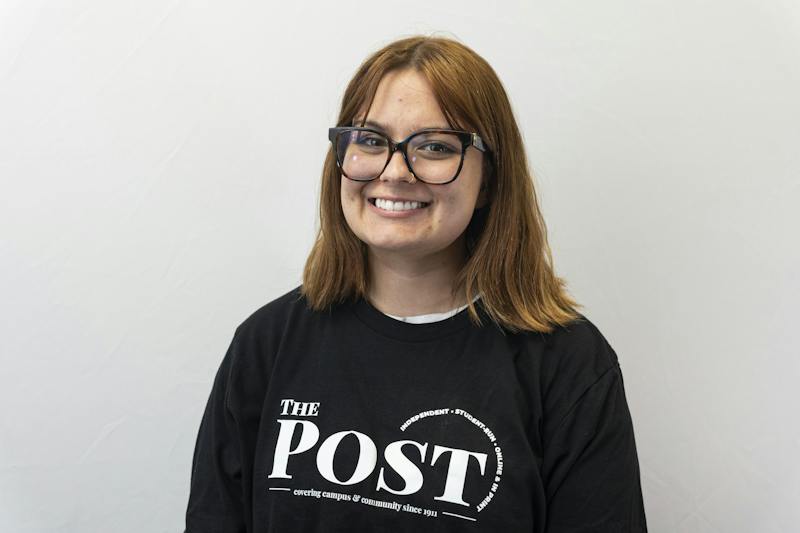
Alexa Sanders is a senior studying psychology at Ohio University. Please note the opinions expressed in this column do not represent those of The Post. Want to talk to Alexa about her column? Email her at al683822@ohio.edu.
. Your task is to write a brand-new article using the core information from the source while completely reimagining its structure, phrasing, and presentation. Guidelines for Content Creation Tone & Style: Use a neutral, professional, and informative tone. Ensure the language is clear, concise, and engaging for a broad audience. Avoid subjective opinions or commentary—stick strictly to the facts. Content Requirements: Do not copy sentences verbatim; instead, paraphrase, restructure, and enhance the information while keeping all details intact. Present a fresh perspective while preserving the factual accuracy of the original content. Use concise, well-organized sections to improve readability. Ensure all data, statistics, and sources remain accurate without distortion. Quote & Attribution Rules (Strictly Enforced): Direct quotes must remain unchanged—never reword or modify a quote. All direct quotes must be accurately attributed to their original speaker. Correct Example: “Innovation is the key to growth,” said John Doe, CEO of TechCorp. If an interviewee clarifies a misconception (e.g., Fonda distancing herself from “No pain, no gain”), retain their exact wording to ensure accuracy. If the original article attributes information to a source, ensure that attribution is retained. Original: According to a report by Bloomberg, the industry is expected to grow 20% by 2026. Correct Rewrite: Bloomberg reports that the industry is projected to expand by 20% by 2026. Never misattribute or create false attributions. Formatting & Structure (HTML Required): Write the article in valid HTML format to ensure proper webpage display. Use headings for major sections and subheadings for key points where applicable. Keep paragraphs short and scannable to enhance online readability. Include bullet points or numbered lists where useful for breaking down complex information. SEO & Readability Guidelines: Follow SEO best practices: Use descriptive, keyword-rich headings that naturally fit the topic. Incorporate primary and secondary keywords strategically without overstuffing. Ensure a clean, semantic HTML structure that improves search engine indexing. Where relevant, include: Meta descriptions summarizing the article in under 160 characters. Alt text for any referenced images. Internal and external links where applicable (only if relevant to the article’s content). Hyperlinks & Source Retention: Retain only links that serve a clear purpose, such as: Product links that are relevant to the article. Source links for studies, reports, or direct quotes. Remove all unnecessary links, including: Newsletter sign-up links “Related Articles,” “Read More,” or “Suggested Content” links Unrelated promotional or self-referential links Do not replace removed links with generic text. Example of correct link formatting in HTML:
For more information, visit this source.
Additional Considerations: The article must be completely original and uniquely worded—it should not resemble the source in structure or phrasing. Ensure the final output is engaging, logically structured, and free of errors. Do not fabricate facts, misinterpret data, or introduce speculation. Fact-check when necessary to ensure all referenced information is up to date. Instructions for Execution: Analyze the source content and identify its core information and key takeaways. Reimagine the structure while ensuring factual integrity and a fresh perspective. Write a fully original article that adheres to all tone, SEO, and formatting guidelines.
