


The Vibrant Intersection of Global and Local in Lagos Fashion
African fashion is experiencing a creative renaissance, gaining international recognition for its innovative styles and cultural richness. Designers like Ejiro Amos Tafiri and Mai Atafo from Nigeria, Christie Brown and Larry Jay from Ghana, Ikojn from Kenya, and Boyde from South Africa are at the forefront of this movement.
Emerging Fashion Capitals
Urban centers such as Lagos, Accra, Marrakesh, Nairobi, and Johannesburg are becoming global fashion hubs. These metropolises reflect a unique blend of local culture and global trends, making them hotbeds for fashion innovation.
Fashion in Lagos: A Case Study
This article delves into Lagos, Nigeria’s most populous city, characterized by its diverse population and rich cultural interactions. My recent study focuses on how fashion in Lagos serves as a mirror to its cosmopolitan nature, showcasing both local traditions and global influences.
Understanding Cosmopolitanism
Cosmopolitanism denotes a global community that surpasses national boundaries, with diverse cultural influences shaping urban fashion, akin to its culinary diversity. Although this concept is often associated with Western nations, Africa has its own longstanding ties to global cultures, facilitated by historical trade and migration.
Philosopher Kwame Anthony Appiah posits that cosmopolitanism in Western contexts often calls for a total assimilation of foreign cultures, whereas in Africa, it allows for a blend of the local and the global, termed “rooted cosmopolitanism.” This concept is evident in various facets of African society, including fashion.
Lagos: A Melting Pot
With a vibrant ecosystem of creative industries, Lagos was ranked as the world’s fourth-largest fashion city just a decade ago. In my study, I engaged with 18 local designers to identify the trends shaping Lagos fashion today.
Trends in Women’s Fashion
The fashion scene for women in Lagos can be categorized into two principal trends: fabric choice and design style. While local materials and appropriated fabrics command popularity, contemporary styles increasingly lean toward Western designs.
Local fabrics, such as Aso oke and Akwete cloth woven by various ethnic groups, are now a staple in women’s fashion. Appropriated textiles like Ankara (wax prints), lace, and George cloth also dominate the market. Previously associated with either everyday wear or cultural events, these materials are now embraced more broadly.
Former trends typically saw indigenous fabrics designated for formal settings, but designers today advocate for their everyday use. The rise in local fabric popularity is attributed to a societal shift and governmental support; since the early 1990s, Nigeria has emphasized locally produced materials.
The Role of Western Designs
While the fabric trends shift towards local materials, the design component largely takes cues from Western aesthetics. Designers incorporate local fabrics into silhouettes that appeal to a global audience, balancing authenticity with contemporary styles. For instance, designer Eji emphasizes the global experience of the African woman:
“The African woman is not only situated in Africa, but they are also all over the world. I believe the world is more cosmopolitan now; we have interracial marriages, we can borrow culture from everywhere, we can interweave stuff.”
Distinct Trends in Men’s Fashion
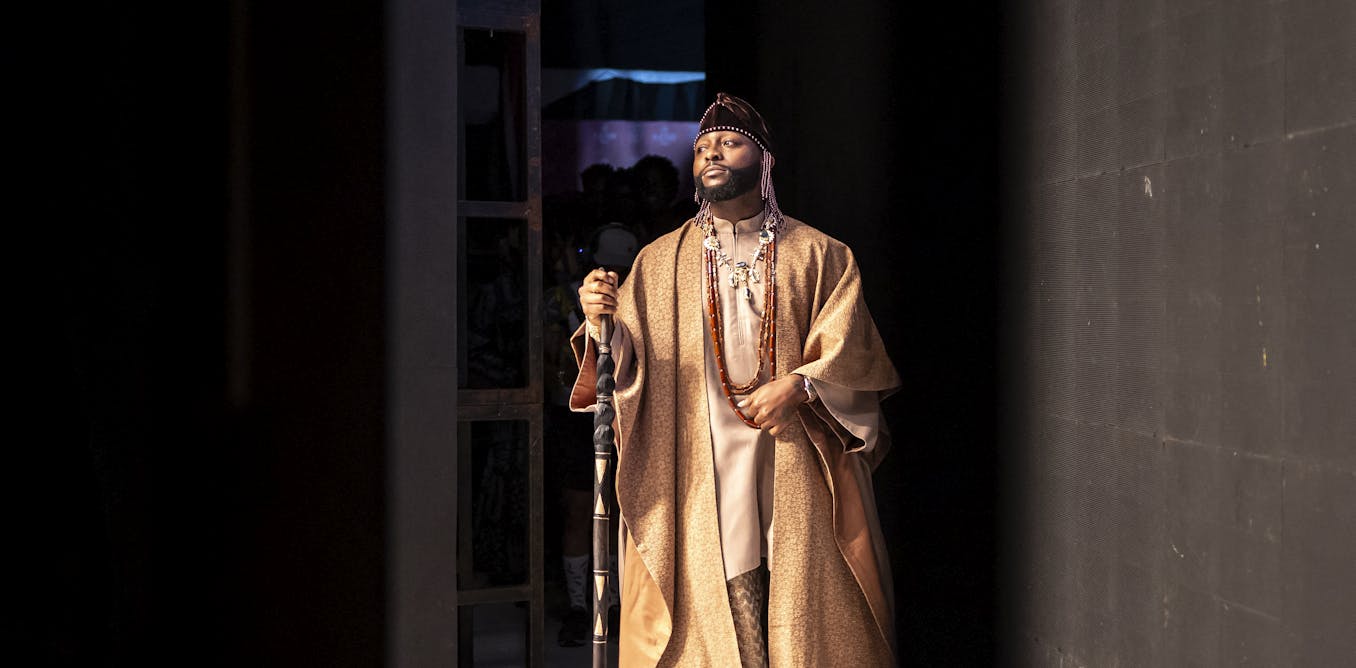
In contrast, men’s fashion in Lagos reflects a different trend dynamic. The fabric trend is predominantly Western, while the design aspect incorporates local aesthetics. Most men wear traditional attire, such as the buba and sokoto, especially for everyday use. For special occasions, the agbada is popular.
Men’s fashion in Lagos is often influenced by the ethnic background of the current president, as noted in my interviews. For instance, former President Muhammadu Buhari, hailing from the north, popularized traditional Hausa clothing, while current President Bola Ahmed Tinubu continues to elevate the agbada, a attire of Yoruba origins. This trend fosters a cultural unity among men across different ethnic backgrounds.
Conclusion: Celebrating Cosmopolitan Fashion
This exploration highlights the fluidity of Nigerian fashion, demonstrating its ability to integrate modern styles with local sensibilities. The interplay between various cultural influences ultimately showcases an evolving form of cosmopolitanism within Lagos, celebrating both global and indigenous styles.
