


Women’s Rugby League in 2025: A Game-Changer for Brands
In 2025, Women’s Rugby League has transcended its past limitations, establishing itself as a prime sporting event that captures the attention of both fans and brands. This evolution is underscored by remarkable attendance, significant television viewership, and cultural relevance, invigorated by the achievements of women’s sports in general.
Record-Breaking Attendance and Viewership
The opening match of the 2025 Rugby League series held in Brisbane set a new attendance record, drawing 26,022 fans to the stadium. This milestone was complemented by outstanding television statistics: the match became the most-watched free-to-air rugby league game of the season, amassing an average audience of 927,000 and reaching nearly 2 million viewers on platforms including Nine’s broadcast and streaming.
ARLC Chairman Peter V’landys recognized the significance of these numbers, stating, “The women’s State of Origin was extremely successful. The ratings were up 40 per cent year-to-year, and it’s the biggest audience we’ve ever had for a women’s game. That’s a remarkable sign of how far the women’s game has come.”
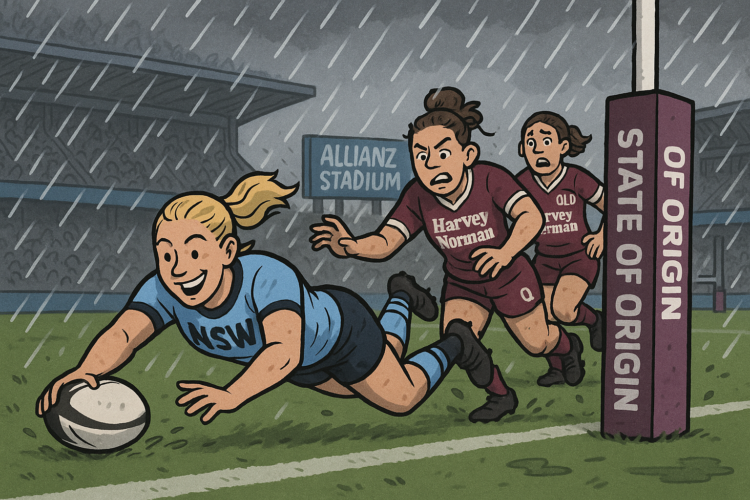
Even the adverse weather conditions during Game Two, which attracted 16,000 spectators, could not undermine the enthusiasm of the fans. The game eclipsed the attendance of a concurrent men’s match in the same city, showcasing the draw of women’s rugby league even in challenging circumstances. This match gained a national television reach of 2.13 million, averaging 1.067 million viewers.
The Shift Towards Brand Engagement
As Women’s Rugby League continues to gain traction, brands have recognized its potential as a significant marketing platform. Among those leading this charge is Harvey Norman. Executive Director Katie Page has been a long-time advocate for women’s sports, predicting the growth potential well before it became mainstream. She noted, “After having a look at the game, I realised the women were invisible.”
Harvey Norman’s proactive engagement with women’s rugby league began as early as 1999, preceding the rebranding of the interstate clash into the distinctive Origin series. This foresight is reflected in their ongoing support, which has contributed to the three-fold increase in the number of teams in the NRLW, growing from just four teams in 2018 to twelve today.
International Recognition and Domination
Further affirming the status of Women’s Rugby League on a global stage, the Australian national team, the Jillaroos, displayed formidable performance early in the year, defeating England with a staggering score of 90-4. This victory highlighted the disparity in investment and support for women’s sports globally, as observed by Page, who commented on the lack of resources allocated to women in the UK.
Looking Ahead: Game III and Marketing Opportunities
The anticipation surrounding Game Three showcases the growing popularity of the series, which will be broadcast live on Nine and 9Now. With the series already in favor of the NSW Blues, the Queensland Maroons are keen to claim a victory and disrupt the Blues’ ambitions for a clean sweep.
Star Players and Broadcast Highlights
Star athletes like Jaime Chapman and Jess Sergis are expected to take center stage, supported by commentary from both legends and fresh voices within the women’s sports community, ensuring a comprehensive and engaging viewing experience.
As the viewership numbers soar, brands are presented with a unique opportunity to align themselves with the momentum of women’s rugby league. This represents a critical window for organizations looking to enter a dynamic sporting arena that is growing rapidly in stature and popularity.
As V’landys emphatically stated, “It nearly hit a million viewers, that’s how far the women’s game has come.” The landscape is shifting—who will seize the opportunity next?
