


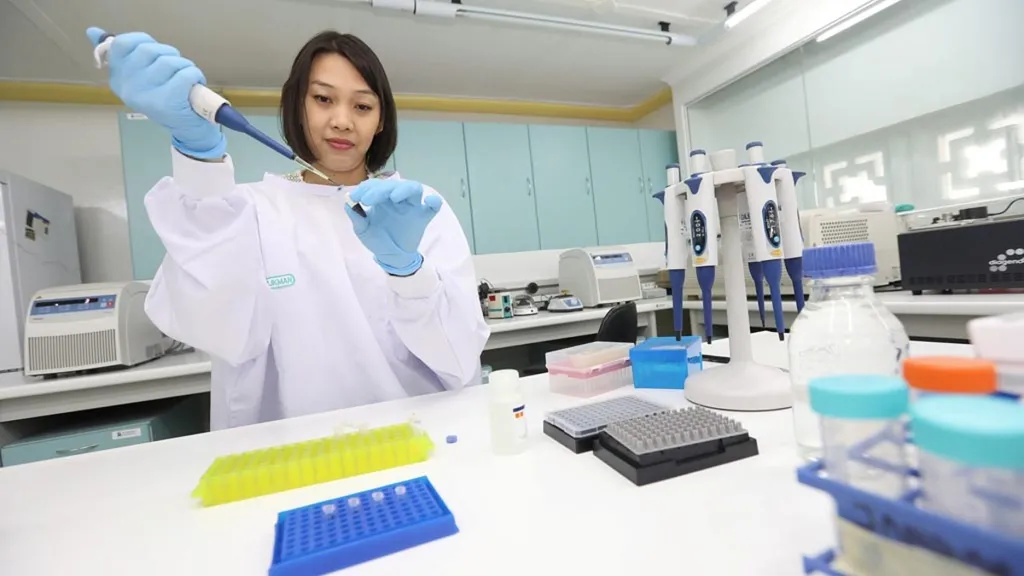
Gender Equality in Science and Technology: A Challenge in Indonesia
Achieving gender equality in science and technology remains a significant challenge in Indonesia, despite advancements in women’s access to higher education. While female enrollment in universities has improved, women continue to face substantial barriers in the workforce, particularly in fields associated with science, technology, engineering, and mathematics (STEM).
The Current Landscape of Education
The Central Statistics Agency (BPS) reported in December 2024 that the enrollment of women in institutions of higher education is notably higher than that of men, at 76.41 percent against 72.92 percent for men. However, this progress has not translated into equivalent employment opportunities.
Employment Disparities
Women’s participation in permanent employment is significantly lower than men’s, with only 52.86 percent of working-age women engaged in full-time jobs compared to 79.85 percent for men. The unemployment rate for college-educated women is alarmingly high at 18.66 percent, in contrast to 8.16 percent for their male counterparts.
The Gender Gap in Leadership
Within academic institutions, such as IPB University, although there are more female students and faculty, men still dominate key leadership roles. Professor Damayanti Buchori noted that there has never been a female rector since the university’s inception in 1963, highlighting the persistent challenges women face in advancing into influential positions.
STEM: A Disproportionate Representation
The underrepresentation of women in STEM fields is pronounced. According to Professor Buchori, while certain domains like nutrition science are predominantly female, areas related to engineering and technology remain male-dominated. A UNESCO report from 2024 indicates that only 25 percent of the STEM workforce globally comprises women, and this trend is mirrored in Indonesia, where women account for merely 8 percent of STEM job positions.
Barriers to Entry in STEM
Several cultural and structural barriers contribute to the gender disparity in STEM. Lecturer Mia Sicawati from the University of Indonesia emphasizes that societal stereotypes linking STEM to masculinity discourage young women from pursuing these fields. Furthermore, many girls often receive limited educational choices, pressured to select “safer” options like teaching.
The Role of Female Mentors
The lack of visible role models in leadership positions within STEM creates additional challenges. Female leaders sometimes perpetuate the very biases they encounter, complicating mentorship dynamics. Women in senior roles may adopt harsher standards for their female subordinates, a phenomenon that reflects broader societal expectations.
Intersectionality in STEM
Understanding the intersection of gender with other forms of social stratification is crucial. Factors such as class, ethnicity, and disabilities exacerbate challenges for women in STEM, complicating their fight for equality.
Workplace Challenges
While there are no overt legal barriers hindering women from entering STEM fields, unconscious biases infiltrate recruitment, promotions, and funding opportunities. Women must navigate workplace expectations that often fail to accommodate their family responsibilities, leading to what is commonly referred to as the “dual burden.” As stated by Professor Buchori, many women experience guilt when balancing their professional and personal lives, a shared sentiment among women in demanding roles.
Efforts Toward Change
Recognizing these disparities, UNESCO launched the “Call to Action” initiative in February 2024, aimed at bridging the gender gap in science. The initiative calls for collaboration to dismantle stereotypes in scientific fields, enhances the visibility of female role models, and fosters educational pathways for women through innovative strategies.
Moving forward, fostering an inclusive and supportive workplace for women in STEM, alongside educational reforms, remains essential in the effort to achieve true gender equality in Indonesia.
