


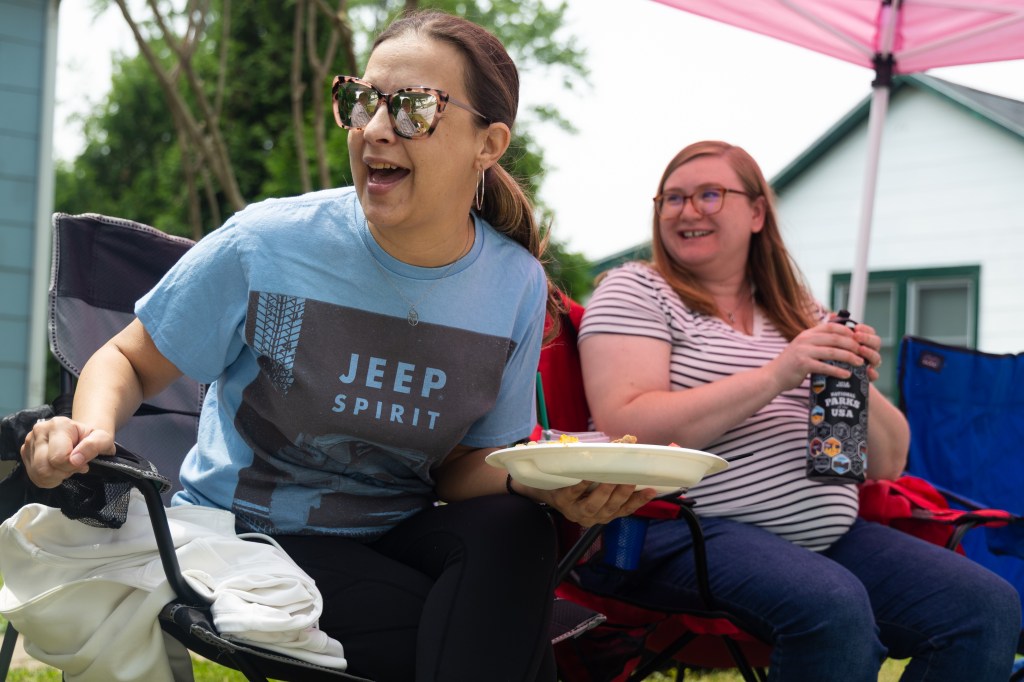
Katie Pappas, a health teacher at Timber Trails Elementary in Hoffman Estates, has been living with kidney disease that has resulted in her reliance on dialysis for 8 to 11 hours every night. After holding this secret from her students, the 40-year-old educator felt compelled to explain her condition to them, noting that while her younger kindergarten students may not grasp the complexities of kidney disease, they could understand analogies related to pollution.
“So Miss Pappas’ kidney is not cleaning the pollution in her blood, that’s why I’m tired all the time,” she clarified for her young audience. Meanwhile, older students, who have a better understanding of body systems, were more prepared to comprehend her struggle.
Pappas is among approximately 3,500 residents in Illinois awaiting a kidney transplant. In the state, the average wait time for such a procedure is estimated between five to seven years, according to the American Kidney Fund. However, Pappas remains hopeful as she actively searches for a living donor—a personal connection that could change her prognosis significantly.
“If this is how I’m going out, I am going to shout it from the rooftops. I’m going kicking and screaming,” Pappas stated with determination. Her resolve to raise awareness about kidney donation is fueled by her selflessness: “It’s not just me. There are so many people, and everybody is worth a chance to live their lives with a new kidney.”
Experts emphasize the urgent need for kidney donors, as nearly 90,000 people in the U.S. are on the waiting list for transplants. Local hospitals report significant wait times for deceased donors, ranging from 310 to 800 individuals awaiting transplants. Living donor transplants, while less common, offer better overall outcomes, as noted by Dr. Raquel Garcia-Roca, an abdominal transplant surgeon at Loyola University. Living donors can be evaluated for health and support systems to ensure optimal outcomes for both donor and recipient.
Facing Challenges
Pappas is not unfamiliar with the path of organ donation. Diagnosed with Type 1 diabetes before her senior year of high school, she previously received a dual kidney and pancreas transplant from a deceased donor about seven years ago. This experience instilled in her a sense of purpose: “What are you going to do with it?” she posed, reflecting on her time with the gift of life.
Her impact on former students demonstrates her commitment and dedication. Summer Parker-Hall, who had Pappas as a fifth-grade teacher, remembers how Pappas provided support when she lost a cherished confirmation necklace. The bond formed during that time remains strong, illustrating Pappas’s lasting influence.
Pappas’s work at the school continues, despite recommendations from healthcare providers to take a break during her ongoing dialysis. She combats exhaustion with dedication, teaching multiple classes each day and even contributing to school productions, all the while focusing on uplifting messages for her students like, “I’m stronger than I think.”
“I have no regular life,” she admitted. “I don’t really have time to, like, go shopping or do laundry.” Her family members and friends are rallying to find her a kidney, organizing fundraisers and spreading the word about her need for a donor.
The Importance of Living Donors
The living kidney donation process is designed with utmost care for the donor’s health. Dr. Garcia-Roca stressed that hospitals follow strict ethical guidelines, prioritizing the well-being of living donors. Only about 20% of individuals interested in donating ultimately follow through, underscoring the importance of raising awareness.
Christine Hernandez, a 50-year-old mother from Chicago, exemplifies another personal journey in search of a kidney transplant. After being diagnosed with a rare inherited kidney disease, she too faces the long wait for a donor. “Everything I had planned for my future, the trips I wanted to take my daughter on, everything stopped. Everything stopped,” Hernandez shared, highlighting the emotional toll of her situation.
With both Pappas and Hernandez, their stories are emblematic of a broader issue facing many individuals with kidney disease, prompting a call for greater awareness and action in living donor outreach efforts. Potential donors interested in supporting these individuals can get involved by contacting local transplant centers and completing necessary questionnaires.
Conclusion
The journeys of Katie Pappas and Christine Hernandez highlight the critical need for kidney donations and the profound impact a living donor can have on the lives of those awaiting transplants. By sharing their stories and advocating for awareness, they not only illuminate their struggles but also inspire others to take action in the fight against kidney disease.
