


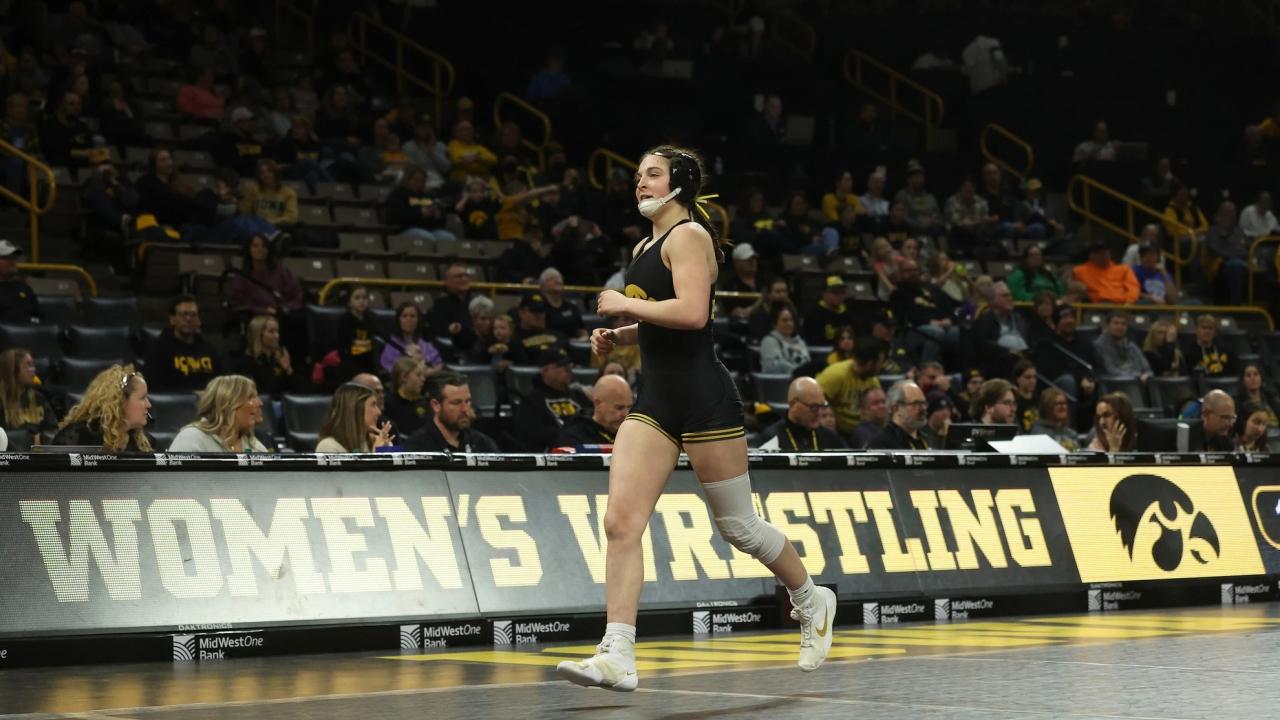
The 2025-26 season will usher in a historic milestone for collegiate athletics as women’s wrestling is officially recognized as an NCAA championship sport. This pivotal development opens new avenues for female athletes and university programs alike. Here’s an overview of what to expect in this inaugural season.
Background and Evolution of Women’s Wrestling
Women’s wrestling took a significant step forward in 2020 when it was designated as an NCAA “emerging sport,” alongside acrobatics and tumbling. This classification was established by the NCAA to promote potential championship sports for women, aiming to enhance competitive opportunities across universities. For a sport to be classified as “emerging,” it must be supported by a minimum of 20 schools.
The establishment as an emerging sport paved the way for women’s wrestling to transition to championship status, provided enough programs were developed. By 2023, the sport exceeded the required threshold of 40 universities sponsoring varsity teams, with Iowa being the first Power 5 school to do so shortly thereafter.
In early 2024, the NCAA Committee on Women’s Athletics acknowledged the sport’s progress and recommended a vote among Division I, Division II, and Division III representatives to elevate women’s wrestling. This proposal officially passed in January 2025.
Significance of Championship Status
Achieving championship status means that female wrestlers can now compete for NCAA titles in sanctioned events. This status not only facilitates significant growth and investment in the sport but also nurtures the potential for producing future Olympic competitors, as collegiate women will compete in freestyle wrestling—the same discipline featured in Olympic competitions.
ICYMI 🚨
Today women’s wrestling took a big step toward becoming the 91st NCAA championship sport, with its projected first NCAA championship occurring in winter 2026. #NCAAWrestling x @ShannonScovel
— NCAA Men’s Wrestling (@NCAAWrestling) February 8, 2024
Upcoming Championship Details
The inaugural NCAA women’s wrestling championship is scheduled for March 6-7, 2026, in Coralville, Iowa. The event will showcase teams from all three NCAA divisions: Division I, Division II, and Division III.
Qualification for the NCAA Tournament
Athletes will secure their spots in the NCAA tournament via six regional tournaments taking place nationwide from February 20-22. Each region will send 30 competitors, culminating in a total of 180 participants in the national championship.
To qualify for the national tournament, teams must have engaged in at least seven dual matches, each featuring a minimum of six wrestlers.
Weight Classes for Women’s Wrestling
The NCAA will feature ten weight categories for women’s wrestling:
- 103 pounds
- 110 pounds
- 117 pounds
- 124 pounds
- 131 pounds
- 138 pounds
- 145 pounds
- 160 pounds
- 180 pounds
- 207 pounds
Wrestling Style
Participants in NCAA women’s wrestling will compete using the freestyle style, which aligns with the format seen in the Olympics. This contrasts with the men’s division, where competitors wrestle in folkstyle.
Match Scoring System
Scoring in freestyle wrestling varies considerably from folkstyle, with two key distinctions:
- Points are exclusively awarded for offensive maneuvers; escapes do not garner points.
- Wrestlers must stay within the match circle, with points allocated for pushing an opponent out of bounds.
Each match consists of two periods, each lasting three minutes, separated by a 30-second interval. Points are scored through several actions, as outlined:
| Move | Description | Points |
|---|---|---|
| Step-out | One wrestler forces another out of bounds | 1 |
| Passivity | An athlete is penalized for lack of offense | 1 |
| Illegal hold | Dangerous positioning against an opponent | 1 |
| Failing a challenge | Incorrect challenge to an official’s decision | 1 |
| Reversal | A defensive wrestler regains control | 1 |
| Takedown | Bringing an opponent from standing to the mat with control | 2 |
| Turns from par terre | Exposing an opponent’s back | 2 |
| Feet to back | Taking an opponent from standing to their back | 4 |
| 4-point throw | A throw without placing an opponent in danger | 4 |
| 5-point throw | A throw that places an opponent in danger | 5 |
Scoring in Dual Matches
Women’s wrestling matches can conclude in various ways, each affecting team scores differently:
| Result | Description | Team Points for Winner | Team Points for Loser |
|---|---|---|---|
| Fall/pin | One wrestler pins an opponent’s shoulders | 5 | 0 |
| Injury Default | An opponent cannot continue due to injury | 5 | 0 |
| Disqualification | Removal of a wrestler for misconduct | 5 | 0 |
| Technical superiority (no points for loser) | Wrestler wins by 10 points without conceding | 4 | 0 |
| Technical superiority (loser scores points) | Wrestler wins by 10 points but loses points | 4 | 1 |
| Decision (no points for loser) | Wrestler wins by fewer than 10 points without conceding | 3 | 0 |
| Decision (loser scores points) | Wrestler wins by fewer than 10 points but concedes points | 3 | 1 |
| Mutual disqualification | Both wrestlers disqualified | 0 | 0 |
In case of a tie at the end of the match, winners will be determined based on specific criteria, including the highest points scored, least cautions, and who scored the last point.
Teams to Watch Out For
Iowa has emerged as a dominant force, winning the National Collegiate Women’s Wrestling Championships (NCWWC) for the past two years. Their roster boasts top talents like Kennedy Blades (160) and Kylie Welker (180), both world team members.
North Central, finishing second last year, remains a strong contender as they aim to challenge Iowa’s reign, and they are currently ranked high in preseason polls. Other notable teams include Grand Valley State, King, Presbyterian, and more, marking a competitive landscape for the upcoming season.
As women’s wrestling enters this new chapter, it promises a thrilling atmosphere for athletes and fans alike, enhancing the landscape of collegiate athletics.
