


The Impact of Domestic Violence Awareness: Beverly Gooden’s Journey
In 2014, the release of a troubling video involving Baltimore Ravens player Ray Rice drew global attention to domestic violence. The video depicted Rice assaulting his fiancée in an elevator, igniting widespread discussions on social media. Following the incident, when Rice’s fiancée chose to marry him, public backlash often misdirected blame toward her: “Why did she stay with him? She must like it.” This response resonated deeply with Beverly Gooden, a survivor of domestic abuse.
“I felt like they were talking to me,” Gooden reflected, expressing the guilt survivors often feel amidst public scrutiny. Motivated by the conversation surrounding Rice and his fiancée, she took to Twitter, sharing her reasons for staying in her abusive relationship through a series of posts marked with the hashtag: #WhyIStayed.
“When I realized the hashtag was trending, I was curious—who were they talking about?” Gooden recalled. Within just two days, the hashtag garnered over 100,000 uses as other women joined in to share their experiences.
Changing the Narrative
Gooden’s aim was to shift the focus of the conversation from “Why did she stay?” to “Why did he abuse her?” Her initiative garnered extensive media coverage, with Forbes naming #WhyIStayed one of the most significant social change hashtags of 2014, and Time recognizing it among the “Top 10 Hashtags That Started a Conversation.” By 2015, she was cited as one of the “8 Hashtags That Changed the World.”
As an award-winning writer and speaker based in Houston, Texas, Gooden has participated in numerous speaking engagements and appeared on platforms like “Good Morning America” and NPR’s “All Things Considered.” She established the Ella Mae Foundation in honor of her late grandmother to further her advocacy work.
Center for Family Justice’s Mission
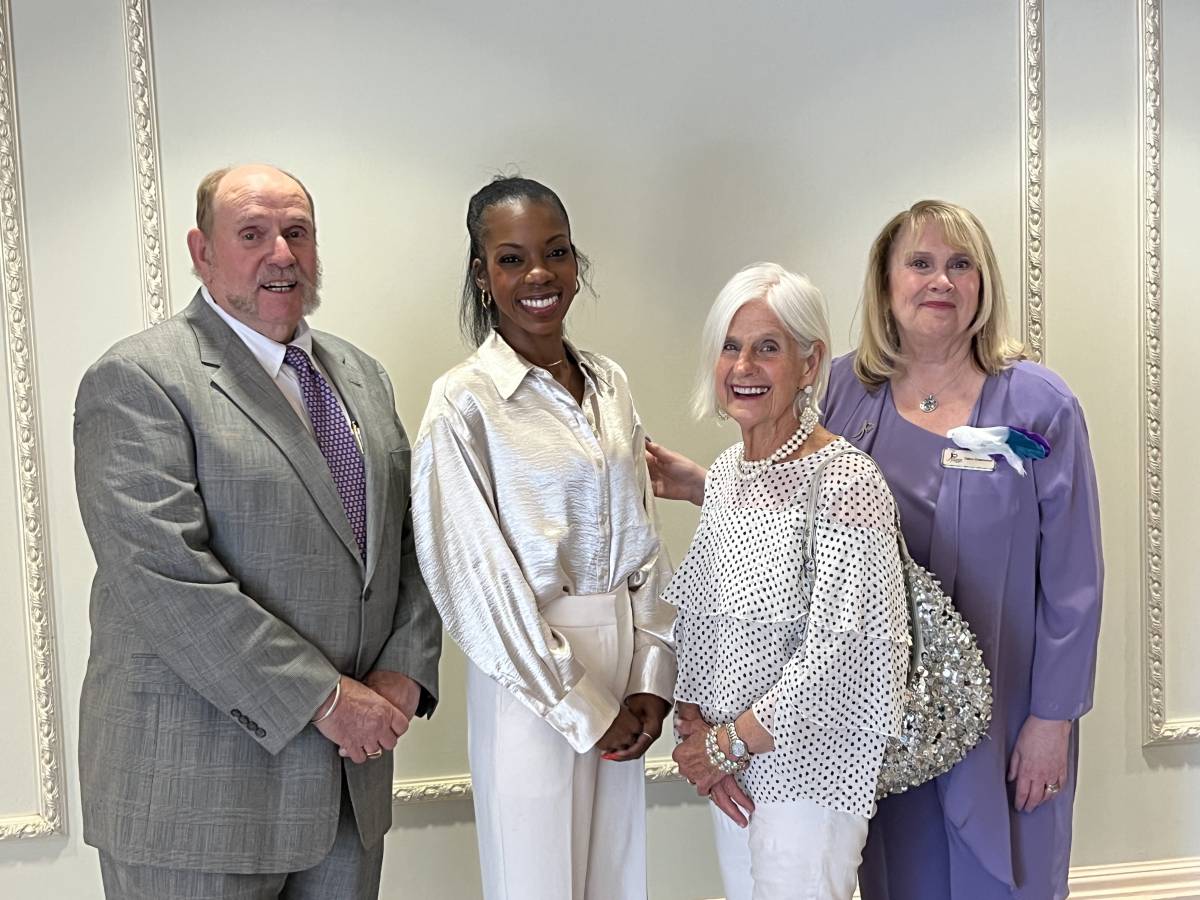
Gooden served as the keynote speaker at the recent annual Speaking of Women fundraising luncheon for the Center for Family Justice (CFJ) in Monroe, Connecticut, where she also signed copies of her book, “Surviving: Why We Stay & Why We Leave Abusive Relationships.”
The CFJ serves multiple communities including Monroe, Easton, and Bridgeport, offering free and confidential support to those affected by domestic violence, sexual abuse, and child abuse. Under the leadership of President and CEO Debra Greenwood, the organization provides various services, including hotlines, educational outreach, legal assistance, and counseling. Recently, they opened Patti’s Place, a safe house for victims, which has already reached full capacity.
Community Support and Outreach Efforts
At the luncheon, local and state officials, law enforcement, and community members gathered not just to support CFJ but also to highlight collaborative efforts in combatting domestic violence. Lt. Gov. Susan Bysiewicz and U.S. Sen. Richard Blumenthal both acknowledged the importance of these initiatives through video messages. Monroe First Selectman Terry Rooney recognized the efforts of local educators in integrating CFJ’s programs into schools.
One notable initiative is the White Ribbon Campaign, led by Gary MacNamara, which encourages men and boys to actively prevent domestic violence. “Most men don’t offend,” he noted, emphasizing the importance of addressing masculinity in discussions of abuse.
Insights from Beverly Gooden
During her address, Gooden relayed her personal narrative, including the moment her boyfriend proposed to her, despite the onset of abuse. She recounted a turning point when, after being attacked, her mind shifted: “Maybe I did something to make you act that way?” This self-doubt kept her in the relationship longer than she should have.
Ultimately, it was an unprovoked assault that led Gooden to realize she no longer wished to prioritize her abuser over her own life. “I decided I wanted to live more than I wanted to stay with him,” she affirmed.
Gooden also identified three common reasons why victims often remain in abusive relationships: financial dependence, fear of threats against themselves or loved ones, and love for the abuser. Despite leaving her husband over 15 years ago, she confessed to missing his former self, emphasizing the complex emotions survivors face.
In her closing remarks, Gooden advised anyone in a similar situation to immediately connect with organizations like the CFJ for support. “It’s crucial to find a community that can ground you,” she stated, acknowledging the challenges inherent in leaving an abusive partner.
For those seeking help, CFJ operates a 24-hour domestic violence hotline at 1-203-384-9559 and offers resources for victims of sexual assault at 1-203-333-2233.
