


Jamaat-e-Islami’s Women’s Wing: A Game Changer in Bangladesh Elections
In a noteworthy development within Bangladesh’s political landscape, Jamaat-e-Islami is harnessing its extensive grassroots women’s wing as a strategic cornerstone for the impending national elections. This move indicates a significant recalibration of political dynamics in the country.
Empowering Women as Campaign Leaders
With a robust membership of over 500,000 trained female “Rukn” members and hundreds of thousands more activists, Jamaat-e-Islami is not merely deploying its women as campaigners—these women are being positioned as potential key players in electoral outcomes.
A Historical Shift in Political Engagement
Once forced to operate in secret under the previous Awami League government, Jamaat’s women’s wing has re-emerged as a powerful public force following the August 5, 2024, uprising. This event marked the end of Sheikh Hasina’s regime and catalyzed a reactivation of the women’s division.
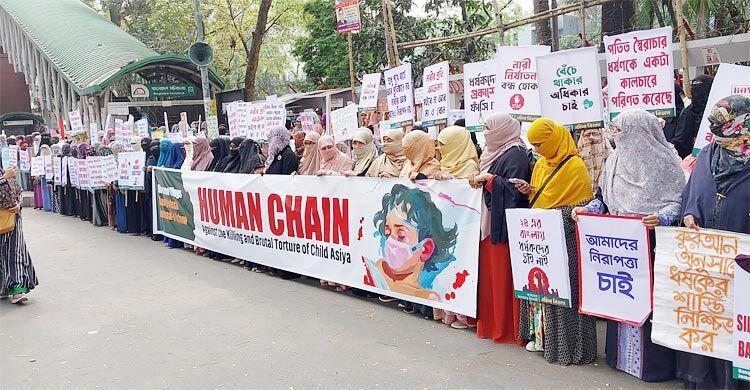
Today, they are visible, organized, and assertively engaging in political dialogue. Recent protests and advocacy efforts reflect their growing prominence:
- On March 15, they formed a human chain at the National Press Club advocating for justice for a rape-murder victim.
- On March 22, they condemned Israeli actions in Palestine, demonstrating their ability to resonate with both local and international audiences.
- In May, a nine-member delegation engaged with the British High Commissioner to discuss women’s empowerment and political involvement.
- In July, they welcomed the US Chargé d’Affaires at their headquarters, signaling a new level of diplomatic outreach.
Mobilizing a Significant Force
The organizational strength of Jamaat-e-Islami is formidable. Internal party data suggests the following:
- Total active members exceed 1 million.
- Women constitute approximately 40% of the membership, incorporating over 500,000 Rukn members.
- The women’s wing operates through a three-tier hierarchy: Associate members, Workers, and Rukn (elite cadre).
Maulana Abdul Halim, Assistant Secretary General and Northern Region Supervisor, highlights their grassroots mobilization: “From housewives in Gaibandha to university professors in Sylhet, our women are organizing yard meetings, voter rallies, and door-to-door campaigns.”
Aiming for Greater Political Representation
In previous local elections, women’s representation has notably increased:
- 2014: 36 women elected as Upazila Vice-Chairmen.
- 2009: 12 elected.
- 2001-2005: Four reserved female MPs in Parliament.
Current discussions within the party suggest plans to field female candidates, even from diverse backgrounds, should they gain Executive Council approval.
A Moral Mission Beyond Votes
Nurunnisa Siddika, Women’s Wing Secretary, emphasizes that their efforts extend beyond vote acquisition. “We don’t work for votes. We work for da’wah to awaken Muslim women to their rights.” She underlines the need for women to recognize their votes as a sacred trust.
The August 5 uprising has inspired women to question political accountability, impacting how they approach the next elections.
Countering Perceptions and Building Alliances
Members of Jamaat-e-Islami are actively working to dispel long-held views of the party being anti-women. Maulana Halim asserts, “Half our party is women. Soon, it’ll be more than half.” The recent diplomatic engagements are part of a strategy to alter public perception and position the party as a progressive force.
Political Analysts Weigh In
Political scientists are closely monitoring this development. Dr. Sabbir Ahmed, a Political Science Professor at Dhaka University, remarks, “This is Jamaat’s most sophisticated electoral play yet.” He notes that mobilized women may sway critical constituencies.
Dr. SM Ali Reza adds that Jamaat is creating a holistic ecosystem that spans from educational institutions to community networks, establishing itself as a serious opposition force.
Conclusion: The Stakes at Hand
If successful, Jamaat’s women’s wing could redefine the engagement of Islamist parties with female voters, evolving strategies for courting rural women and transforming moral narratives into electoral impact. As the elections draw near, the mobilization of this previously silent force has the potential to reshape the political landscape in Bangladesh.
