


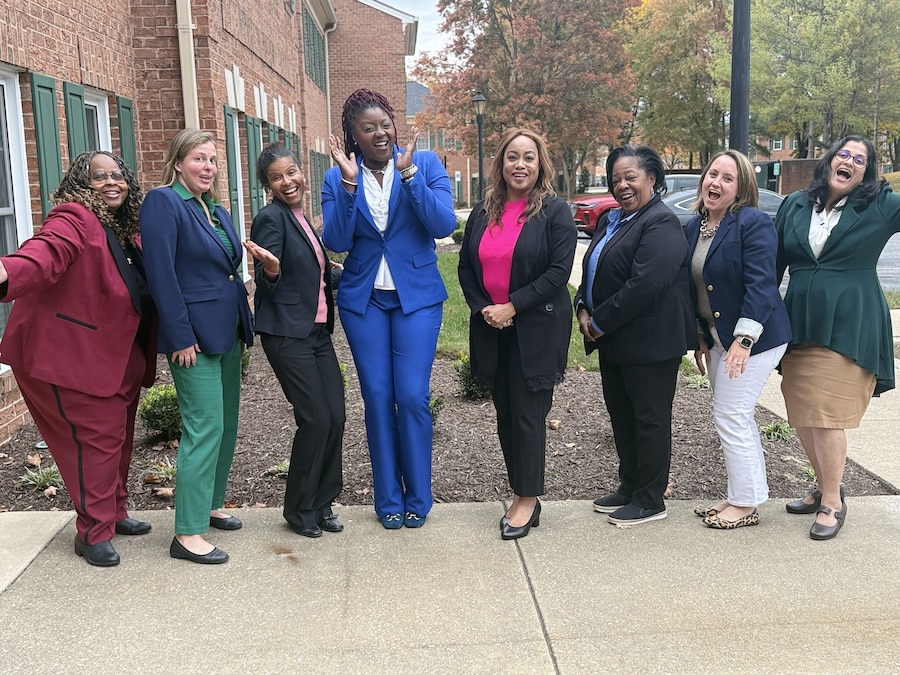
Baltimore County Sees Surge in Female Political Candidates
Historical Context
Baltimore County has historically lagged behind in female political representation, missing key milestones in 1992 and again in 2018 when many women were elected to high offices nationwide. While other regions embraced female leadership during these pivotal years, Baltimore County remained predominantly male and white.
Current Landscape
Currently, the landscape is changing with the County Council’s expansion from seven to nine seats, which has prompted a notable influx of female candidates. Among these, four women, including three Black leaders, are competing for council seats. Additionally, two women of color are entering the race for state delegate, while incumbent delegates Jennifer White and Michele Guyton aim to retain their positions.
Supporting Organizations
Efforts to cultivate a pipeline of female political leaders are spearheaded by organizations like Emerge Maryland. Diana Emerson, executive director of Emerge Maryland, emphasized the excitement surrounding the increased number of women entering Baltimore County politics, stating: “The fact that we have this many women stepping up to the plate to change the narrative for Baltimore County is just so exciting.”
Regional Trends
This growth is not isolated; it reflects a regional trend. For instance, Howard County has four women vying for the county executive position, while Kathy Klausmeier serves as Baltimore County’s first female executive. These developments illustrate a broader shift toward inclusive leadership across the state.
Candidates and Issues
Among notable candidates is Jyoti Mohan, a history professor and nonprofit organizer, who is campaigning for a state delegate seat in northern Baltimore County. She is challenging incumbent Nino Mangione, who has held the position for seven years. Mohan emphasizes the importance of addressing local issues such as affordable housing and family support services rather than engaging in divisive political rhetoric.
Trends in Representation
With women candidates now in contention, there is hope for increased transparency and dialogue within the County Council. Del. Kim Ross, who currently holds a seat, noted that more women could have positively influenced the council’s recent redistricting process.
Moreover, Black women, in particular, have been at the forefront of advocating for greater representation, ensuring that diverse voices are part of the decision-making process.
Looking Forward
With four women—Shawn McIntosh, Arkia Wade, Sharonda Huffman, and Makeda Scott—now running in newly established districts, Baltimore County is poised for a change in its political representation. This potential shift could reshape the council’s dynamics, especially as women make up a significant portion of the electorate, with one-third being Black voters, alongside increasing Asian and Latino populations.
