


Women Driving Science and Innovation in South Africa
Despite significant advancements in gender equality through progressive legislation, South Africa continues to struggle with achieving substantive gender equity, especially in the sciences. This sentiment was echoed during a recent forum organized by the Organization for Women in Science for the Developing World (OWD) at the Science Forum South Africa 2025.
Focus on Women’s Representation in Science
During the discussions, attendees underlined the importance of enhancing women’s representation in scientific institutions. They agreed that the recognition and support of women’s contributions are critical for fostering a more inclusive scientific community. Participants highlighted persistent barriers that limit women’s potential in scientific fields, thus hampering their career advancements.
The Perspectives of Leading Female Academics
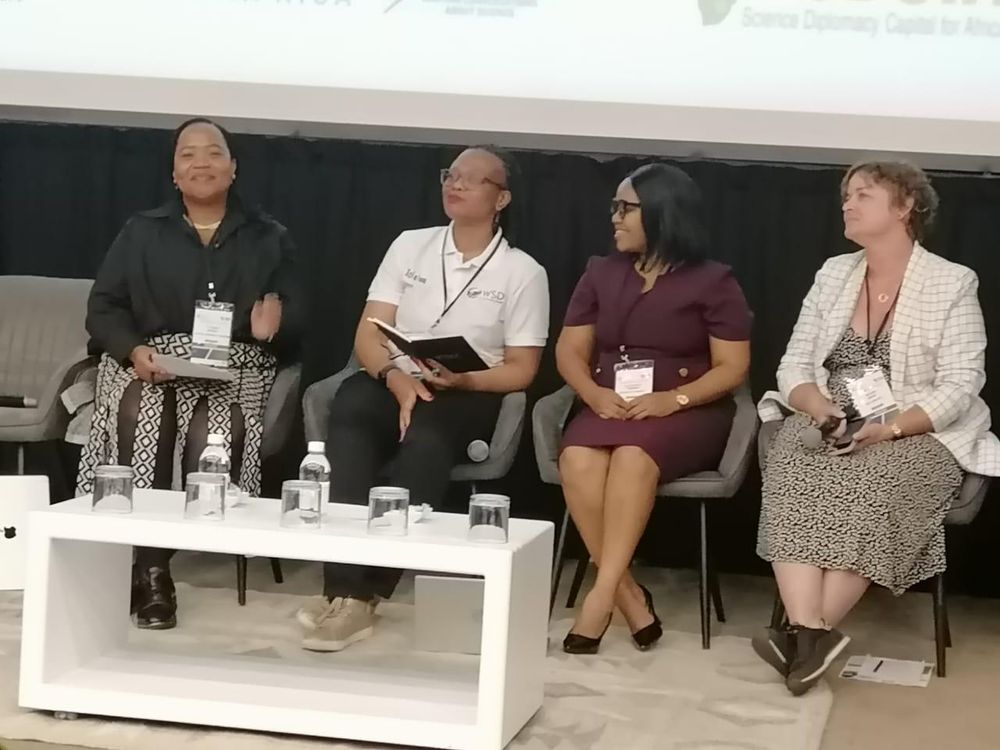
A high-profile panel, composed exclusively of women, addressed the potential of women in driving scientific innovation and societal change in South Africa. Among them was Nokukhanya Thembane, a lecturer at the Department of Biomedical Sciences at Mangosuthu University of Technology, and a strong advocate for STEM education. She articulated the idea that women are not just contributors to science but are also integral leaders and innovators.
Women as Leaders and Innovators
Thembane emphasized the extensive capabilities of women in scientific and technological realms, stating, “We are leaders, innovators, and system-changers.” She cited various examples of women-led initiatives that have implemented digital health platforms and surveillance systems, showcasing how women are effectively transforming academia into a resource for communities.
The Patenting Gap
Despite their contributions, Thembane reported that women account for less than 9% of patent filings in South Africa. This statistic highlights a broader issue—the need for systems to support women’s inventive potential. She pointed out that existing structures, characterized by funding disparities and inadequate representation in decision-making roles, create hurdles for women to fully express their scientific expertise.
Impactful Innovations in Health
Thembane illustrated the importance of women’s contributions in digital health and equity, mentioning several notable projects:
- Dr. Shikoh Gitau: Developed mobile health platforms for essential services like maternal care.
- Dr. Precious Lunga: Led healthtech solutions offering remote, data-driven care throughout Africa.
- Regina Honu: Initiated tech education programs empowering women to create local digital health solutions.
- Phyllis Kyomuhendo: Co-founded m-SCAN, a portable ultrasound device aimed at providing maternal scanning in underserved communities.
Addressing Local Needs
The success of these projects is attributed to support networks like the African Women in Digital Health (AWiDH), which ensure that innovations are tailored to local contexts. Thembane stated, “Women are shaping health systems and crafting culturally aware solutions.” These technologies aim directly at local challenges rather than replicating foreign models.
Revisiting Africa’s Sovereignty in Innovation
Thembane stressed the importance of African solutions built on local knowledge and priorities. She remarked on lessons learned during events like the Covid-19 pandemic, which highlighted the need for trust-building and community engagement in health initiatives. “Innovation is not optional; it is a national imperative,” she concluded.
Entrepreneurship as a Cultural Shift
Thembane also argued that academic institutions should redefine their criteria for measuring success. “Innovation cannot be gauged solely by the number of published papers,” she urged. Instead, emphasis should be placed on measurable social impact and innovation outcomes, integrating a culture of entrepreneurship throughout academic programs.
Transformative Potential of Women in Science
Highlighting the social responsibility of science, she noted that women are well-positioned to transform the academic landscape into one that promotes inclusivity and social justice. Thembane called for a robust investment in women-led innovations to bridge the gaps that currently exist within the scientific community. She asserted that, “Women-led, community-informed innovation is not optional. It is essential for building a South Africa that leaves no one behind.”
