


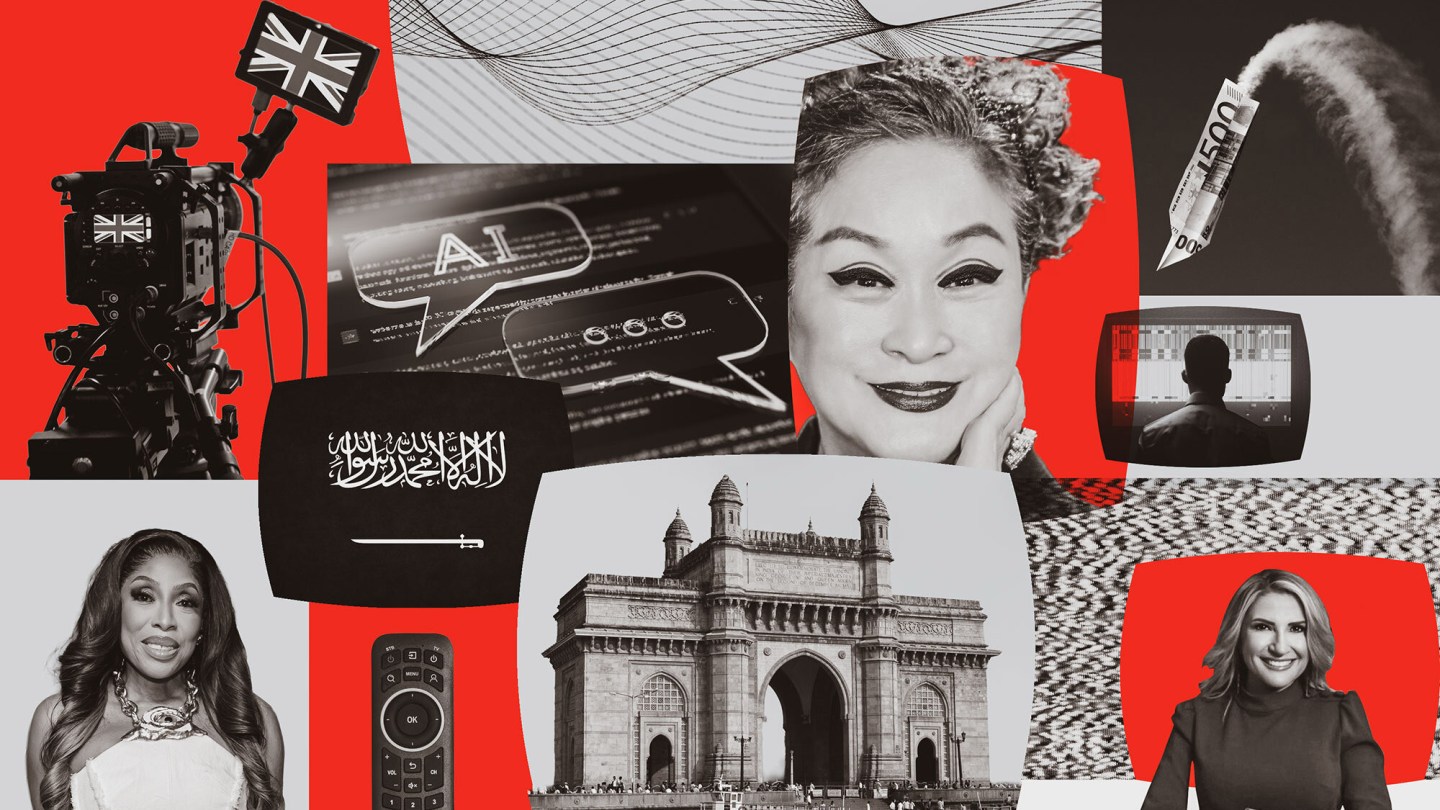
The Transformative Landscape of International Television in 2025
As the international television industry navigates the complexities of 2025, executives find themselves confronting the dual challenges of transformation and upheaval. Streaming consolidation, rising production costs, and the swift advancement of artificial intelligence (AI) are compelling industry leaders to reassess their business models and creative strategies. Compounding these challenges are political developments, including cuts to diversity programs in the U.S. and disputes over public funding in Europe, putting pressure on an industry traditionally rooted in inclusivity and narrative exploration.
Women Leading Change in Television
In this turbulent environment, influential leaders are emerging, particularly women who are reshaping the global television narrative. From Lagos to London, Munich to Mumbai, these executives are not just weathering the storm but actively defining the future of the industry.
Diversity as a Strategic Imperative
Diversity has long been a crucial theme in the international television arena, and it has surfaced as a key point of contention against a backdrop of renewed skepticism. “Diversity isn’t a program, it’s reality,” asserts Mo Abudu, CEO of Nigeria’s EbonyLife Media. She is launching the streaming platform EbonyLife ON Plus and plans to open a cultural hub in London, emphasizing the urgency for opportunities that cater to African narratives.
Laura Fernández Espeso, general director of Spain’s Mediapro, views diversity as critical to enhancing creativity and competitive advantage. ZDF’s program director, Nadine Bilke, echoes this sentiment, stating that meaningful representation in content and workforce will yield more impactful programming.
AI’s Role in Creativity
The discourse around representation intersects with questions about AI’s influence in the television sector. While concerns persist about automation diluting creativity, Kate Ward, managing director of unscripted at BBC Studios, encourages an optimistic view of AI as a collaborative tool rather than a threat. This perspective advocates for a future where human ingenuity and AI can work in synergy.
Original Programming in a Crowded Market
Despite technological advancements, the core challenge remains: can original programming continue to resonate in a saturated market? Cécile Frot-Coutaz, CEO of Sky Studios, emphasizes the necessity for creative risk-taking, spotlighting projects that dive into unusual narratives.
Successful examples exemplifying this creative boldness include the British coming-of-age series “Adolescence,” Italy’s dramatic “La Storia,” and Germany’s captivating “Babylon Berlin.” Moreover, Asian productions like the anime hit “Kaiju No. 8” and the globally acclaimed “Squid Game” showcase international television’s ability to create compelling content that transcends borders.
Profiles of Key Leaders
Mo Abudu – CEO, EbonyLife Media (Nigeria)
As a pioneer in amplifying African storytelling, Abudu is set to transform traditional narratives through EbonyLife ON Plus and the upcoming EbonyLife Place in London. Her investments underscore her belief that “our stories don’t need permission, they need opportunity.”
Maria Pia Ammirati – Director, Rai Fiction (Italy)
Ammirati’s historical series “La Storia” has drawn critical acclaim, reflecting her vision amidst the growing competitive landscape shaped by global streaming giants.
Nadine Bilke – Program Director, ZDF (Germany)
Bilke advocates for public broadcasters to focus on their values rather than chasing streaming giants, stressing the importance of understanding audience engagement in a digital age.
Carol Choi – Executive VP, Walt Disney Co., Asia-Pacific
Choi’s marketing strategies have propelled Disney+ to the forefront in Asia-Pacific, emphasizing the need for culturally resonant storytelling.
Julie Choi – CEO, TVING (South Korea)
As Korea’s first female streaming CEO, Julie Choi has implemented significant changes in the sports broadcasting landscape, focusing on improving fan experiences.
Industry Challenges and Future Outlook
Amid ongoing industry challenges, including budget constraints and changing viewer behaviors, these leaders embody resilience and innovation. They understand that adapting to a constantly evolving media landscape is essential for maintaining relevance and success.
Conclusion
The stories and strategies of these powerful women in international television illustrate a collective commitment to shaping an industry that thrives on diversity, creativity, and adaptability. As we approach the future, the resilience and ingenuity of these leaders will undoubtedly pave the way for narratives that continue to resonate globally.
