


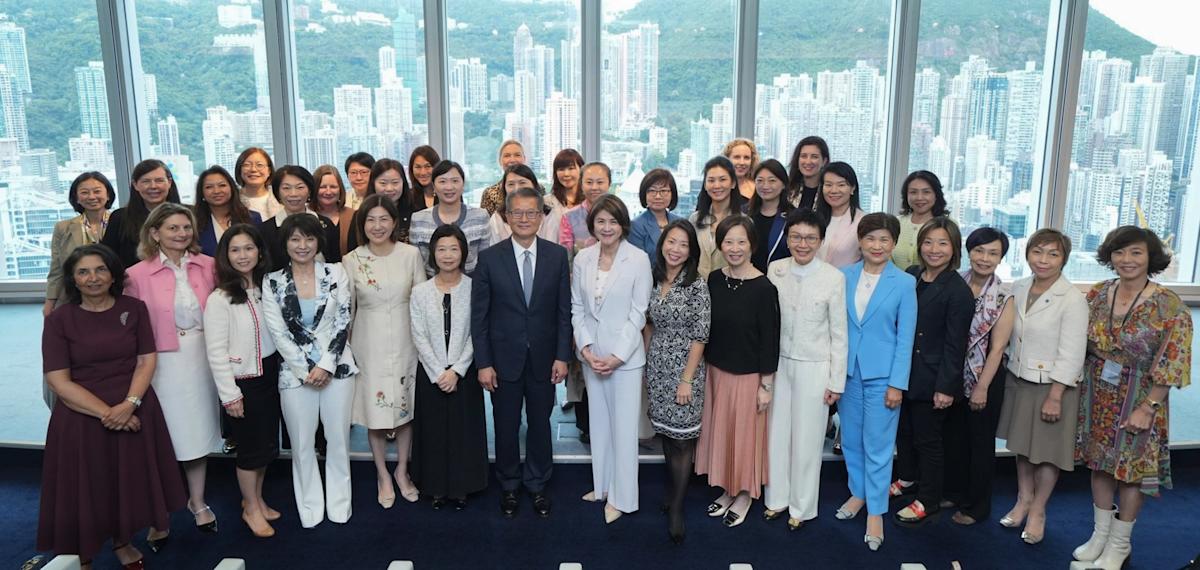
Hong Kong’s financial landscape has experienced a notable shift in female representation within senior roles, as revealed in a recent survey. Conducted by the Women Chief Executive Network, KPMG, and the Women’s Foundation, the findings highlight a significant rise in women occupying leadership positions and board seats in recent years.
As of this year, women hold 45% of senior leadership roles—including titles such as CEO and managing director—across banks, asset management firms, insurance companies, and fintechs in Hong Kong. This signifies an 11-point increase from the 34% reported in 2018.
In addition, the survey indicated that female participation on boards of directors reached 37%, up from 21% in 2018—a jump of 16 percentage points. Data was collected from 24 Women Chief Executive Network member firms and included responses from 532 financial professionals in the region, gathered between April and July.
The Women Chief Executive Network comprises 60 female executives from prominent organizations such as UBS, Standard Chartered, and Citigroup. Notable figures, including Amy Lo Choi-wan of UBS, Mary Huen Wai-yi of Standard Chartered, and Aveline San Pau-len of Citi, are among the active members, illustrating a strong leadership presence among women in the industry.
The support for women’s advancement in Hong Kong is underscored by the upcoming Women Chief Executives Summit 2025, scheduled for November 3. This event coincides with the Global Financial Leaders’ Investment Summit organized by the Hong Kong Monetary Authority, which will host top bankers from around the world.
The boost in female leadership has been attributed to regulatory changes aimed at enhancing gender diversity, particularly new policies introduced by the Hong Kong Exchanges and Clearing (HKEX). As a result, fewer than 10 of the approximately 2,600 listed companies lack women on their boards, compared to over 800 firms—representing 40%—without female directors in 2022.
Additionally, corporate culture is evolving, with 72% of respondents noting that the presence of female role models has increased. “Women in Hong Kong are beginning to lead authentically and successfully, which is challenging longstanding stereotypes about leadership,” said Ivy Cheung, senior partner at KPMG China.
While 77% of entry-level women in Hong Kong’s financial sectors feel supported in pursuing leadership roles, this sentiment declines to 59% among mid-career women. The survey suggests that companies can foster a more supportive environment by enhancing parental leave and mental health resources.
The integration of emerging technologies like artificial intelligence in the financial sector is expected to provide women with the tools necessary for career development, further promoting gender inclusivity.
According to the survey, Hong Kong is viewed favorably as an international financial hub that embraces women breaking through the glass ceiling, with 76% of respondents highlighting the city’s safety as a crucial factor in supporting women’s professional growth.
This comprehensive survey paints an optimistic picture of gender diversity in Hong Kong’s financial services, reflecting a concerted effort among organizations to cultivate women’s leadership capabilities in a supportive environment.
For further insights and developments in financial leadership, continued monitoring of initiatives like the Women Chief Executives Summit will be essential in understanding the trajectory of gender diversity in the region.
This article has been derived from reporting by the South China Morning Post, a major outlet focusing on developments in China and Asia.
