


The Burkini Debate: A Crossroads of Culture and Politics
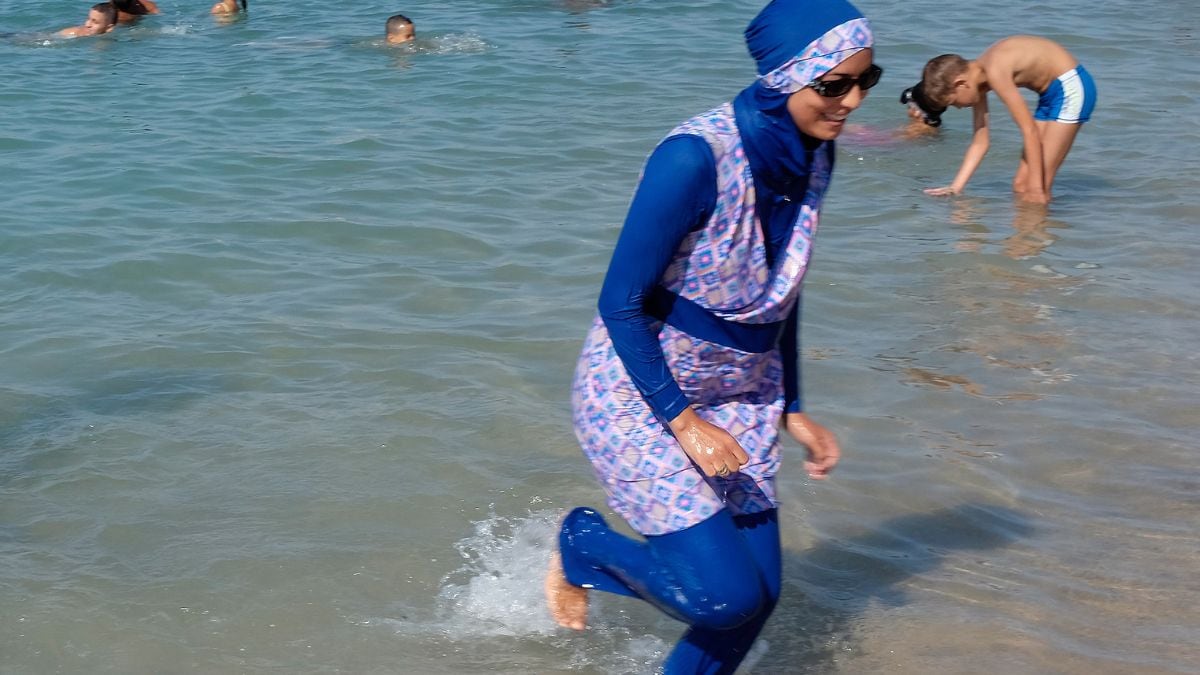
While swimwear may appear to be a trivial subject, the burkini—a full-body swimsuit designed for Muslim women—has become a focal point in international political discussions. The garment is currently under scrutiny, with countries like France imposing bans on its use in public spaces, contrasting sharply with Syria’s new policies that mandate its wear in public swimming areas.
Syria’s Shift Towards Burkini Mandates
Under the current Islamist-led administration, Syria has enacted rules that require women to don burkinis or similarly modest swimwear at public beaches. This new dress code extends beyond swimwear; women are also expected to wear loose-fitting clothing in public, while men are prohibited from appearing shirtless in public spaces.
Interestingly, these mandates are not uniformly enforced; private resorts are exempt, allowing for “Western swimsuits” as long as they adhere to “general morals,” according to Syria’s tourism authorities. Furthermore, the recent regulations mark a significant change in cultural policy, emerging shortly after Islamist factions took power.
Public Reaction and Implications
The introduction of these modesty rules has sparked diverse reactions among Syrians, stirring discussions about individual liberties within the context of the new governance. The authorities claim these changes reflect “the public interest,” yet the lack of clarity regarding enforcement raises questions about their practicality.
The French Opposition to Burkinis
The debate regarding burkinis in France gained traction in 2016 when several coastal towns banned the garment, arguing that it contradicted the nation’s secular principles and posed security risks. These bans caught international media attention, especially after images surfaced of law enforcement demanding a woman remove her burkini on the beach, igniting global outcry.
In a notable twist, Grenoble’s city council attempted to revoke the burkini ban in public swimming pools in 2022, spurred by local activism. However, this attempt was swiftly nullified by France’s highest administrative court, reinforcing the nation’s commitment to maintaining the “neutrality of public service.”
Secularism and Its Implications
Central to France’s stance on the burkini is its long-standing doctrine of secularism, or laïcité, which advocates for the separation of religion from public institutions. The introduction of the “separatism law” under President Emmanuel Macron further fortified this viewpoint, positioning it as a safeguard against perceived religious extremism.
Voices of Dissent
Critics argue that these regulations do not champion freedom, but rather, restrict it. Fatima Bent, a member of the Muslim feminist group Lallab, emphasized that the view of Muslim women as a monolithic group oversimplifies the complexities of diverse cultural identities and choices.
Global Responses to Burkini Bans
France is not alone in its opposition to the burkini; several nations have implemented similar restrictions. Some notable examples include:
- Austrian Bans: Austria has previously prohibited burkinis in public swimming pools, labeling them as “unsafe clothing.”
- Italy’s Penalties: Since 2009, Italy has fined women up to 500 euros for wearing burkinis in beaches or swimming facilities.
- Belgium: The mayor of Antwerp once described burkinis as “wearable tents,” which led to protests among Muslim women.
- Germany: The situation is mixed; while some areas have enforced bans citing hygiene issues, court cases have successfully overturned these regulations in others.
The Origin of the Burkini
The burkini was created in 2004 by Lebanese-Australian designer Aheda Zanetti, who aimed to provide Muslim women with a comfortable and practical option for swimwear. Zanetti’s inspiration stemmed from her niece’s struggles to participate in sports due to restrictive clothing. This led her to design a garment that harmonized modesty with functionality.
Initially intended for Muslim women, the burkini gained traction among various demographics, including cancer survivors and individuals seeking additional sun protection. In 2023, the garment made headlines again when Erica Robin, Pakistan’s first Miss Universe delegate, showcased a burkini during the competition, marking a significant cultural milestone.
Conclusion
The burkini is emblematic of wider discussions around women’s rights and cultural identity. As nations navigate the complexities of these issues, the garment stands as a microcosm of the differing views on personal freedom, expression, and cultural norms.
