


Women in Science and Engineering in the EU: 2022 Overview
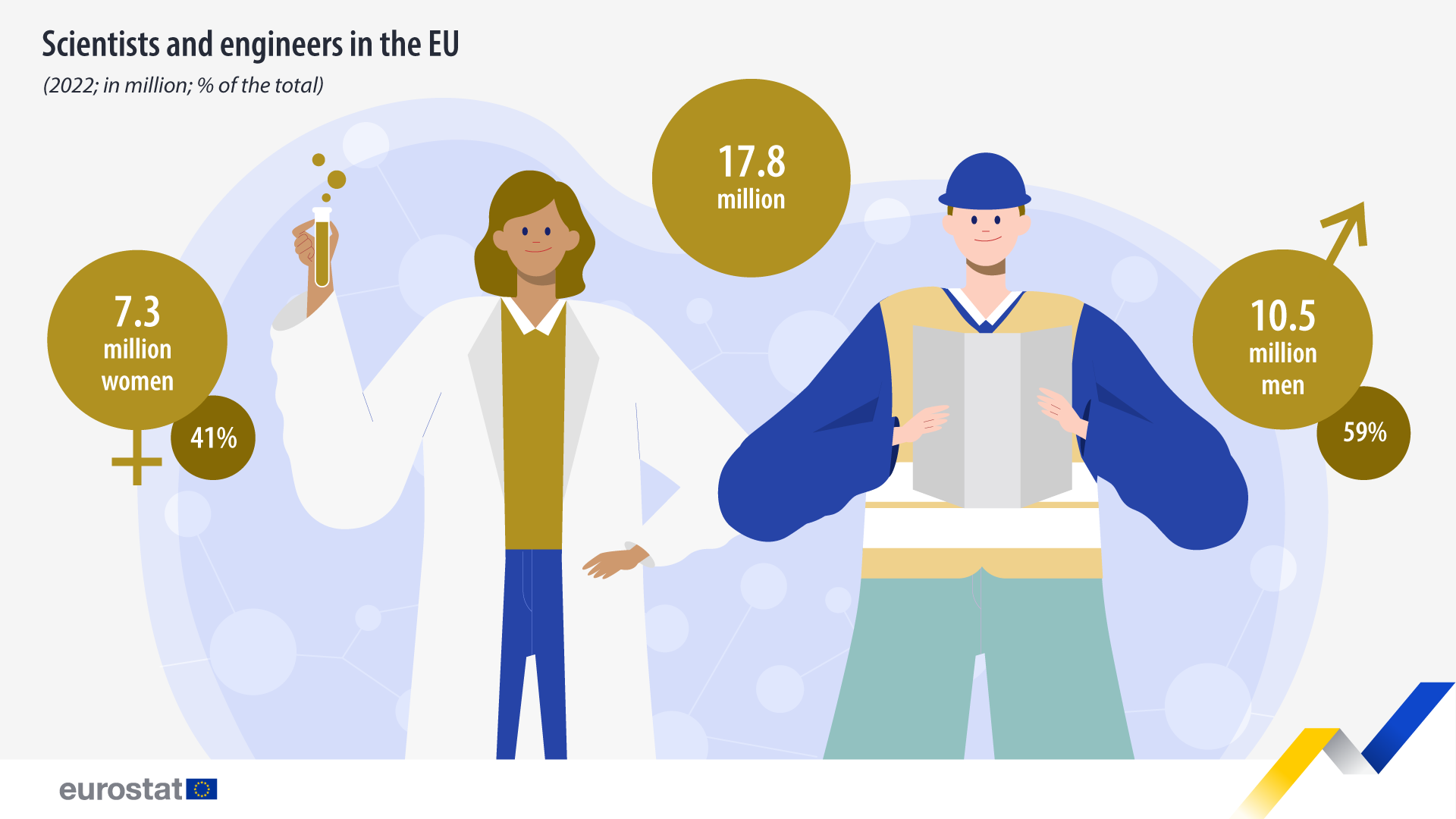
In 2022, the number of female scientists and engineers in the European Union reached approximately 7.3 million, marking an increase of 310,500 from 2021. This remarkable growth translates to women constituting 41% of the overall workforce in science and engineering fields.
Sector Distribution
The majority of women working in these fields were employed in the service sector, where they accounted for 46% of the workforce. In contrast, the manufacturing sector had a lower representation, with only 22% of scientists and engineers being female.
Country Variances
The representation of women in science and engineering varies significantly across EU member states. In 2022, countries such as Denmark, Lithuania, and Bulgaria boasted high proportions of female scientists and engineers, with figures of 53%, 52%, and 51%, respectively. Conversely, Hungary, Finland, and Germany reported much lower percentages, with participation rates of 31%, 32%, and 34% respectively.
Source dataset: hrst_st_nsecsex2
Women in Science and Technology Occupations
Women working in science and technology are categorized based on their involvement in creating, advancing, and applying scientific and technological knowledge. This includes not just scientists but also technicians and associated professionals.
Regional Perspectives
According to regional data, the highest percentages of women in science and technology were observed in Lithuania (64.1%), Corsica (63.9%), and Latvia (62.7%). On the flip side, the regions with the least female participation included Nord-Ovest in Italy (45.3%), Malta (45.8%), and Sud in Italy (46.1%).
Source dataset: hrst_st_rsex
Celebrating Women’s Contributions
This data release coincides with the International Day of Women and Girls in Science, which is celebrated annually on February 11. The continuing increase in female representation in STEM fields is crucial for sustainable development and innovation in science and engineering.
