


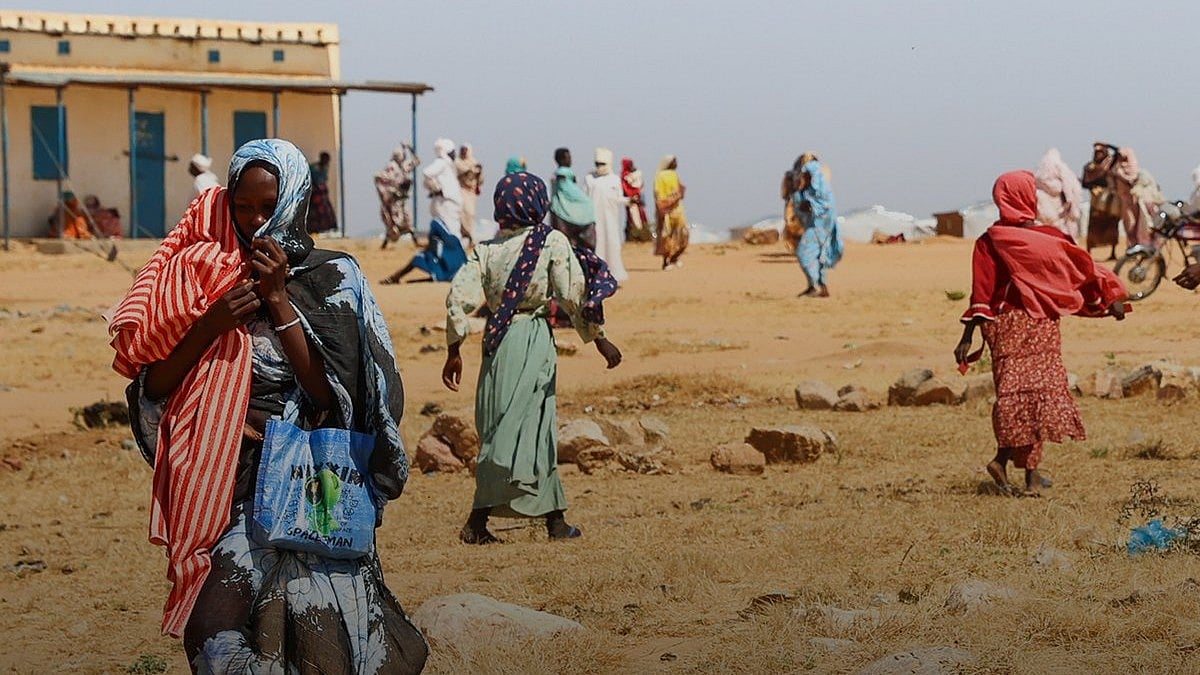
Women and Girls Face Record Risks in Conflict Zones
The latest report from the United Nations brings alarming insights into the current state of active conflicts around the world, revealing that 676 million women reside within 50 kilometers of ongoing violence—the highest figure since 1996. Civilian casualties among women and children have surged, with recent data indicating a quadrupling of such incidents compared to previous years. Moreover, conflict-related sexual violence has increased dramatically by 87%.
25 Years of Security Resolution 1325: Progress Under Threat
This year marks the 25th anniversary of the pivotal Security Council Resolution 1325, which was established to ensure women’s participation in peace and security initiatives. However, the UN report highlights a troubling trend, suggesting that decades of advancements in women’s rights and representation are now unraveling.
Sima Bahous, UN Under-Secretary-General and Executive Director of UN Women, emphasized the gravity of the situation: “Women and girls are being killed in record numbers, shut out of peace tables, and left unprotected as wars multiply. Women do not need more promises; they need power, protection, and equal participation.”
The Disparity in Peace Negotiation Roles
Despite substantial evidence that including women in peace negotiations leads to more durable agreements, their participation remains critically low. In 2024, a staggering 90% of peace processes featured no female negotiators, with women accounting for merely 7% of negotiators and 14% of mediators worldwide.
Funding Imbalances: Military Spending vs. Support for Women’s Organizations
The report identifies a significant funding imbalance, noting that while global military expenditures surpassed $2.7 trillion in 2024, women’s organizations operating in conflict zones received only 0.4% of available aid. This severe underfunding places many grassroots organizations on the brink of collapse due to financial constraints.
Bahous remarked, “These are not isolated data points; they are symptoms of a world that is choosing to invest in war instead of peace, and one that continues to exclude women from shaping solutions.”
Call for Action: The Need for a Gender Data Revolution
The report urges governments and international organizations to commit to a “gender data revolution.” It warns that the lack of disaggregated data obscures the experiences of women in conflict zones, leaving their needs unaddressed and their realities unacknowledged.
UN Women calls for actionable steps toward creating measurable outcomes: resolving conflicts through inclusive political solutions, empowering women to lead security reforms and recovery initiatives, and establishing greater accountability for violations, along with access to justice and reparations for survivors.
Conclusion
As the global situation continues to deteriorate, the need for decisive action to protect women and girls in conflict zones has never been more urgent. Only through inclusive efforts can we hope to address the disparities and ensure a safer future for those most affected by violence.
