


WNBA All-Stars Unite for Fair Pay Advocacy
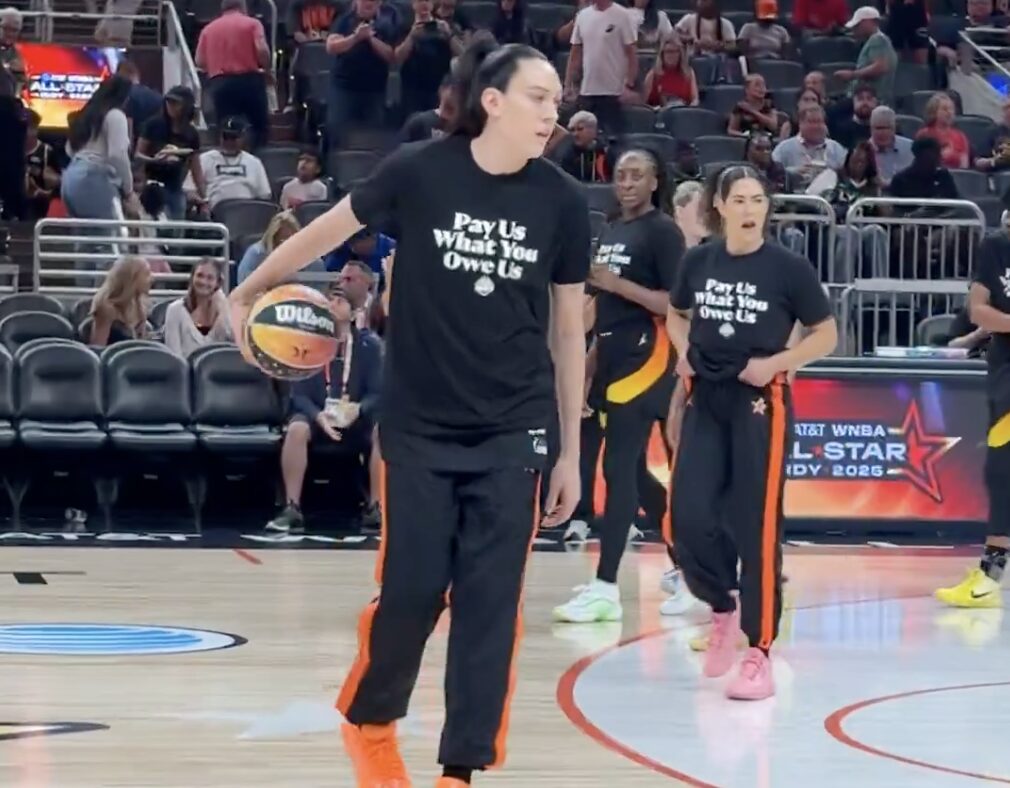
During the recent 2025 WNBA All-Star Game, players conveyed a powerful message to league officials: the time has come for equitable compensation. This call for fair pay arose following a collective bargaining negotiation, which left many players feeling undervalued and disrespected.
Financial Growth Amid Salary Disparities
The WNBA is entering a new financial era with a media rights deal poised to deliver $200 million annually starting in 2026. Franchise valuations are now estimated between $250 million and $500 million, and sponsorship deals are increasingly robust. However, this financial growth is not reflected in player salaries, which peak at $250,000—significantly lower than the multi-million dollar contracts in the NBA.
A Show of Unity at the All-Star Game
In a bold move, WNBA players donned matching t-shirts reading, “Pay us what you owe us,” during their warm-ups for the All-Star Game. Sparks guard Kelsey Plum remarked on the collective effort, stating, “We wanted to do something … as a collective, and I thought that it’s a very powerful moment. Sometimes, you don’t have to say anything.”
Star player Caitlin Clark added during a pre-game press conference, “We should be paid more, and hopefully that’s the case moving forward as the league continues to grow.” This sentiment encapsulates the players’ ongoing battle for fair compensation within the league.
Allies in the Fight for Fair Pay
The struggle for equal compensation has historical precedence within women’s sports, with some victories paving the way for future progress. Notably, the U.S. Women’s National Soccer Team’s successful class-action lawsuit against the U.S. Soccer Federation resulted in a $24 million settlement, establishing equal pay for both men’s and women’s teams moving forward.
WNBA players benefit from a strong support system, particularly from their fans. During the All-Star Game, the crowd erupted in a chant of “Pay them!” when Minnesota Lynx forward Napheesa Collier received the MVP trophy, highlighting a shared belief in the players’ quest for fair compensation. “We didn’t know that was going to happen. So it was a genuine surprise,” Plum shared. “It just shows that as players, we are united—but the fans are united in believing what we’re seeking,” too.
Conclusion
As the WNBA continues to prosper, the necessity for fair pay for its athletes grows increasingly urgent. The recent display of unity and advocacy during the All-Star Game highlights the commitment of players to seek equitable treatment amid their league’s financial success.
