


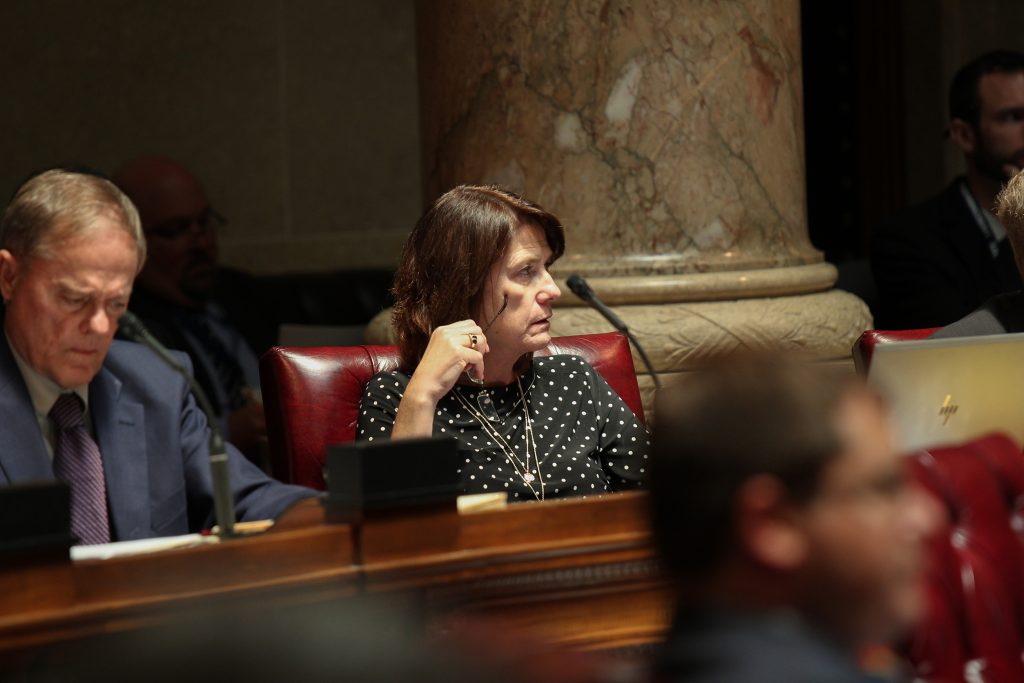
The Rise of Women Legislators in Wisconsin: A Century of Progress
Wisconsin’s political arena has witnessed significant changes over the past century, particularly in the representation of women. In January 1925, the state welcomed its first female legislators: Mildred Barber, Helen M. Brooks, and Helen F. Thompson. A hundred years later, in January 2025, a historic milestone was achieved with 44 women—34 in the Assembly and 10 in the Senate—making up one-third of the state’s Legislature for the first time.
Growth in Female Representation
According to a recent report by the Legislative Reference Bureau, the last decade saw a remarkable 30% increase in the number of women in Wisconsin’s Legislature, with one additional legislator compared to the previous session. Female participation has markedly shifted; currently, 34 of the 44 women legislators are Democrats, including the leadership in both the Assembly and Senate.
Demographics and Careers
The Legislative Reference Bureau’s analysis highlights the professional backgrounds of current lawmakers:
- 16 out of 33 senators and 43 out of 99 assembly members are full-time legislators, earning around $55,000 plus travel and lodging expenses.
- 31 Assembly members identified as small-business owners, making it the second most common profession.
- Local government roles and experiences as legislative aides are also prevalent, with 14 senators and 53 assembly members possessing such backgrounds.
Breakdown of Senate and Assembly Members
Democratic women have notably made the most gains within the Legislature, despite the Republican Party holding the majority in both houses. Current statistics reveal:
- Women now represent a majority among Assembly Democrats, comprising 26 of 45 seats.
- In the Senate, eight out of 15 Democratic members are women.
Organizations Supporting Female Candidates
Emerge Wisconsin, founded in 2008, plays a pivotal role in training Democratic women to pursue political office. The organization offers:
- A 70-hour training program covering essential skills like fundraising, networking, and campaign communications.
- Regular training sessions held over six months to foster a strong foundation for success in political campaigns.
Aging and Experience of Legislators
Current legislators vary widely in age and experience:
- Senators’ average age is 53, ranging from 31 to 81 years.
- Assembly members average 51 years of age, with ages between 25 and 71.
Notable professions among assembly members include: chefs, police officers, nutritionists, and military veterans, with many serving as first-time representatives.
Wisconsin’s First Women Legislators
Mildred Barber, at 23, became a Republican Assembly member in 1925 after a decisive election against a Prohibitionist candidate. Her family tie to the legislature is especially unique, as she was part of the first father-daughter pair in state history. Helen Brooks, an educator, and Helen Thompson, a hotel owner from Park Falls, were also among the early female legislators from Wisconsin.
“They talk about a woman’s sphere as though it had a limit. There’s not a place in earth or heaven… without a woman in it,” stated Helen Thompson in a quote rediscovered by a Wisconsin Public Radio reporter in 2023.
The Long Road to Equality
While women gained representation in the Assembly in 1925, it wasn’t until 1975 that the first woman, Kathryn Morrison, joined the Senate. Serving just one term, she was instrumental in initiating reforms in sexual assault laws.
With the growing representation of women in Wisconsin’s Legislature, it is clear that the state is progressing towards greater gender equality in politics.
