


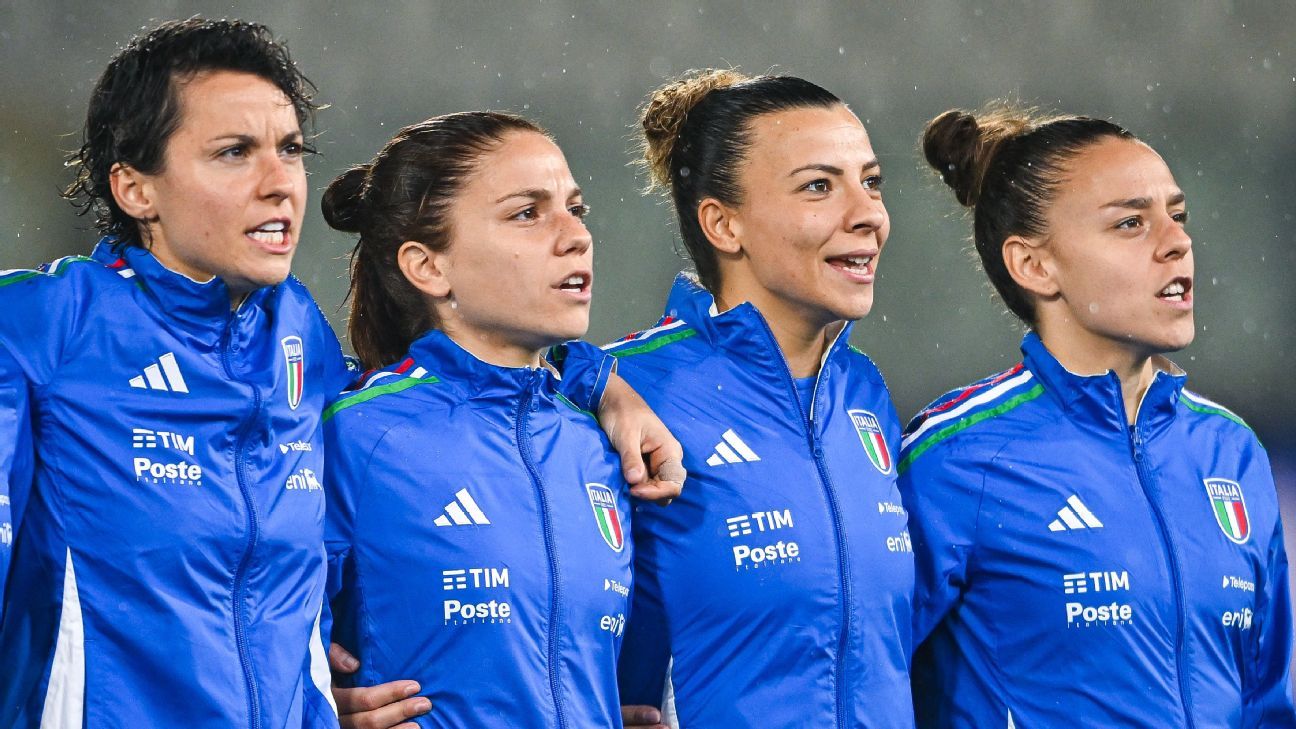
Italy’s women’s football team emerged as a formidable force during the 2019 World Cup in France, capturing the attention of the globe by reaching the quarterfinals with a squad composed entirely of amateur players. Their remarkable achievement came at a time when the men’s national team notably failed to qualify for their own World Cup, marking a significant moment in Italy’s footballing narrative.
The success story of 2019 catalyzed a movement toward equality in women’s sports, with the Italian Football Federation (FIGC) committing to professionalizing Serie A Femminile by 2022. However, subsequent tournaments, including the 2022 Euros and the 2023 World Cup, saw the national team exit at the group stage, diminishing some of the momentum gained.
In the wake of disappointing performances, head coach Milena Bertolini resigned after players expressed concerns about the lack of support and preparation for success. Today, Italy enters a new chapter under the direction of Andrea Soncin, who steps into the role with a more robust and promising squad that includes the first Italian woman nominated for the Ballon d’Or.
The Path to Professionalism
The journey of women’s football in Italy has been fraught with challenges, including ingrained cultural biases and insufficient investment. Instances like remarks made by former Italian Amateur Football Association president Felice Belloli in 2015 exemplified the systemic prejudice the sport faced, leading to his eventual dismissal and ban.
Despite these obstacles, a domestic league has existed since 1968, though it remained largely neglected until recent reforms. Italy’s earlier successes, such as reaching the quarterfinals in the 1991 World Cup, were overshadowed by a long period of underperformance, and Italy’s absence from major tournaments served to further stigmatize women’s football.
Capitalizing on Growth
The national team’s surprising run in 2019 reinvigorated awareness of women’s football in Italy. Reporting record viewership numbers on television, the team’s achievements demonstrated that there was a significant audience yearning for competitive women’s sports. Players articulated dreams of elevating the game as they returned home to enthusiastic support, prompting general optimism for the future.
In 2022, a pivotal moment arrived when the FIGC announced the transition to a fully professional league, a move that transformed the landscape of women’s football in Italy. It catalyzed investment across teams such as Juventus and AS Roma, establishing a more competitive domestic framework.
New Investments and Achievements
The professionalization of Serie A has fostered an environment ripe for development, with clubs like Fiorentina, Juventus, and AS Roma setting a precedent for professional clubs. The removal of a previous salary cap has allowed the most affluent teams to attract top international talent, which, in turn, enhances local player development.
As a result, the Italy squad for upcoming international fixtures is predominantly composed of players from Serie A, spotlighting the league’s role in bolstering the national team. With experienced players such as Laura Giuliani returning from abroad and new talents emerging, the team is now equipped with both experience and youth.
Looking Towards Euro 2025
As Italy prepares for Euro 2025, they face the tough challenge of competing in Group B against Spain, Portugal, and Belgium. Under Soncin’s leadership, the team intends to build upon its recent successes, balancing tactical flexibility with a more cohesive approach toward matches.
A historic moment for the women’s game in Italy! 🇮🇹⚽️
For the first time ever, our First Team, U19s and U17s are all going to the Euros in the same year! We’re so proud of you all! 💙#Azzurre #LeAzzurreSiamoNoi
— Italy ⭐️⭐️⭐️⭐️ (@Azzurri_En) April 10, 2025
Without a doubt, the pressure is mounting for this team, yet their recent performances have proved promising. Soncin’s fresh approach has seen improvements both tactically and in player morale. If Italy can capitalize on their potential at the upcoming tournament, they may just reignite the enthusiasm seen in 2019.
