


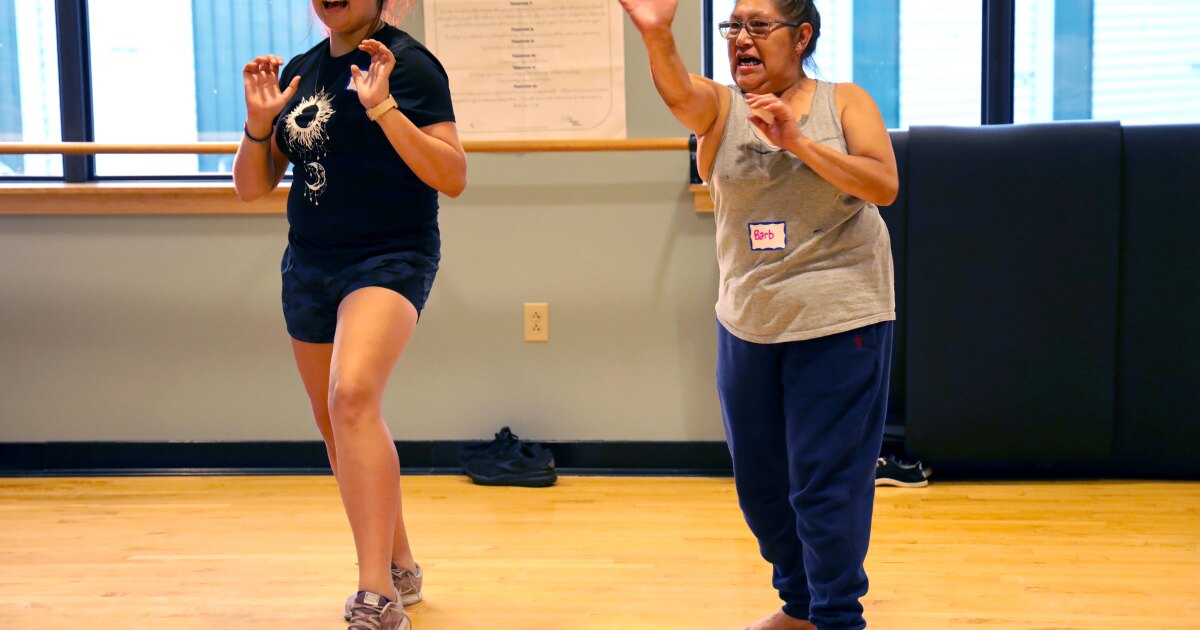
A recent self-defense workshop held at a tribal health center in Northern Maine provided crucial skills and empowerment to a group of ten Wabanaki women from the Houlton Band of Maliseet Indians. Facilitated by MiMi Tarshus, the workshop focused on self-defense techniques, situational awareness, and effective de-escalation strategies in potentially violent situations.
During the session, Tarshus led participants through a series of vocal and physical drills, emphasizing the importance of assertiveness. “I said no! One, two, three,” she instructed, prompting the women to respond with powerful affirmations and physical thrusts forward, simulating protective gestures.
Clara Porter, executive director of Prevention, Action, Change, a nonprofit organization, highlighted the critical aspects of self-defense, teaching participants to identify vulnerable areas on an attacker, such as the eyes, nose, throat, and groin. This practical knowledge is particularly vital, considering the high rates of violence faced by Indigenous women.
Throughout the workshop, the women engaged in realistic scenarios to practice their responses to harassment. For instance, a simulated aggravating interaction involved role play, where Porter, pretending to be aggressive, engaged participant Victoria Frederick. “Can I buy you a drink?” she asked. “I’m not interested,” responded Frederick. Tarshus encouraged Frederick to stand firm, leading to assertive declarations of “I said no!” while demonstrating proper self-defense moves.
This unique workshop design caters specifically to Indigenous women and individuals who identify as two-spirited, a term many Native tribes use to describe diverse gender identities. The initiative is part of a broader effort organized by Wabanaki Public Health & Wellness to address the pressing concern of missing and murdered Indigenous women, with Crisis Response Manager Lena Newell underscoring the alarming statistics surrounding this issue. “Out of the United States, we have the lowest population, but we have the highest murder rate, Indigenous women specifically,” she stated.
Statistics reveal that a significant 84 percent of Indigenous women experience violence in their lifetimes compared to 71 percent of white women, as reported by the National Institute of Justice. The data indicates that some tribal communities face murder rates for Indigenous women over ten times the national average. Newell emphasized the importance of these workshops, stating, “Knowing that just because I look the part, I can be an easy target… We’re showing our girls how to get out of this situation. Knowledge is powerful.”
The impact of violence against Indigenous women extends beyond individual cases; every year, countless Indigenous women and girls go missing across North America. The full extent remains undocumented, as federal databases lack comprehensive data collection based on tribal, state, or national levels. Maine, in particular, holds a history of unsolved cases pertaining to missing and murdered Indigenous women.
A poignant personal account was shared by Barbara Haynes, 57, who reflected on her experience in an abusive relationship. Seeking healing, she participated in the self-defense course, bringing her own daughter and granddaughter with her to break the cycle of familial violence. “I’m very proud of my mother,” commented her daughter, Vanessa Tomah. “Being a Native American woman is even harder.”
Efforts to address the ongoing crisis of missing and murdered Indigenous women have gained bipartisan attention in recent years, although recent political shifts may hinder progress. Chief Clarissa Sabattis of the Maliseet Tribe pointed out that recent directives have restricted discussions around diversity, equity, and inclusion, which are crucial for addressing the unique challenges faced by Indigenous communities.
“Diversity, equity, and inclusion very much impact us. It’s hard when you can’t use that language,” Sabattis noted, highlighting the struggle to communicate about issues that disproportionately affect Indigenous populations.

The potential cuts in funding for Bureau of Indian Affairs programs aimed at tracking data on missing and murdered Indigenous people could further exacerbate the crisis. Newell also recounted the traumatic legacy of Kim Neptune, a Passamaquoddy citizen whose murder several years ago continues to haunt her community. “It just brought a lot of fear and a lot of trauma,” Newell added.
As the workshop drew to a close, many participants found themselves reflecting on past traumas stirred by the scenarios. “I didn’t realize what this would bring up for me… I just didn’t know,” remarked Dolores Crofton-Macdonald, visibly moved. Together, the group participated in a smudging ceremony—a traditional practice of burning sage—and sang songs celebrating Indigenous strength and resilience. Wabanaki Public Health & Wellness plans to continue offering self-defense classes across all Wabanaki reservations, alongside Crisis intervention teams to support tribal communities in the face of trauma and violence.
