


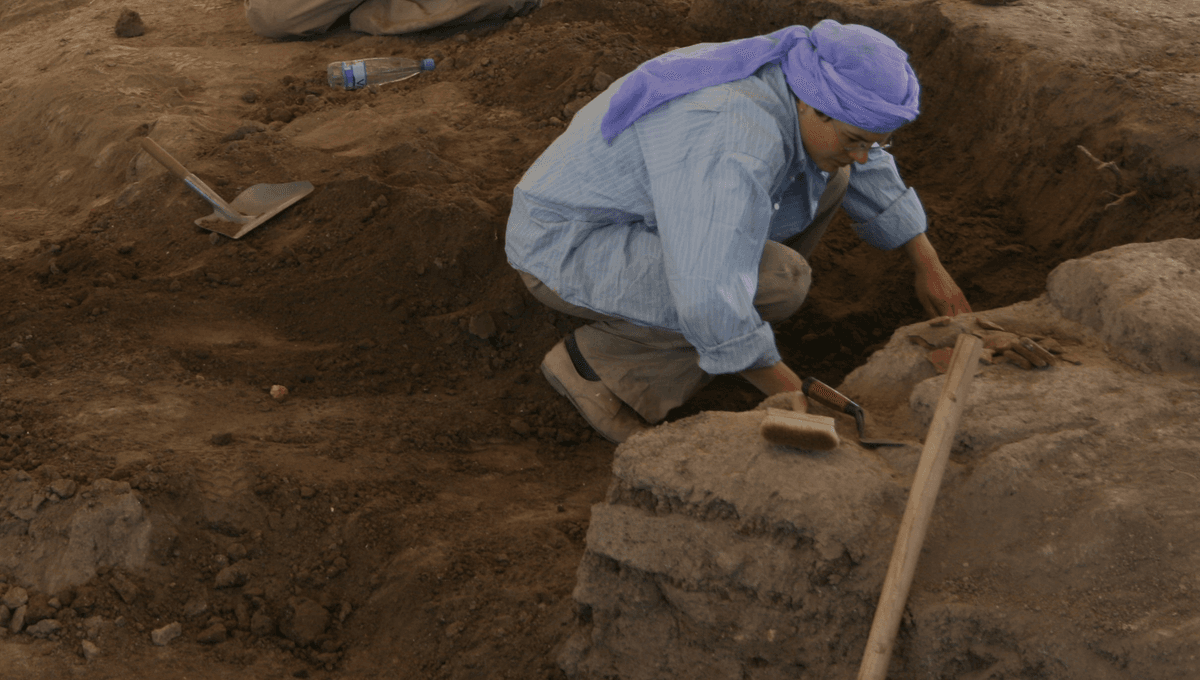
The discovery of DNA from over 100 individuals buried in the East Mound of Çatalhöyük sheds new light on the social structure of one of the world’s oldest known settlements. This ancient site, located in modern Turkey, was inhabited for approximately 1,200 years, yet no written records of its civilization have survived. Consequently, much of our understanding of the society has been derived from archaeological findings.
Insights into Kinship and Burial Practices
Research demonstrates that the inhabitants of Çatalhöyük showed a tendency to live in proximity to maternal relatives. Contrary to what might be expected in a tightly-knit family structure, kinship did not significantly influence burial locations. Bodies interred within the same dwelling were only slightly more likely to be closely related than those found in other areas of the settlement, indicating that living arrangements resembled more of a communal dormitory than typical nuclear family homes.
Dr. Eva Rosenstock from the University of Bonn elaborated on the findings, stating, “Female lineages were more important than male ones here in the seventh millennium BCE. This suggests that women were more important as far as forming households went.” This insight hints at a social dynamic where women played a critical role in household establishment and family structures.
Comparative Societal Structures
In anthropological discussions, matrilocality—a system where men reside with their partner’s family—can often correlate with higher status for women within society. Dr. Rosenstock clarified that while Çatalhöyük may not represent a true matriarchy, the societal structure was likely more favorable to women compared to later civilizations. In contexts where men lived with their partners’ families, it becomes less common for women to be mistreated, creating conditions that diverged significantly from subsequently recorded practices seen in larger urban centers.
Evidence from Archaeological Findings
The significance of women in Çatalhöyük has been noted since excavations began. Early archaeologist James Mellaart theorized about the prominence of women based on the discovery of numerous female figurines and other artifacts. While some may question the connection between decorative objects and societal status, supporting evidence exists. Women buried at Çatalhöyük tended to have more grave goods, particularly during the earlier periods of the East Mound’s occupation, suggesting higher social standing.
Contrasting the earlier egalitarian structure of Çatalhöyük with contemporary hierarchies reveals a society characterized by equality, unlike later eras when significant wealth disparities arose.
Long-Term Changes in Çatalhöyük
Çatalhöyük’s over millennium-long occupation led to gradual societal evolution. Recent findings indicate that the non-kin burial patterns became more pronounced toward the end of the settlement’s timeline. Earlier records suggest that houses were primarily occupied by extended families—a characteristic prevalent in many cultures throughout history. Interestingly, the prominent female figurines tied to the town were most commonly found in the later stages of occupation, hinting at a shift in societal values or priorities over time.
The Role of Previous Excavations
In excavations of Çatalhöyük’s West Mound, where previous findings included two prehistoric infants, researchers have connected these remains to the larger dataset from the East Mound. Despite being part of the same genetic pool as the East Mound individuals, the two infants were not closely related, mirroring the broader social pattern observed at the site.
Genetic Research Methodology
DNA preservation in Çatalhöyük’s climate posed challenges; however, innovative methods allowed researchers to extract genetic material from skeletons previously considered unsuitable for analysis. The dense petrous bone proved to be a more reliable source for DNA, enabling archaeologists to compile a comprehensive genetic overview from 131 individuals interred in 35 different households.
Findings from this study reveal that while genetic diversity within the Çatalhöyük population fluctuated throughout its extensive habitation, the overall genetic makeup remained relatively stable, suggestive of a cohesive community. Furthermore, trade links indicated by imported artifacts highlight a cultural exchange that contributed to this genetic continuity.
Published findings in *Science* contribute to understanding the complex legacy of Çatalhöyük, including its influence on population migrations into Europe via the Aegean region.
