


By Victoria Mejicanos
AFRO Intern
Understanding Uterine Fibroids: A Critical Health Issue for Women
Uterine fibroids are noncancerous tumors that frequently affect women, particularly those of African descent. Characterized by symptoms such as heavy menstrual bleeding, pelvic discomfort, and notable weight gain, these growths can significantly impact a woman’s reproductive health and overall quality of life. Despite their prevalence, uterine fibroids often remain under-discussed in medical communities and public spheres.
Prevalence and Impact of Fibroids
Statistics highlight the disparity in fibroid occurrence, with approximately 80% of Black women encountering fibroids by age 50, compared to 70% of their White counterparts, as reported by the National Institutes of Health. This prevalence indicates a greater likelihood of requiring medical intervention among Black women, making awareness and proactive health dialogues critical.
Dr. Nicola London, a seasoned OB-GYN, emphasizes the hereditary nature of fibroids and encourages women, especially younger generations, to engage in family discussions regarding their health history. “Some of the older population, they don’t like to talk about, they don’t want to talk about anything,” Dr. London stated, suggesting that younger women should inquire about their family’s medical past, particularly regarding surgeries such as hysterectomies.
Legislative Support for Fibroid Research
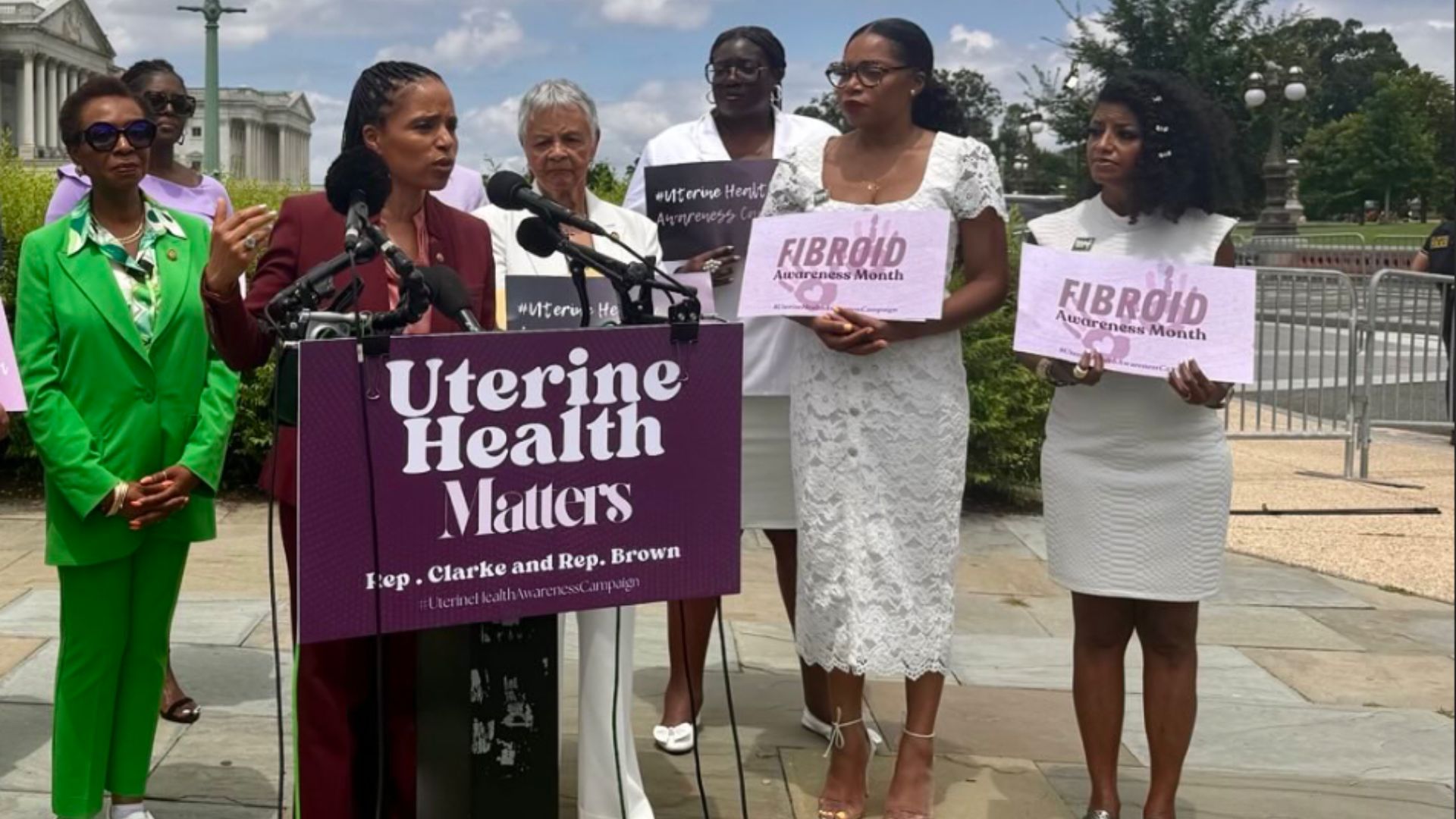
The causes of uterine fibroids remain largely unclear, prompting legislative responses to improve research and treatment options. On July 15, U.S. Senator Angela Alsobrooks (D-Md.) and Congresswomen Shontel Brown (D-Ohio-11) and Yvette D. Clarke (D-N.Y.-09) co-sponsored the Uterine Fibroid Intervention and Gynecological Health Treatment (U-FIGHT) Act. This initiative aims to enhance legislative support for uterine health initiatives, including addressing the challenges surrounding fibroids and uterine cancer.
Tanika Gray Valbrun, who has endured significant health challenges due to fibroids, praised this legislative effort. Her experience includes multiple myomectomies and ongoing health complications, underscoring the importance of comprehensive treatment and awareness. Valbrun expressed that the revival of these bills signifies not just legislative progress but a commitment to valuing women’s health and voices.

The Complexity of Treatment Options
Uterine fibroids can hinder fertility, particularly when they are submucosal, leading to risks such as miscarriage or complications during pregnancy. Untreated fibroids may also escalate to severe pain and pressure on adjacent organs, resulting in symptoms like back pain and urinary issues. Existing treatment options vary, ranging from medications that aim to shrink fibroids to more invasive procedures like myomectomies and hysterectomies, which may be necessary in severe instances.
“For too long, uterine fibroids have plagued women, particularly Black women,” Sen. Alsobrooks noted, underscoring the need for increased funding for research, awareness campaigns, and proactive treatment solutions.
Star power has also joined the advocacy, with actress Lupita Nyong’o sharing her personal fibroid journey. In her statement, she recalled receiving limited treatment options in 2014 and called for a future of increased education and proactive health measures for affected women. “Transformation begins with understanding, and understanding requires research,” Nyong’o concluded, expressing gratitude to lawmakers for their commitment to advancing this critical health issue.
