


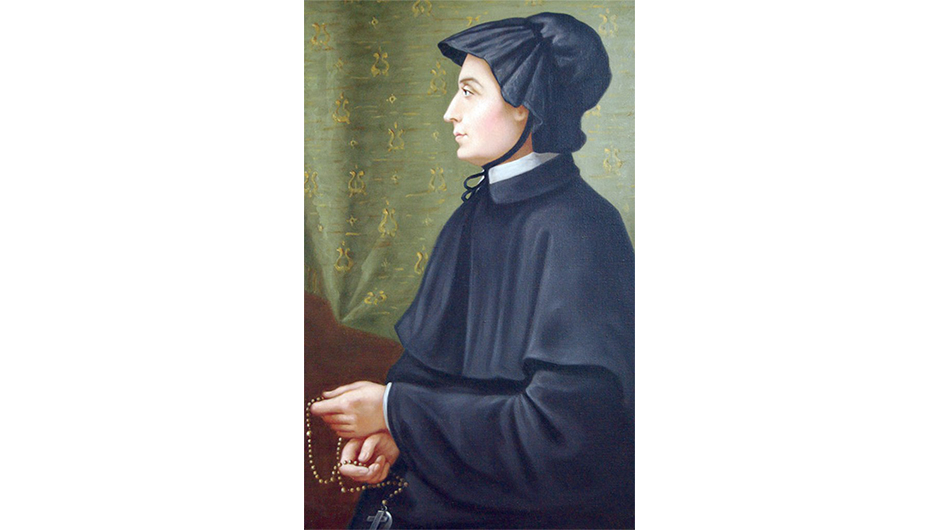
Honoring St. Elizabeth Ann Seton: A Legacy of Faith and Education
A Historic Anniversary
This year marks the 50th anniversary of the canonization of St. Elizabeth Ann Seton, the first saint born on what is now U.S. soil. The Daughters of Charity, her founding religious community, hope to inspire Catholics to learn more about her remarkable life.
A Multifaceted Life
St. Elizabeth Seton led an extraordinary life characterized by dramatic transformations. She experienced periods of teen depression, transitioned from a wealthy socialite in New York to an impoverished widow with five young children, and ultimately found solace and purpose in her faith.
Journey to Catholicism
Seton’s pivotal moments occurred during her struggles in Italy when she encountered Catholicism. It was in this challenging time that she cultivated a deep devotion to the Eucharist, leading her to embrace Catholicism and establish the Daughters of Charity in Maryland, preceding the arrival of Vincentian priests and brothers in the United States.
Preserved Writings and Their Significance
Throughout her life, St. Elizabeth Seton maintained a robust correspondence, documenting her experiences in numerous letters, journals, and “commonplace books.” These writings, which have recently been digitized for public access via the DePaul Digital Commons, offer a unique glimpse into her thoughts and emotions.
Sister Betty Ann McNeil, a Daughter of Charity, emphasizes the distinctiveness of viewing Seton’s handwritten letters. “It’s so different from reading a typescript,” she noted. “The size of the letters, how dark they are — she did not have a bold font. She created a bold font.”
Educational Impact and Personal Philosophy
St. Elizabeth Seton’s initial calling as a wife and mother transformed when her husband fell ill and passed away shortly after moving to Italy. Following his death, she returned to New York with a renewed faith and a commitment to education, teaching in a school that ultimately went bankrupt. This led to her move to Maryland to establish a women’s religious institute and a school.
Her writings reflect her strong reliance on saints such as St. Vincent de Paul and St. Louise de Marillac, as well as St. Teresa of Avila. She believed passionately in serving the poor and considered her vocation to be a divine gift.
Relevance Today
St. Elizabeth Seton’s life is filled with themes of resilience and compassion that resonate strongly in today’s society. Sister Betty Ann highlights that Seton’s experiences parallel contemporary challenges, stating, “She became a spiritual leader and mentor as a schoolmistress.”
Her reflections also address issues relevant to modern parents, as she noted the hesitation of many to accept their children’s academic difficulties, a sentiment still echoed in today’s educational environment.
A Figure of Strength
St. Elizabeth Seton’s journey was not only a spiritual one; she expressed a wide range of emotions, from joy to anger. Sister Betty Ann captures this complexity, saying, “She was a communicator. She’s a woman with emotions. She could get angry. She cried. She could protest.”
Seton’s legacy continues to inspire individuals to embrace their faith while advocating for those in need, illustrating the power of one woman’s voice in the landscape of religious and educational reform.
