


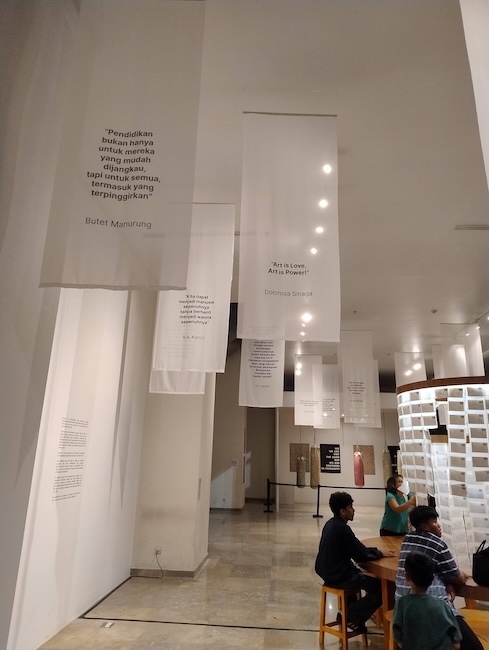
An exhibition titled Sunting is currently being showcased at the National Museum of Jakarta, focused on the contributions of women to Indonesia’s social landscape. This exhibition seeks to elevate awareness around women’s leadership and achievements across various domains such as education, politics, arts, and sports. The name, Sunting, is inspired by both a traditional hair ornament and Soenting Melajoe, the first newspaper designed specifically for women in West Sumatra, established in 1912.
The exhibition is innovative in its approach, beginning with an immersive installation by artist Ika Vantiani. Titled Menjadi Dian yang Tak Padam (To Be an Unquenchable Light), this piece invites visitors to engage by writing their reflections on postcards, which they then attach to a fabric structure shaped like a cylindrical tower of light. Above, banners display inspirational quotes from notable women, such as educator Butet Manurung, who promotes literacy among Indigenous communities.
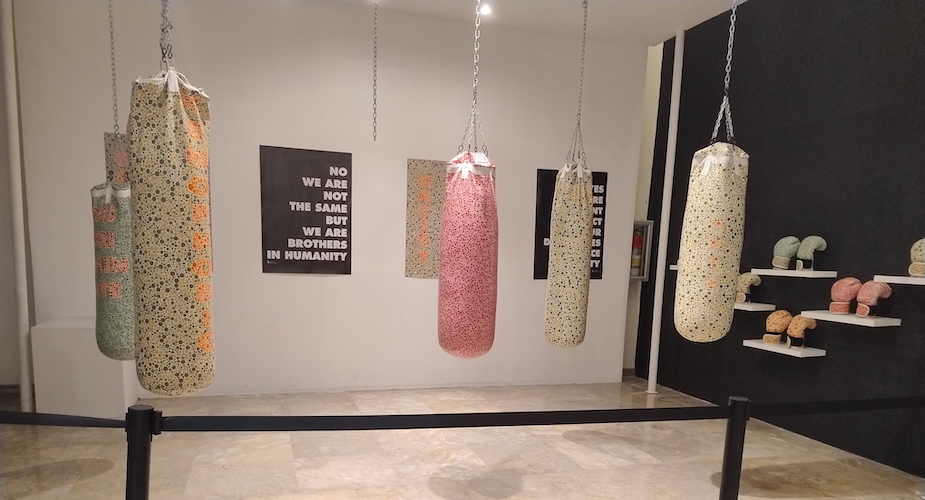
Another impactful artwork, I (don’t) SEE COLOUR by Bibiana Lee, incorporates boxing bags and gloves adorned with colored dots resembling an Ishihara color blindness test. The accompanying message, “No, we are not the same, but we are brothers in humanity,” addresses the multifaceted violence experienced by women, including physical, verbal, and systemic assault. While the mention of “brothers” may seem out of place in a women-centric exhibition, Lee’s work compellingly underscores the intersectional challenges faced by women, particularly those from marginalized backgrounds.
A significant portion of the exhibition emphasizes the pivotal roles women played in Indonesia’s nationalist movement. Various women’s organizations, such as Perwari (Women’s Association of the Republic of Indonesia) and Kowani (Indonesian Women’s Congress), are highlighted. The display includes numerous artifacts and memorabilia showcasing Indonesian women’s diverse contributions throughout history.
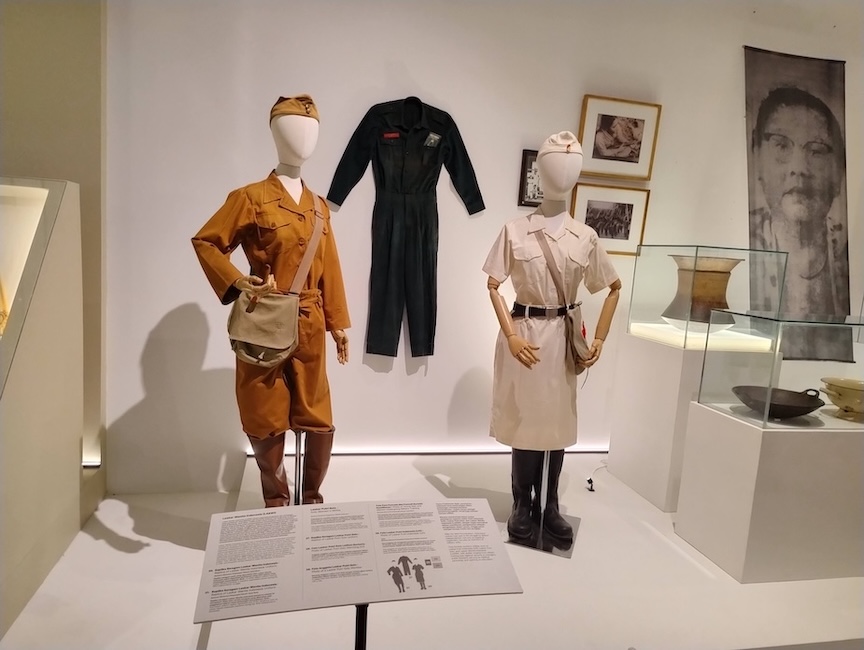
Totaling a rich variety of items, the exhibition features traditional clothing, showcasing a fusion of Indonesian styles, from a glimmering sequined kebaya by fashion designer Non Kawilarang to batik garments worn by influential figures like Ruhanna Kuddus. Additionally, historical publications authored by women, such as Soenting Melajoe, alongside lesser-known magazines like Pahesan, are exhibited, illustrating the evolution of women’s literature in Indonesia.
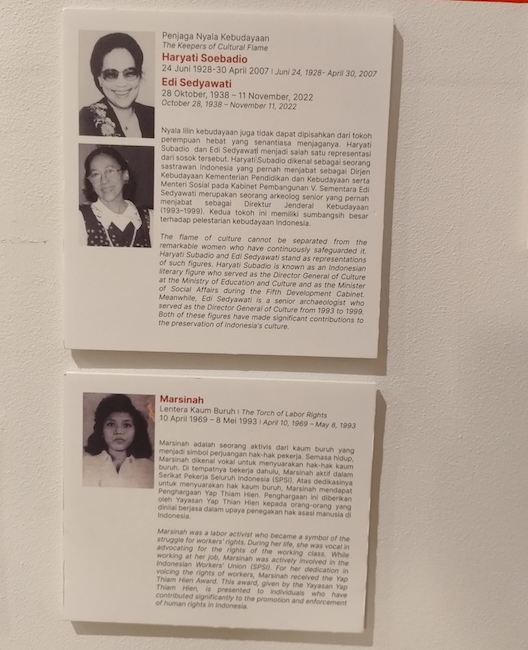
However, the exhibition’s narrative becomes complex when addressing the period of human rights abuses during the New Order regime. The era is referred to as one of “Stability and Development,” bypassing the controversial connotations often associated with the term “New Order.” While the exhibition includes figures like labor activist Marsinah, it notably omits critical details surrounding her tragic murder, leaving her story fragmented.
The absence of Gerwani (Indonesian Women’s Movement), the country’s largest women’s organization, and its persecution under New Order is another significant omission. The exhibition credits S.K. Trimurti as a journalist, avoiding her connection to Gerwani, indicating a reluctance to confront the politically sensitive aspects of women’s history. By lauding Tien Soeharto, the former First Lady, for her initiative with Dharma Wanita, the exhibition raises questions about the portrayal of women’s roles during a conservative shift under Suharto’s regime.
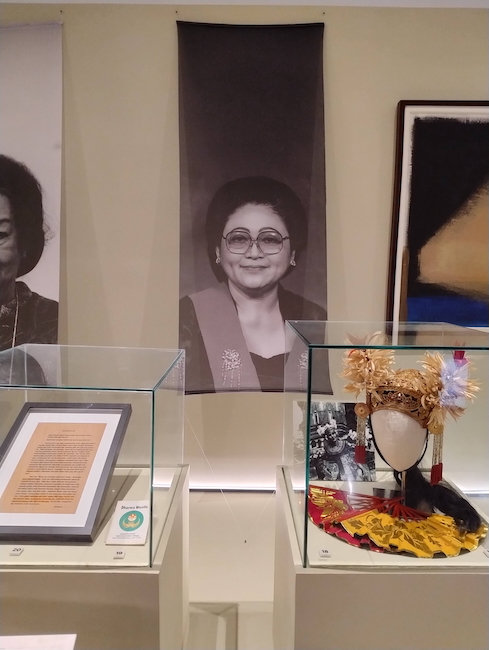
Despite its efforts to showcase a diverse narrative, the exhibition acknowledges that many women who have shaped Indonesia remain absent from public recognition. It includes a disclaimer emphasizing that those honoring women’s contributions is just a glimpse into a broader history that often overlooks the vital roles played by countless individuals.
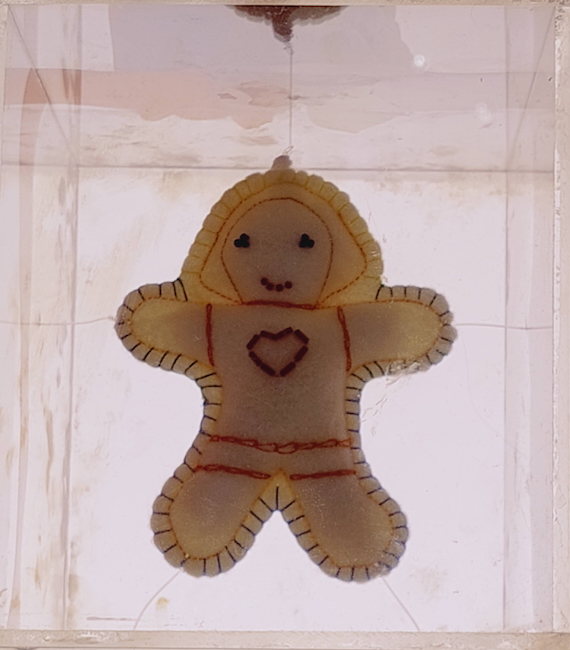
Among the smaller artifacts is the May 1998 Doll (Boneka Mei 1998), symbolizing the trauma of the systematic violence against women during the latter stages of the New Order era. This handmade doll serves as a critical reminder of the human rights abuses that have marred Indonesian history, questioning the extent to which history can be rewritten or forgotten.
The Sunting exhibition reflects the complexities inherent in portraying women’s roles in Indonesian history. While it showcases the advancements made in women’s rights post-New Order, it must navigate a landscape shaped by current political agendas. With connections to key governmental figures who have been controversial in their stances on historical injustices, the exhibition’s ability to remain impartial and comprehensive is under scrutiny.
Sunting: Jejak Perempuan Indonesia Penggerak Perubahan (Tracing of Women Who Shaped Indonesia) will be on display at the Museum Nasional in Jakarta until July 31, 2025.
Vannessa Hearman, a historian of modern Indonesia and a Senior Lecturer at Curtin University, contributed to this article. She also serves on the board of Inside Indonesia.
