


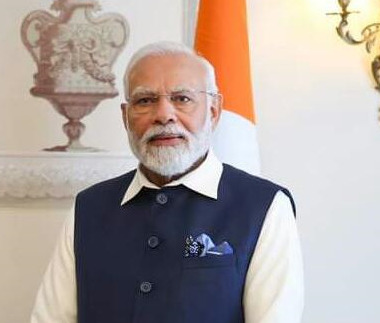
PM Modi Launches ESTIC 2025: A New Era in Science and Innovation
New Delhi, November 3, 2025 — Prime Minister Shri Narendra Modi officially opened the Emerging Science, Technology and Innovation Conclave (ESTIC) 2025 at Bharat Mandapam, welcoming international scientists, innovators, and academic leaders. During his address, he celebrated India’s inaugural victory in the ICC Women’s World Cup 2025, hailing the triumph of the women’s cricket team as a source of national pride that will motivate youth across the country.
Fostering Innovation and Research
Highlighting recent scientific advancements, Modi announced the successful launch of India’s largest communication satellite, praising the role of Indian scientists and the Indian Space Research Organisation (ISRO). He articulated a vision for the 21st century that requires collective expertise in emerging technologies to guide future advancements.
The establishment of the Anusandhan National Research Foundation signals India’s commitment to enhancing research capabilities. The Prime Minister further unveiled the Research, Development, and Innovation Scheme, with a substantial budget of ₹1 lakh crore, aimed at fostering innovation in both public and private sectors.
Building a Modern Innovation Ecosystem
Modi emphasized the government’s efforts to create an innovation-friendly environment, underscoring reforms in financial regulations and procurement policies. These changes aim to expedite the transition of prototypes from laboratories to commercial markets, thereby accelerating technological development.
Key Achievements
- India’s R&D expenditure has doubled over the past decade.
- The number of registered patents has surged 17 times.
- India is ranked as the world’s third-largest startup ecosystem, with over 6,000 deep-tech startups.
- The bio-economy has grown from $10 billion in 2014 to approximately $140 billion today.
Moreover, Modi discussed ongoing advancements in sectors like quantum computing, green hydrogen, and deep sea research, positioning India as a leader in these emerging fields.
Inclusive Innovation and Education
Modi underscored the importance of including diverse perspectives in innovation processes, particularly highlighting the contributions of women in science. He noted a significant rise in patent filings by women, from under 100 annually a decade ago to over 5,000 today. Furthermore, he mentioned that approximately 43% of students in STEM fields are women, surpassing global averages.
To foster curiosity among youth, Modi announced the expansion of Atal Tinkering Labs from 10,000 to 35,000, which are designed to encourage children to explore science and technology through hands-on experimentation. He reiterated the government’s dedication to enhancing educational infrastructure, including new universities and support for young researchers through the Prime Minister’s Research Fellowship program.
Future Perspectives on Science and Technology
Modi discussed the ethical implications of artificial intelligence (AI), emphasizing India’s efforts to harness AI for societal benefit and to develop an ethical governance framework. As part of this initiative, he announced the Global AI Summit scheduled for February 2026 to promote inclusive and human-centric AI development.
He called for a paradigm shift focusing on nutrition security, urging innovations in agriculture that combat malnutrition globally, enhance soil health, and improve personalized medicine through genomic mapping. The Prime Minister expressed hope that attendees would explore these opportunities, reinforcing the government’s commitment to research funding and support for innovators.
Conclusion
Prime Minister Modi concluded his address by invoking “Jai Vigyan, Jai Anusandhan,” expressing confidence that the Conclave would catalyze India’s journey towards becoming a global innovation leader. The summit, running from November 3 to 5, includes participation from over 3,000 individuals spanning academia, industry, and government, alongside numerous Nobel Laureates and esteemed scientists.
The inaugural day was also attended by notable figures such as Union Minister Dr. Jitendra Singh and Principal Scientific Adviser Prof. Ajay Kumar Sood, marking a significant milestone in India’s ongoing evolution in the fields of science and technology.
