


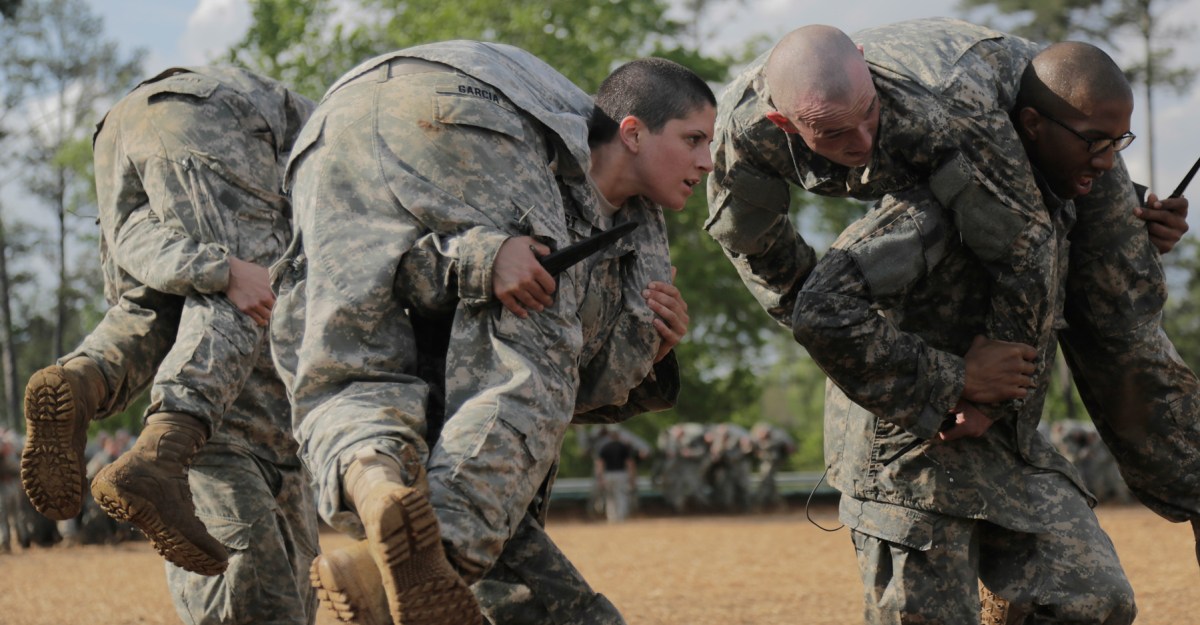
Women in Combat: Emelie Vanasse’s Journey Through Ranger School
Historical Context
At the time Emelie Vanasse began her ROTC program at George Washington University, women were barred from officially participating in combat roles. As a medical officer, Vanasse utilized her biology degree but was acutely aware of the limitations imposed on her due to her gender.
A Woman’s Determination
“I always felt like, who really has the audacity to tell me that I can’t be in combat arms? I’m resilient, I am tough, I can make decisions in stressful environments,” stated Vanasse, expressing her frustration with gender restrictions.
Policy Changes for Gender Equality
The landscape changed in 2015 when the Obama administration announced that all combat positions would be made available to women. Despite requests from military leaders, particularly in the Marine Corps, to retain male-only frontline units, then-Defense Secretary Ash Carter emphasized the necessity of utilizing the full spectrum of national talent.
Breaking New Ground
This pivotal shift allowed women to apply to Ranger School. Inspired by the achievements of Capt. Kristen Griest and 1st Lt. Shaye Haver, who became the first women to graduate from the program, Vanasse set her sights on receiving the same honor. She graduated from Ranger School in 2017, marking her place as one of the inaugural female Army infantry officers.
Fitness Standards and Integration
With the integration of women into combat roles, the military developed uniform fitness standards applicable to all genders. The Ranger Physical Fitness Test consists of a single standard that applies to both men and women, contrasting with varying age- and gender-adjusted tests in other areas.
Challenges and Misconceptions
Despite this progress, some officials persist in claiming that standards have been lowered. Defense Secretary Pete Hegseth voiced concerns about the integration, suggesting that it impairs unit capability. However, many women had successfully collaborated with male infantry units in combat zones under the same rigorous conditions.
Experiencing Ranger School
Vanasse recounted her experience: “I woke up at 3 am… and drove to Camp Rogers, very aware of the coming pain and mental strain.” She faced skepticism from some evaluators simply for being a woman in a historically male-dominated environment.
Endurance Through Adversity
She reflected on the physical and mental hardships she endured, stating, “I tasted real failure… I crawled up a mountain on my hands and knees.” Yet she acknowledged that these trials contributed to the core Ranger School experience.
Unwavering Commitment
Vanasse maintained her determination throughout the rigorous training. “I just knew that it was something that I could get through,” she remarked, emphasizing her unwavering confidence.
Equal Standards in Training
Addressing the notion that women may have received special treatment, Vanasse asserted, “I did the same Ranger physical fitness test that all the men took.” She confirmed that she completed the same challenging tasks while ensuring her participation was on equal footing.
Redefining Lethality
The conversation around effectiveness in combat often circles back to the term “lethality.” Vanasse articulated that while physical fitness plays a role, true lethality encompasses a range of skills including tactical acumen, leadership, and team cohesion. She emphasized that success in combat requires more than just physical prowess.
Revisiting Stereotypes
Regarding Hegseth’s comments on women’s roles in combat, Vanasse expressed frustration, stating that they undermine the hard-won achievements of women in the military. She believes that such views often reflect a misunderstanding of women’s capabilities and contributions.
The Road Ahead
As the military continues to evolve, the discourse surrounding women’s integration into combat roles remains critical. Vanasse’s journey exemplifies not only the challenges faced but also the significant strides made toward equality in the armed forces.
