


Pride Organizations Stand with Trans Rights, Suspend Political Participation
In a significant move for the LGBTQ+ community, four of the largest Pride organizations in the UK—including Birmingham, Brighton, London, and Manchester Prides—have made the decision to bar political parties from participating in their events. This suspension is positioned as a stance of “unequivocal solidarity” with the transgender community.
Motivation Behind the Suspension
The announcement follows a ruling from the Supreme Court, which defined the term “woman” within the context of the Equality Act as only referring to biological sex. This has sparked contrasting reactions within the LGBTQ+ community, with some viewing the ruling as protective of single-sex spaces, while others express concern about its implications for transgender individuals.
Statement from Pride Organizations
The collective of Pride organizers emphasized a “disturbing global trend” wherein LGBTQ+ rights are “… systematically rolled back.” They asserted that the UK must avoid a similar regression and instead position itself as a leader in human rights and equality.
“In this moment, we choose to stand firmer, louder, and prouder in demanding change that protects and uplifts trans lives,” they stated.
They underscored that the decision to exclude political parties serves as a refusal to platform those who have not adequately safeguarded LGBTQ+ rights.
Legal Context and Reactions
The recent Supreme Court ruling delineates existing equality laws, stating that an individual identifying as transgender does not alter their biological sex for the purposes of the Equality Act, even with a Gender Recognition Certificate (GRC). Lord Hodge, a Supreme Court judge, highlighted that the law still protects against discrimination towards transgender persons despite these clarifications.
Responses to the ruling have been mixed. Some organizations, including For Women Scotland, welcomed it, feeling that it affirms women’s safety in single-sex spaces. Others, however, feel that the ruling neglects the rights of transgender individuals. Scottish Lesbians, a grassroots organization, expressed disappointment that Pride events are perceived as less inclusive for lesbians.
Calls for Action
The Pride organizers are advocating for:
- Full and enforceable protections under the Equality Act
- Timely access to NHS gender-affirming healthcare
- Reform of the gender recognition certificate process
- Sustainable funding for services led by and supporting trans individuals
Impact on Political Engagement at Pride Events
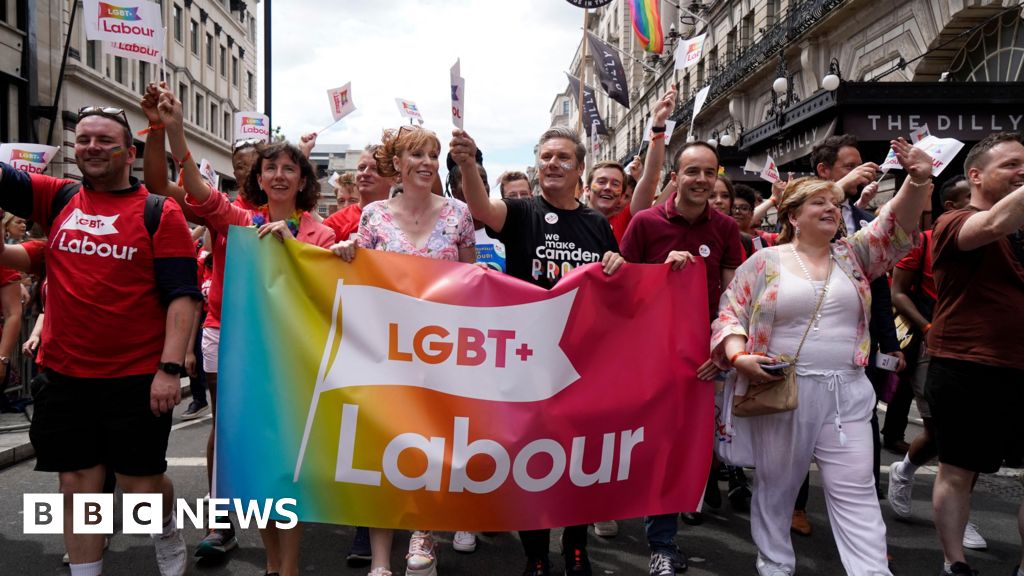
This suspension is not isolated; Birmingham Pride had previously announced similar restrictions, and other events across the UK, including in Belfast and Southampton, are considering or have adopted similar measures. Political parties have traditionally played a prominent role in Pride marches, with various politicians participating to showcase their commitment to LGBT+ issues.
Reacting to the suspension, a spokesperson for LGBT+ Lib Dems expressed deep disappointment, indicating the need for a nuanced conversation with Pride organizers to facilitate future engagement.
Conclusion
This development marks a critical juncture in the ongoing dialogue surrounding LGBTQ+ rights and the perceived tension between various factions within the community. As Pride events prepare for the upcoming season, the implications of these decisions will likely shape the landscape of advocacy and inclusion in the UK.
