


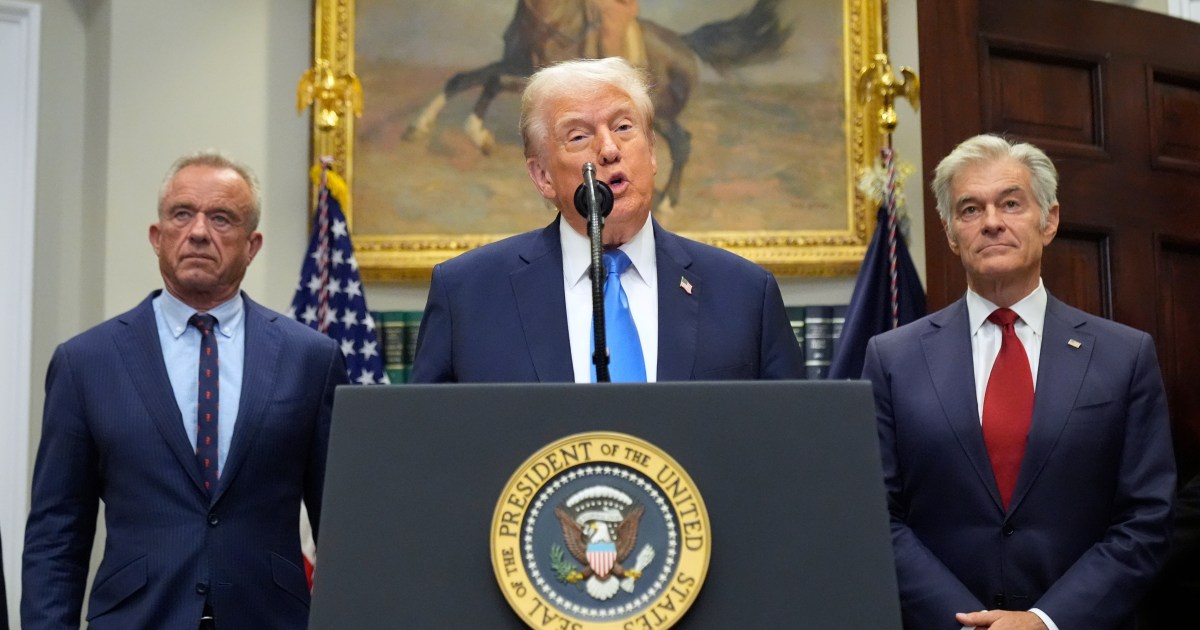
In recent statements, former President Donald Trump has advised pregnant women against using Tylenol, known worldwide as paracetamol, citing unverified connections to autism. This announcement coincided with the U.S. Food and Drug Administration’s (FDA) plans to update warning labels regarding potential risks associated with the painkiller.
During a press conference at the White House, Trump emphatically stated, “Don’t take Tylenol. Don’t take it.” He encouraged expectant mothers to “fight like hell not to take it,” acknowledging, however, that some circumstances may require the medication, advising women to consult with their healthcare providers.
Controversy Surrounding Vaccinations and Medication
Additionally, Trump expressed skepticism about the standardization of childhood vaccinations, particularly the measles, mumps, and rubella (MMR) vaccine, proposing that these should be administered in separate doses rather than in combination. He argued, “It seems to be that when you mix them, there could be a problem.”
Medical Community Responds
The immediate backlash from medical professionals was significant. Organizations such as the American Academy of Pediatrics and the American College of Obstetrics and Gynecology (ACOG) quickly labeled Trump’s statements as irresponsible. ACOG President Steven J. Fleischman emphasized that paracetamol has been deemed safe during pregnancy and is crucial for managing pain and fever, both of which can be harmful to both the mother and the fetus if left unmanaged.
Research shows that approximately half of pregnant women globally use paracetamol for effective pain relief. It has remained one of the few recommended medications for expectant mothers, particularly for fever reduction, which can pose risks if untreated.
Scientific Studies and Findings
While some studies have suggested a connection between paracetamol use and conditions such as autism, many medical experts warn that no definitive causal link has been established. A prominent population-based study published in The Journal of the American Medical Association found no correlation when comparing children exposed to the medication with their unexposed siblings.
Arthur Caplan, a bioethicist at NYU Grossman School of Medicine, criticized the Trump administration’s stance as “hugely negative” for public health, suggesting that it promotes misinformation and could undermine trust in scientific guidance. He remarked, “I think mainstream medicine will ignore what he said today.”
Moreover, Catherine Lord, a UCLA autism specialist, highlighted that studies claiming a link between Tylenol and autism often face limitations due to confounding variables. She assured that medical professionals will maintain that Tylenol does not cause autism, while also recommending that pregnant women remain cautious with any medication use. “Having a high fever or being in pain is not good for a growing baby either, so they should consult their doctor,” she stated.
FDA’s Position on Paracetamol
In its updated guidance, the FDA acknowledged research indicating a potential correlation between the chronic use of paracetamol during pregnancy and autism risk. However, the agency noted that no causal relationship has been solidified and pointed to a body of literature presenting opposing findings. The FDA reiterated that acetaminophen remains the only over-the-counter medication approved for treating fever in pregnant women, emphasizing the risks associated with high temperatures during pregnancy.
According to the American Academy of Pediatrics, autism results from a complex interplay of genetic and environmental factors, with no single cause identified. This underscores the importance of relying on medical consensus and research rather than solely on anecdotal claims.
