


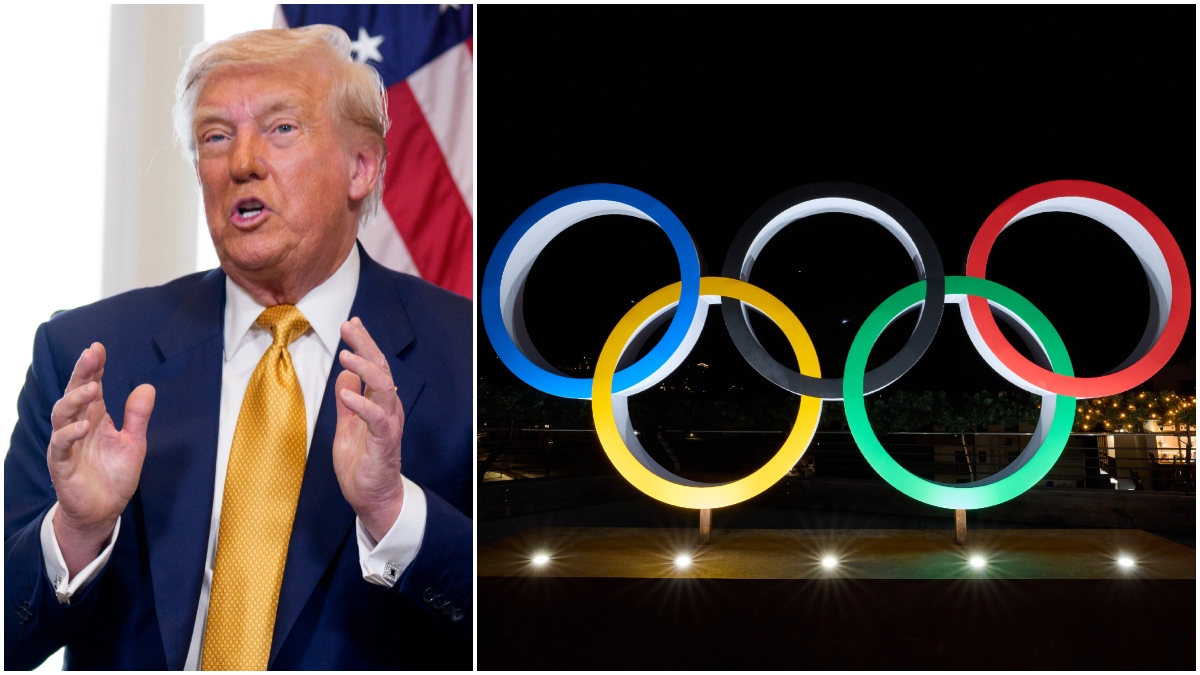
Examining Controversial Commentary: Trump and Transgender Athletes in Sports
The ongoing discourse surrounding transgender athletes in competitive sports has seen various outlets take polarizing stances. Notably, the San Francisco Chronicle has faced criticism over an opinion piece titled, “Trans athlete ban part of Trump’s quest to ruin L.A. Olympics and sports, one step at a time.” This article raises questions about the implications of such commentary in a historically significant publication established in 1865.
Background on the Columnist
The column, authored by Scott Ostler—who has contributed to the Chronicle since 1991—positions itself within a backdrop of contentious political dialogue. Ostler identifies as a sports columnist, yet the tenor of his writing has drawn scrutiny, particularly for blending sports commentary with sharp political critique.
Analyzing the Headline and Premise
The piece opens with the striking assertion that banning men from competing in women’s sports aligns with Donald Trump’s perceived agenda to undermine the integrity of the Olympic Games. Ostler’s rhetoric employs hyperbole, branding this policy change as a form of gaslighting—a term often invoked when discussing misinformation.
Argument Focus: Safety and Fairness in Women’s Sports
Ostler’s argument hinges on a criticism of those advocating for the inclusion of transgender athletes in women’s sports, suggesting that prioritizing inclusivity could undermine the safety and fairness of competitions. This raises pivotal questions about the balance between inclusivity and maintaining a level playing field in athletics.
Criticism of the US Olympic and Paralympic Committee
Further complicating the discussion, the U.S. Olympic and Paralympic Committee (USOPC) has recently adjusted its policy to align with Trump’s executive order, which prohibits male athletes from participating in women’s sports. Ostler expresses dissatisfaction with this change, highlighting the USOPC’s historical approach that had allowed sports governing bodies to create their own rules surrounding transgender participation. He argues that these rules were developed through extensive dialogue and research, emphasizing that years of deliberation should not be discarded lightly.
Polling and Public Opinion
Ostler references polling data suggesting that a majority of Americans oppose the idea of transgender women competing against cisgender women. However, he counters this with a rhetorical question regarding the validity of relying solely on polling for policymaking, drawing connections to other politically charged issues. This line of reasoning illustrates the complexity inherent in weighing public opinion against established policies in sports.
Conclusion: The Broader Implications
The recent editorial from the San Francisco Chronicle encapsulates the complex and often divisive nature of discussions about gender and athletics. It invites stakeholders to consider not only the immediate implications for athletes but also the broader societal context regarding fairness, safety, and representation in sports.
Final Thoughts
The debate over transgender participation in sports is far from resolved, and contributions from media figures like Ostler will likely continue to shape public discourse. As society navigates these discussions, the importance of balanced, fact-based commentary remains paramount to inform effective policy decisions that respect both individual rights and fair competition.
