


NCAA’s New Policy Sparks Legal Controversy Over Transgender Athlete Participation
The landscape of collegiate athletics is under scrutiny following a lawsuit regarding the NCAA’s ban on transgender athletes in women’s sports. The legal challenge is centered on claims that the NCAA lacks legal authority to enforce policies that counter Pennsylvania state law and the Title IX federal statute.
Background of the Case
The lawsuit was filed by Evie Parts, a track athlete from Swarthmore College who was removed from her team on February 6, coinciding with the NCAA’s announcement of its revised participation policy. This new guideline restricts competition in women’s sports to athletes assigned female at birth.
NCAA’s Involvement
The NCAA, which governs athletic programs for over 1,100 colleges and universities in the U.S., has faced increasing challenges regarding its policies on transgender athletes. The recent changes were implemented shortly after former President Donald Trump signed an executive order aimed at excluding transgender individuals from participation in women’s sports.
Details of the Lawsuit
Parts’ complaint highlights the actions of several Swarthmore athletics officials, including coach Peter Carroll and athletic director Brad Koch. It alleges that their decisions contributed to a severe decline in Parts’ mental health, prompting her to engage in self-harm.
“We stand by the allegations in the complaint,” stated Susie Cirilli, Parts’ attorney. “As stated in the complaint, the NCAA is a private organization that issued a bigoted policy. Swarthmore College chose to follow that policy and disregard federal and state law.”
School’s Response
In a statement regarding the matter, Swarthmore College acknowledged the distress faced by its transgender community. They expressed a commitment to supporting student-athletes while navigating the complexities of rapidly evolving guidelines. The institution has opted to refrain from further comment due to the ongoing litigation.
The Broader Context
The NCAA’s decision is set against a backdrop of legislative efforts, with the Pennsylvania state Senate recently approving a bill that aims to restrict transgender athletes from competing in all levels of women’s sports. While this bill has yet to pass through the Democratic-controlled House, it indicates a growing national debate over transgender rights in athletics.
Impact on Participation
Parts, who resumed her collegiate athletic career in 2023 after a hiatus, found herself in a difficult position post-policy change. The lawsuit claims that she was offered the option to compete on the men’s team, but faced significant restrictions, such as being denied coaching assistance and travel with the women’s team. Eventually, she was “fully reinstated” and competed until her graduation in May.
Recent Developments
In a related case, a transgender woman was recently involved in legal action against Princeton University after being removed from a track meet just before her race. This lawsuit also raises questions about the treatment and inclusion of transgender athletes in collegiate sports.
Conclusion
The ongoing legal battles underscore significant tensions surrounding transgender athlete participation in competitive sports. As communities continue to advocate for inclusivity, the outcomes of these cases may shape the future of collegiate athletics in the United States.
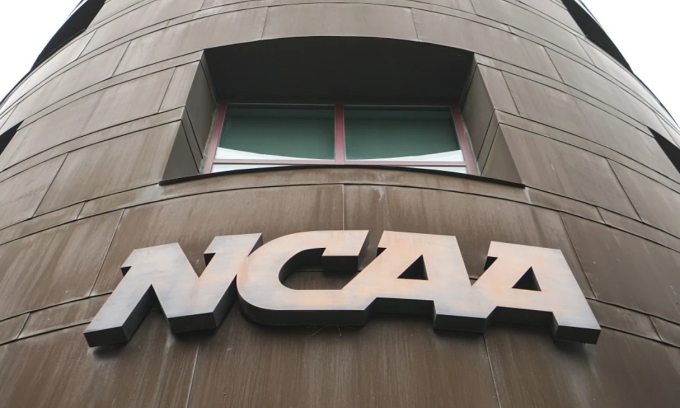
NCAA headquarters in Indianapolis, U.S. on July 15, 2025. Photo by AP
